
How to Choose a Bathroom Sink Cleaner That Fits Your Sink
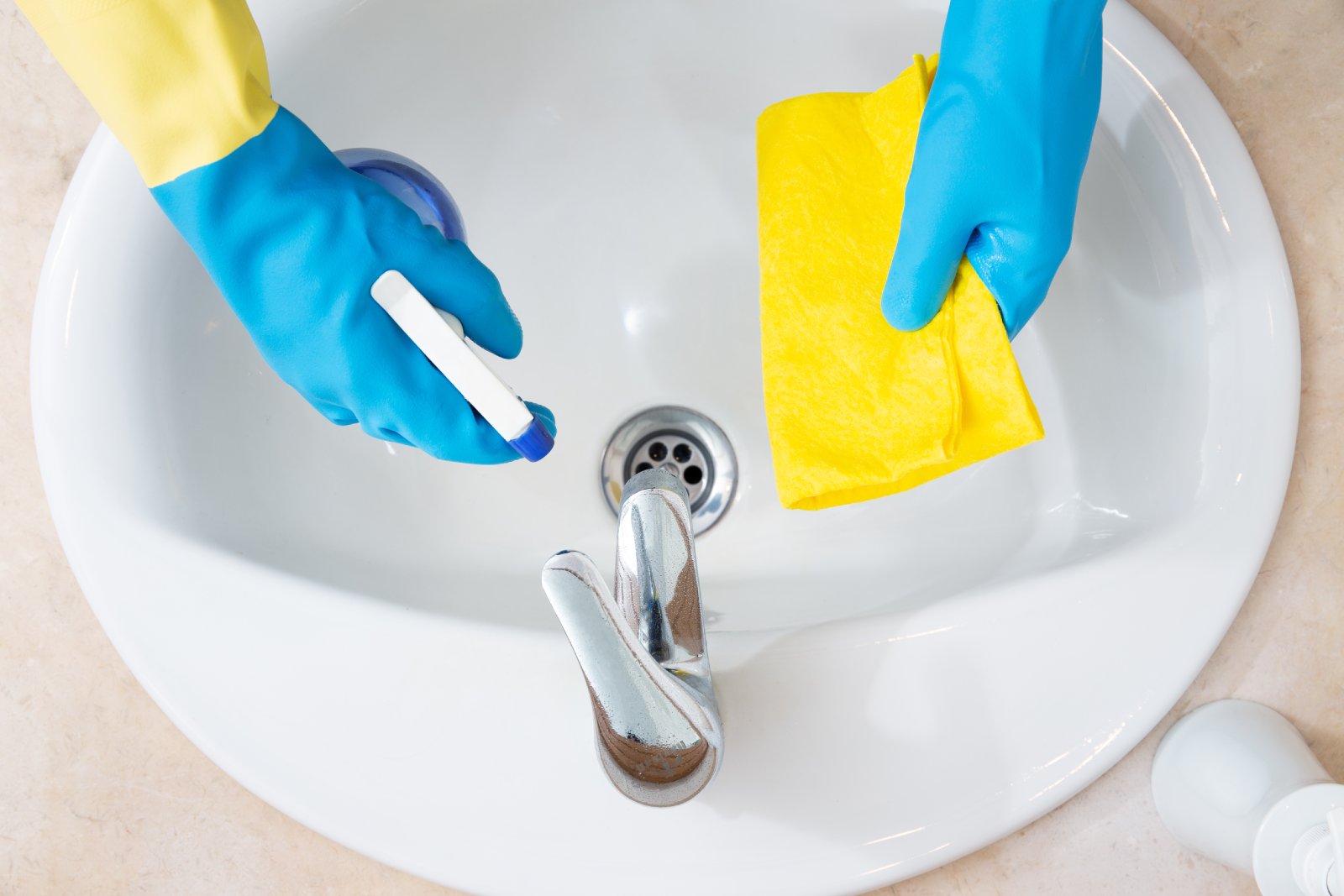
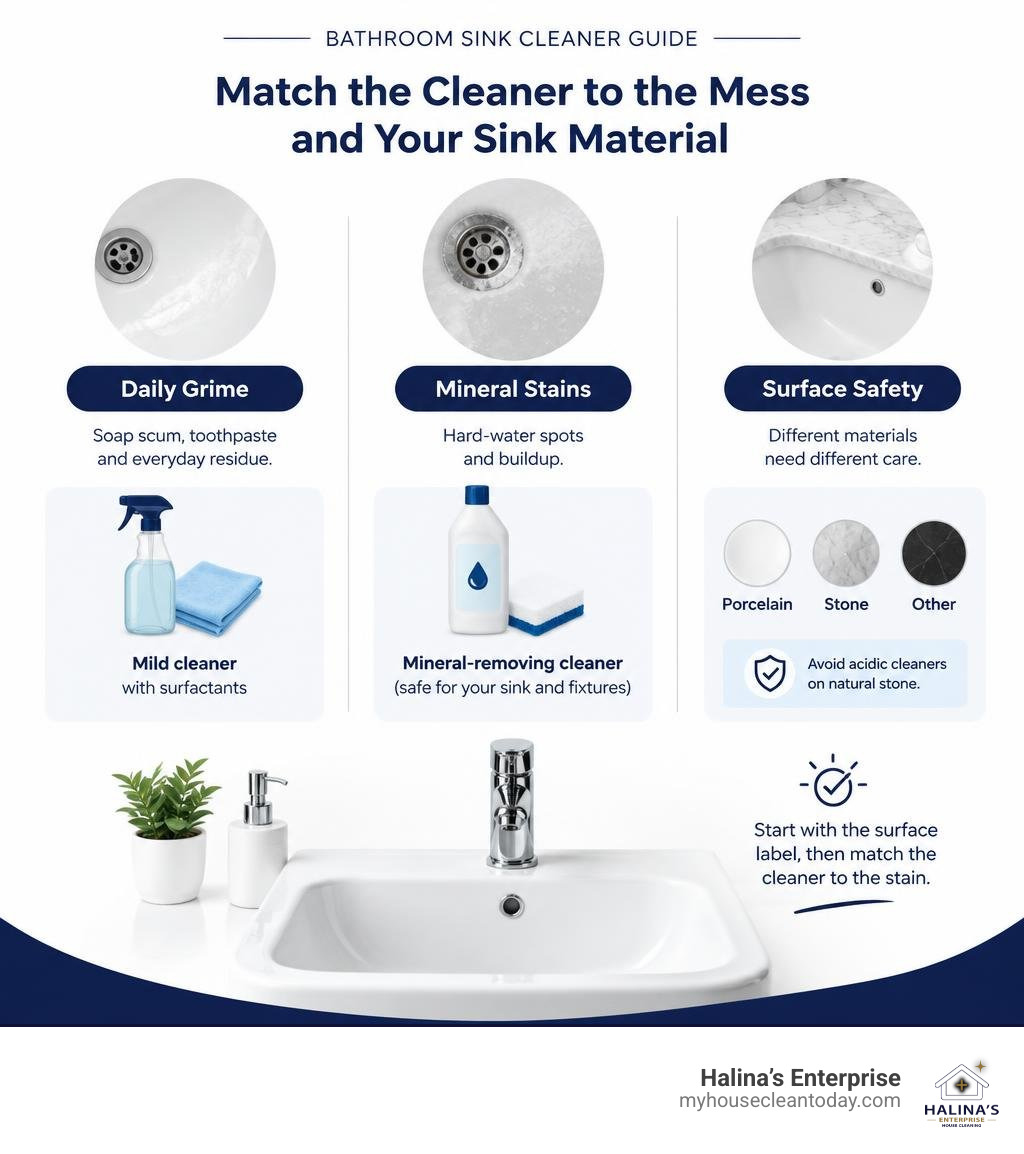
The best bathroom sink cleaner depends on the mess and the sink material. For everyday toothpaste and soap residue, choose a mild cleaner with surfactants and wipe with a soft cloth. For hard-water spots, use a mineral-removing cleaner only if its label says it is safe for your sink and fixtures. A gentle powder scrub can handle stuck-on grime, but test it first to avoid dulling the finish. Avoid acidic cleaners on natural stone.
If you are short on time, start with the surface label, then match the cleaner to the stain. That simple check matters more than a promise to clean everything.
Discover more about bathroom sink cleaner:
How to Choose the Best Bathroom Sink Cleaner for Your Home
Walking down the cleaning aisle or scrolling through the more than 10,000 bathroom cleaning products available online can quickly turn overwhelming. To find the right match, it helps to understand how different formulations work on various surfaces.

Bathroom sink cleaners generally fall into four primary categories:
- Powder Scrubs: Formulated with fine mineral abrasives like sodium bicarbonate or feldspar. These lift crusty toothpaste or stuck makeup mechanically without scratching porcelain when used with sufficient water. Highly rated natural options like Molly’s Suds Sink SCRUB boast a 4.9 out of 5-star customer rating for their gentle yet effective scrub power.
- Foaming Sprays: Products like CLR Brilliant Bath Foaming Bathroom Cleaner Spray cling to vertical basin walls and faucet necks, breaking down grime before you even wipe.
- Cream Cleansers: Thick liquid creams provide controlled abrasive power and dwell time, making them ideal for heavy soap scum on durable basins.
- Multi-Surface Sprays: Convenient daily sprays that use plant- or synthetic-based surfactants to dissolve light grease, cosmetic oils, and dust.
| Cleaner Format | Best Surface Fit | Primary Strength | Watch Out For |
|---|---|---|---|
| Powder Scrub | Vitreous china, porcelain, stainless steel | Stuck toothpaste, metal marks, sink rings | Dry rubbing on delicate acrylic |
| Foaming Spray | Glazed ceramic, chrome, glass basins | Clings to vertical curves, dissolves scum | Over-spraying unsealed marble |
| Cream Cleanser | Traditional porcelain, solid surface, cast iron | Heavy residue, stubborn discoloration | Inadequate rinsing leaving haze |
| Liquid Spray | Daily maintenance across all safe materials | Quick wipe-downs, zero residue | Tough mineral scale removal |
Plant-Based vs. Chemical Bathroom Sink Cleaner Options
The choice between plant-based and traditional chemical cleaners comes down to indoor air quality, personal sensitivities, and cleaning speed. Traditional chemical sprays often rely on synthetic surfactants, quaternary ammonium compounds, or bleach to disinfect and dissolve organic matter quickly. While powerful, these formulas can release volatile organic compounds (VOCs) that irritate sensitive airways.
In contrast, plant-derived cleaners rely on renewable surfactants derived from coconut or corn sugars, combined with mineral scrubbing agents like baking soda and pure essential oils for scent. For households with young children, curious pets, or allergy sufferers, switching to eco-friendly cleaning products safe for kids and pets creates a healthier living space. You can also explore our safe hypoallergenic cleaning techniques to maintain sparkling fixtures without harsh chemical fumes.
Evaluating Ingredients to Look For and Avoid
When reading product labels, knowing which active ingredients to prioritize helps you protect both your family and your plumbing:
Ingredients to Look For:
- Aluminum-free sodium bicarbonate: A gentle, non-scratching abrasive that deodorizes as it cleans.
- Citric or lactic acid: Plant-based acids that naturally break down light hard water spots without damaging surrounding surfaces.
- Glucosides and plant oils: Mild, biodegradable surfactants (such as decyl glucoside) paired with lemon peel, lavender, or peppermint essential oils.
- EPA Safer Choice Certification: Signals that every ingredient has been vetted for environmental and human health safety.
Ingredients to Avoid or Use with Caution:
- Chlorine Bleach: Disinfects well, but can corrode certain metallic fixture finishes and damage septic ecosystems.
- Synthetic Phthalates and Artificial Perfumes: Common triggers for indoor allergies and headaches.
- Phosphates, Formaldehyde, and Parabens: Harsh additives that pose long-term aquatic and environmental hazards.
If your household requires targeted disinfection, balanced formulas like Clorox Disinfecting Bathroom Cleaner Spray offer bleach-free sanitizing power when used as directed.
Matching Cleaners to Common Bathroom Sink Challenges
Different messes require distinct chemical approaches. Identifying the exact nature of the buildup in your sink will save you time and prevent unnecessary scrubbing.
Conquering Soap Scum, Toothpaste, and Daily Grime
Soap scum is not just dried soap; it is a stubborn matrix created when fatty acids in bar soaps combine with minerals in tap water. Add dried shaving cream, dental paste, and cosmetic oils, and you get a sticky film that regular water cannot rinse away.
To break down this film, look for cleaners with dedicated surfactant blends. A thick foaming option like Zep Foaming Soap Scum Eliminator coats vertical basin walls, holding active cleaning agents against the scum layer for several minutes so you can wipe it away effortlessly.
Removing Hard Water Stains, Calcium, and Limescale
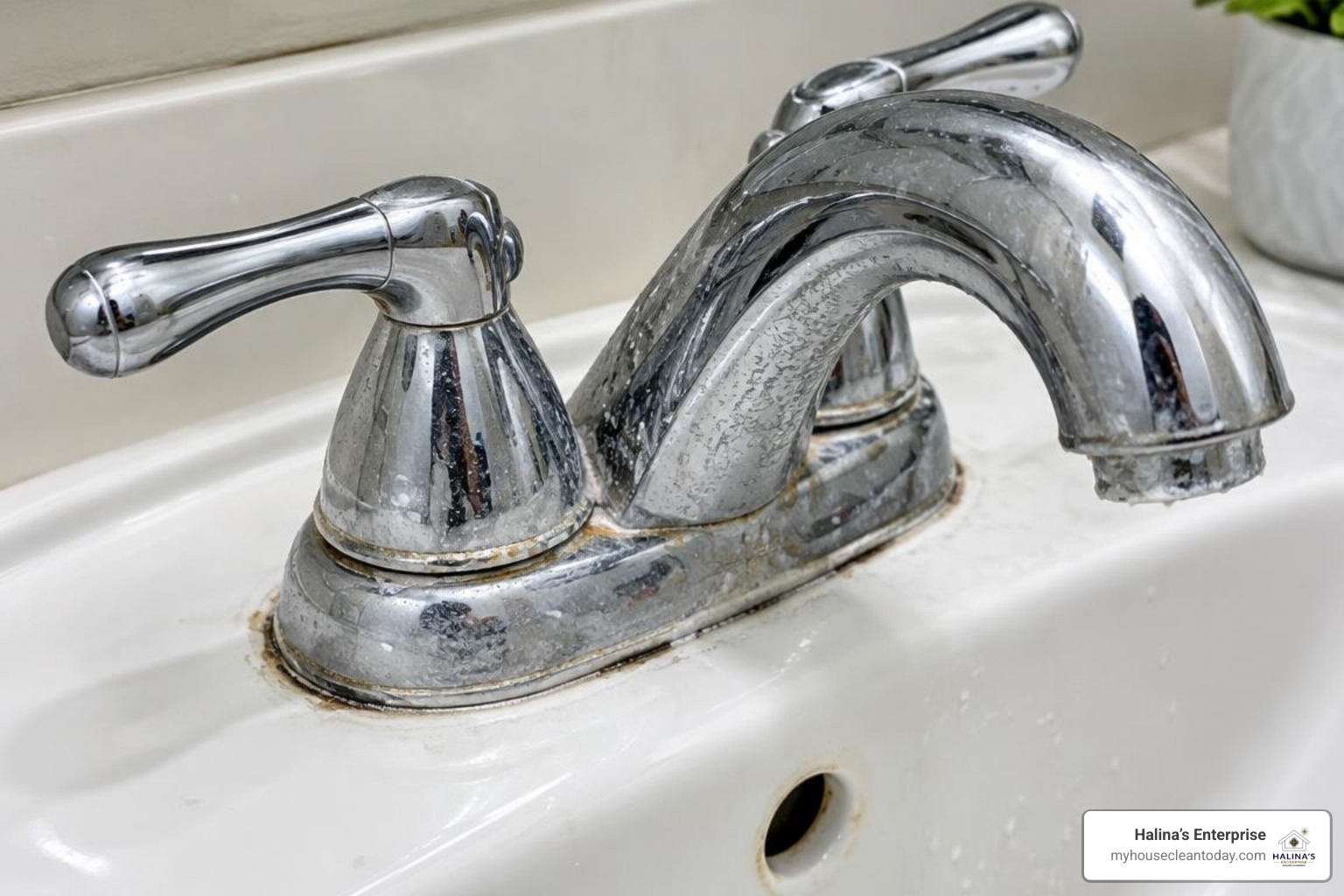
If you notice chalky white rings around your drain collar or cloudy crust on your chrome faucet, you are dealing with mineral scale (calcium carbonate and magnesium deposits). Alkaline or neutral soaps will not dissolve mineral scale; you need a mild acid to react with and dissolve the calcium bonds.
Specialized treatments like Lime-A-Way Hard Water Stain Remover Spray break down tough mineral deposits in seconds. For comprehensive strategies to manage stubborn scale buildup throughout your home, check out our practical guide to conquering bathroom hard water stains.
Surface Compatibility: Protecting Your Basin and Fixtures
Using the wrong cleaner can permanently etch, discolor, or dull your bathroom vanity. Always pair your cleaning solution with your specific sink material.
Selecting a Bathroom Sink Cleaner for Different Basin Materials
- Porcelain and Vitreous China: Extremely durable and non-porous. Glazed porcelain withstands most foaming cleaners, mild acids, and gentle cream cleansers such as Soft Scrub Cleanser for Ceramic & Porcelain. Avoid harsh scouring pads that can scratch the glossy outer glaze over time.
- Stainless Steel: Common in modern powder rooms and utility basins. Use specialized, non-scratch formulas like Kohler Stainless Steel Cleaner, which cleans while leaving a protective barrier that repels fingerprints and water spots.
- Natural Stone (Marble, Granite, Travertine): Highly sensitive to acids. Never use vinegar, citric acid, or harsh chemical descalers on stone basins, as they cause immediate chemical etching. Use pH-neutral stone soaps only.
- Solid Surface and Acrylic: Non-porous but softer than porcelain. Avoid abrasive powders and instead choose foaming sprays or smooth liquid detergents.
Multi-Surface Versatility Across the Bathroom and Home
Many high-quality sink cleaners double as versatile household problem solvers. Gentle mineral scrubs made with sodium bicarbonate and natural essential oils can tackle multiple chores:
- Bathtubs and Shower Pans: Lifts stubborn ring-around-the-tub grime without dulling fiberglass finishes.
- Toilet Bowls: A quick sprinkle into the bowl brightens water lines and neutralizes odors naturally.
- Carpet Spotting & Deodorizing: Sprinkle lightly over spot stains or musty areas, let sit for 15 minutes, and vacuum up.
- Trash Cans and Hampers: Dust a tablespoon of powder in the base of bathroom wastebaskets to absorb persistent odors.
Proper Application Methods for a Scratch-Free Shine
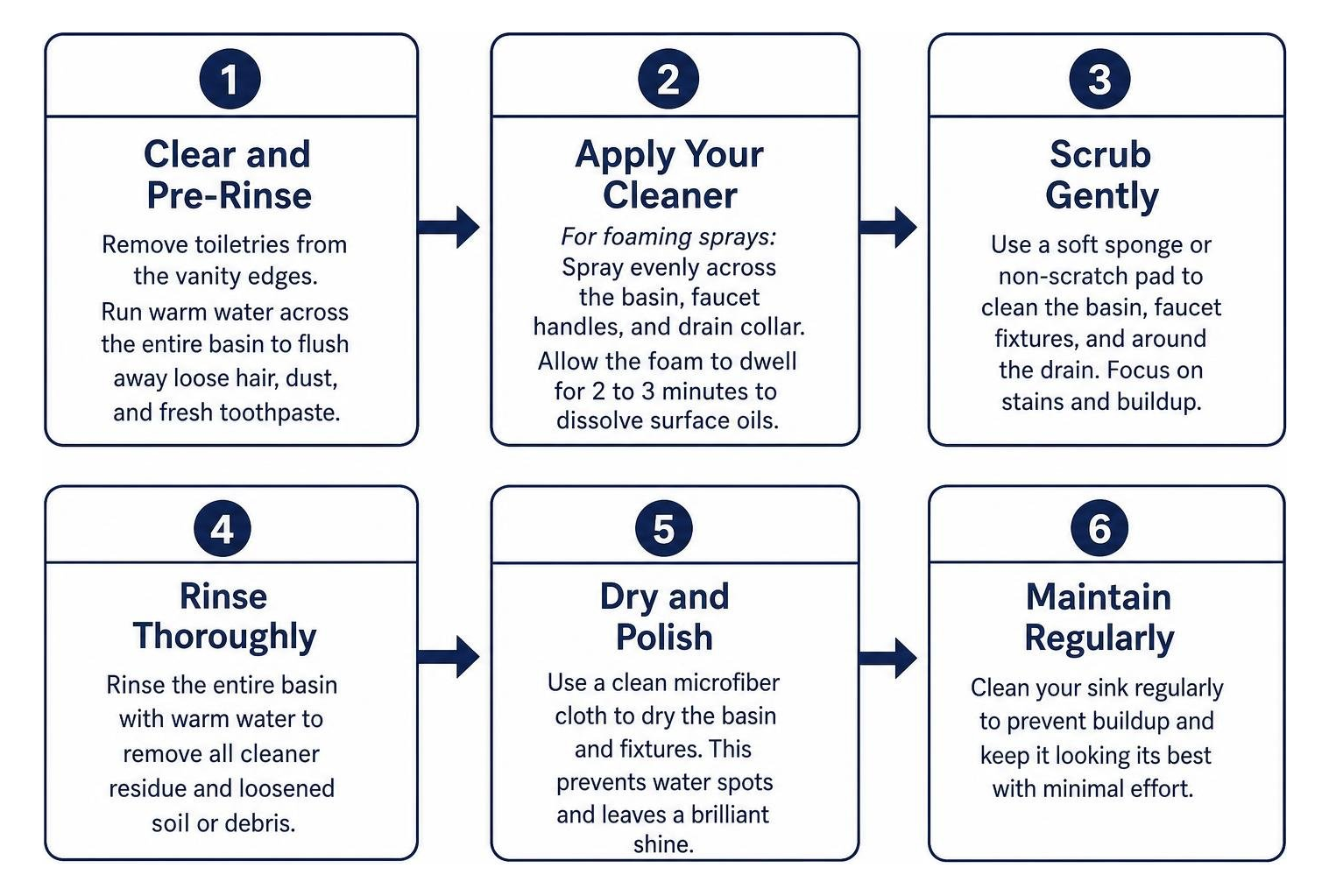
Following a consistent technique ensures your sink stays brilliant and scratch-free:
- Clear and Pre-Rinse: Remove toiletries from the vanity edges. Run warm water across the entire basin to flush away loose hair, dust, and fresh toothpaste.
- Apply Your Cleaner:
- For foaming sprays: Spray evenly across the basin, faucet handles, and drain collar. Allow the foam to dwell for 2 to 3 minutes to dissolve surface oils.
- For powder scrubs: Lightly moisten the basin, then sprinkle the powder evenly across stained areas.
- Scrub with Care: Use a damp non-scratch cellulose sponge or a soft-bristled detail brush. Work in small, overlapping circular motions, paying close attention to the overflow opening and around the base of the faucet.
- Rinse Thoroughly: Flush the basin with cool water to carry away all suspended debris and cleaning residues.
- Dry and Buff: Dry the sink and metal fixtures with a clean, dry microfiber cloth. This final step prevents unsightly water spots and leaves chrome gleaming.
For whole-home refreshes that extend well beyond the sink basin, our comprehensive deep house cleaning solutions take care of every corner of your living space.
Frequently Asked Questions About Bathroom Sink Cleaners
Can one powder scrub effectively clean both kitchen and bathroom sinks?
Yes. A high-quality, non-abrasive mineral powder scrub formulated with fine-grade sodium bicarbonate works wonderfully on both vitreous china bathroom sinks and stainless steel or composite kitchen sinks. It easily lifts toothpaste and soap scum in the bathroom while cutting through cooking oils, burnt residue on pots, and coffee stains in the kitchen. Just verify that your specific sink material is rated safe for mild mineral scrubs.
How often should a bathroom sink be thoroughly cleaned?
We recommend wiping down the faucet and basin daily with a damp microfiber cloth to prevent soap and toothpaste from hardening. A thorough cleaning with a dedicated basin cleaner should be done weekly to eliminate bacteria, prevent drain odors, and stop mineral deposits from forming around the fixture base. If you need assistance maintaining your home on a regular schedule, our team provides convenient routine residential cleaning.
Why are DIY baking soda and vinegar mixtures often ineffective on soap scum?
While mixing baking soda (a base) and vinegar (an acid) creates an entertaining fizz, the chemical reaction quickly neutralizes both active agents into water and a trace amount of sodium acetate. This neutral mixture lacks the specialized surfactants required to emulsify body oils, cosmetic fats, and synthetic polymers found in modern soaps. A dedicated bathroom cleaner or a surfactant-boosted mineral scrub is significantly more effective.
Conclusion
Choosing the right cleaner comes down to understanding your sink’s material, targeting the specific type of grime you face, and selecting ingredients that protect your family’s health and indoor air quality. By keeping a gentle, plant-based powder scrub or a reliable foaming spray on hand and following proper cleaning habits, you can keep your bathroom sparkling and fresh every day.
When life gets busy, let our experienced team help. Halina’s Enterprise brings more than 30 years of cleaning excellence to homeowners throughout Roselle, Schaumburg, Bloomingdale, and the surrounding Chicagoland communities. As an award-winning, fully insured, and bonded cleaning service, we prioritize safe, non-toxic products to deliver deep, health-focused results. Contact us today to explore our expert residential cleaning services and schedule your personalized home cleaning plan.