
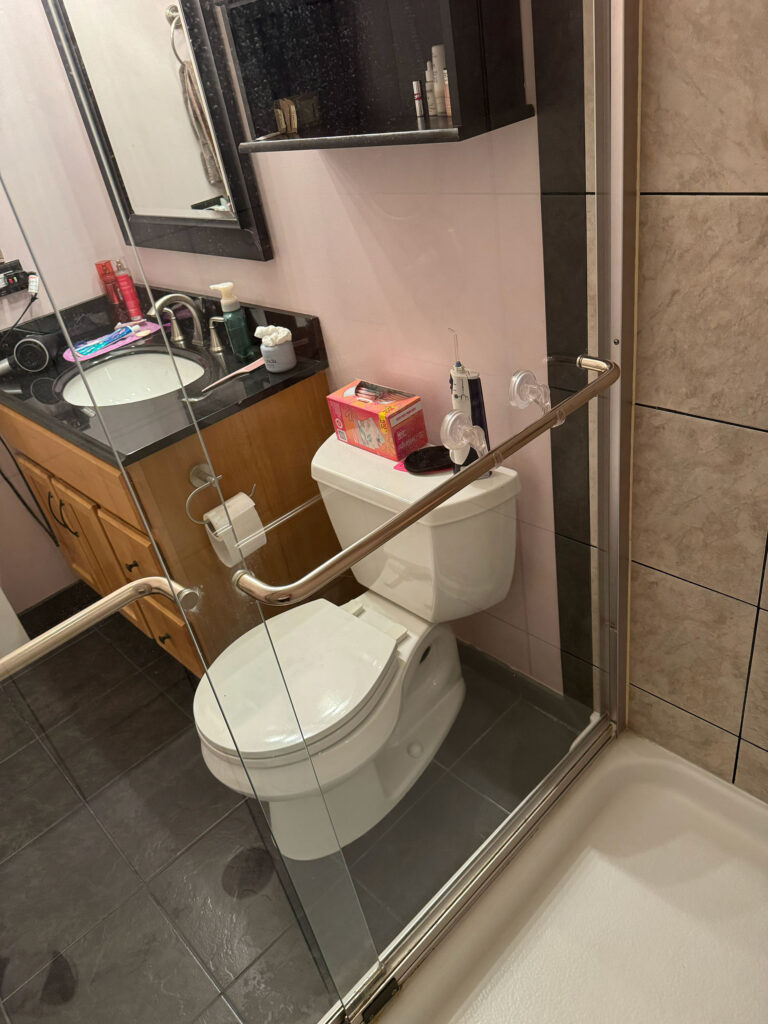
How to Remove Hard Water Stains in Your Bathroom
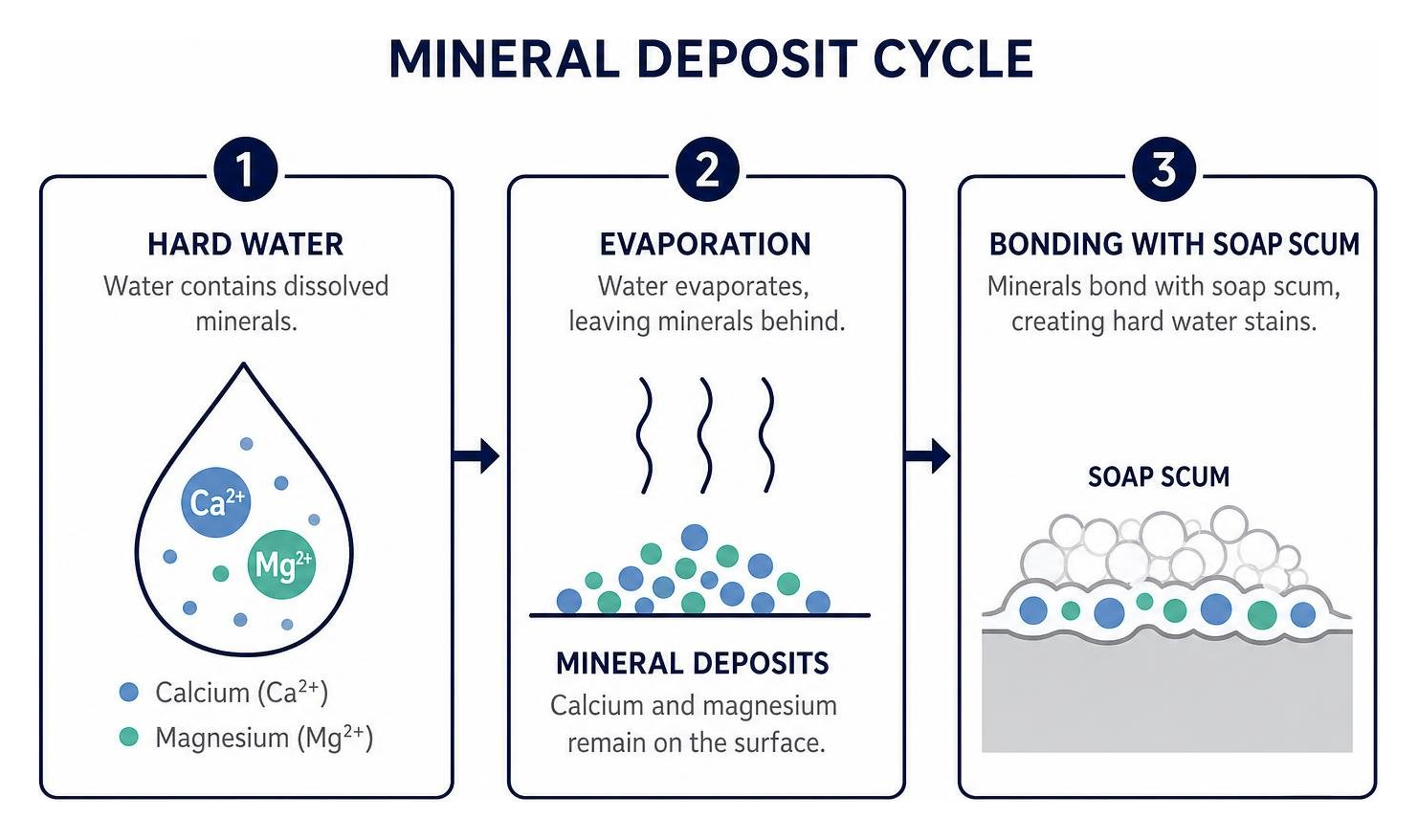
For glass shower doors and glazed tile, spray on equal parts white vinegar and water. Wait 15 minutes, wipe with a soft cloth, then rinse and dry. For faucets, showerheads, and toilets, use a descaler labeled safe for that surface and follow its directions. Avoid vinegar on natural stone and delicate fixture finishes, and never mix any descaler with bleach.
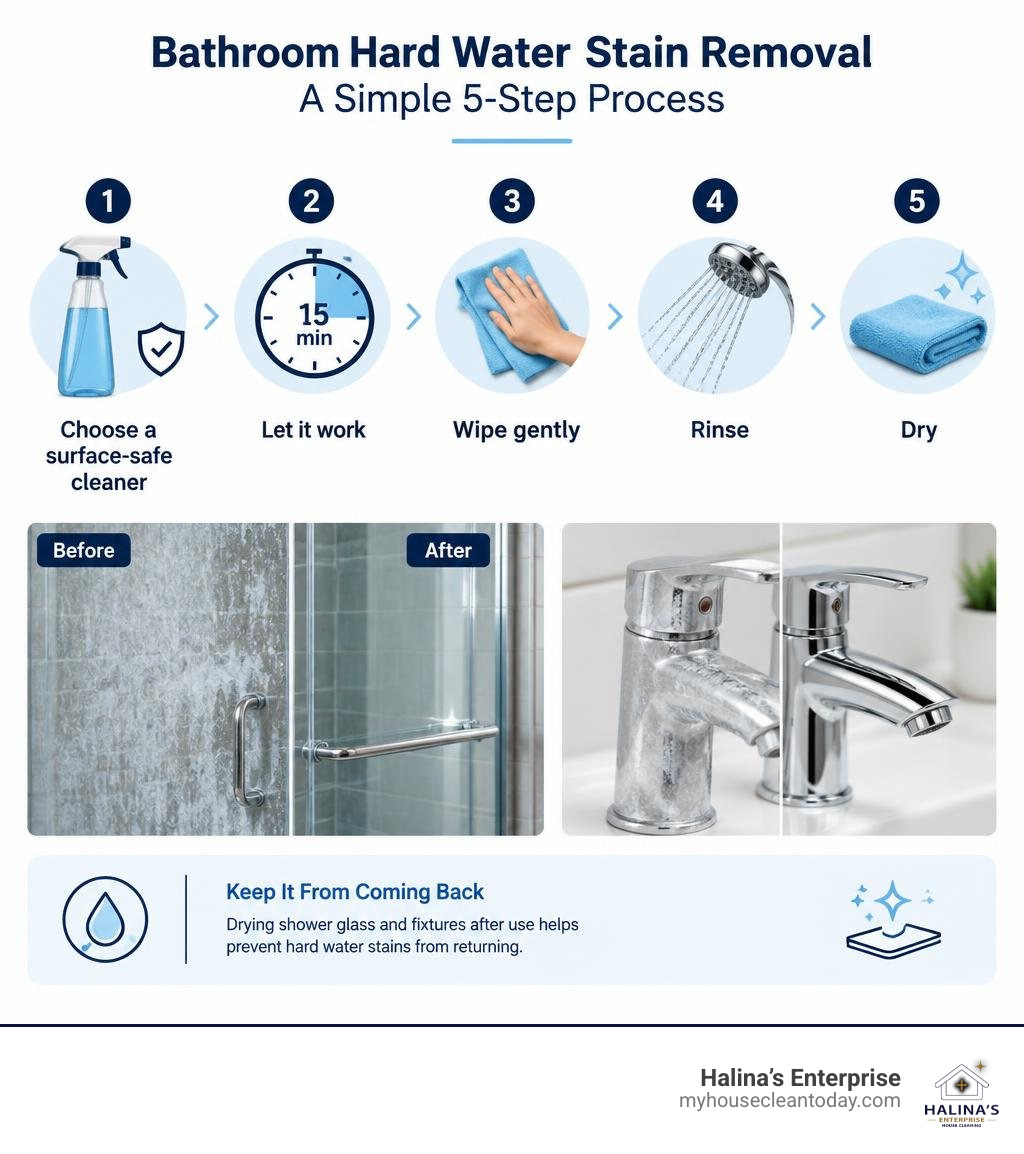
The chalky marks appear when water dries and leaves calcium and magnesium behind. Drying shower glass and fixtures after use helps keep the stains from coming back. When approaching hard water stain removal, bathroom care works best when you match the cleaner to the surface and stay consistent with your routine.
Understanding What Causes Bathroom Limescale and Mineral Deposits
Hard water stains look like cloudy spots on glass, white crusts around faucet aerators, or stubborn orange-brown rings in toilet bowls. These blemishes are not dirt; they are concentrated mineral deposits left behind when moisture evaporates.
As groundwater filters through underground limestone, chalk, and dolomite rock formations, it absorbs dissolved mineral ions—primarily calcium and magnesium, along with trace amounts of iron. When you turn on your shower or sink, this mineral-rich water coats your fixtures. Once the water dries, the solid minerals stay behind as calcium carbonate, commonly known as limescale.
Water hardness is measured by the concentration of dissolved calcium carbonate in milligrams per liter (mg/L):
| Hardness Classification | Mineral Concentration (mg/L) | Common Bathroom Impact |
|---|---|---|
| Soft Water | 0 to 60 mg/L | Minimal spots; soap lathers freely and rinses cleanly. |
| Moderately Hard | 61 to 120 mg/L | Light spotting on shower glass and slight scale at the base of faucets. |
| Hard Water | 121 to 180 mg/L | Noticeable crust on showerheads; persistent dull film on tile and glass. |
| Very Hard Water | Over 180 mg/L | Thick limescale rings, clogged aerators, severe toilet staining, and etching risks. |
To identify your home’s baseline mineral levels, consulting a water hardness classification guide is an excellent place to start.
Throughout northern Illinois communities like Roselle, Schaumburg, Naperville, and Arlington Heights, groundwater sources naturally contain elevated mineral concentrations. When these minerals mix with the fatty acids in standard bar soaps, they form insoluble soap scum. This curd-like film bonds tightly to surfaces, trapping more minerals with every shower. Over time, untreated mineral deposits can cause permanent micro-etching in glass panels and corrode delicate metallic coatings.
Proven Techniques for Bathroom Hard Water Stain Removal
Tackling mineral buildup requires a method that breaks chemical bonds without damaging the underlying surface. Standard household degreasers and alkaline formulas fail here because calcium carbonate requires a low-pH, acidic cleaner to dissolve.
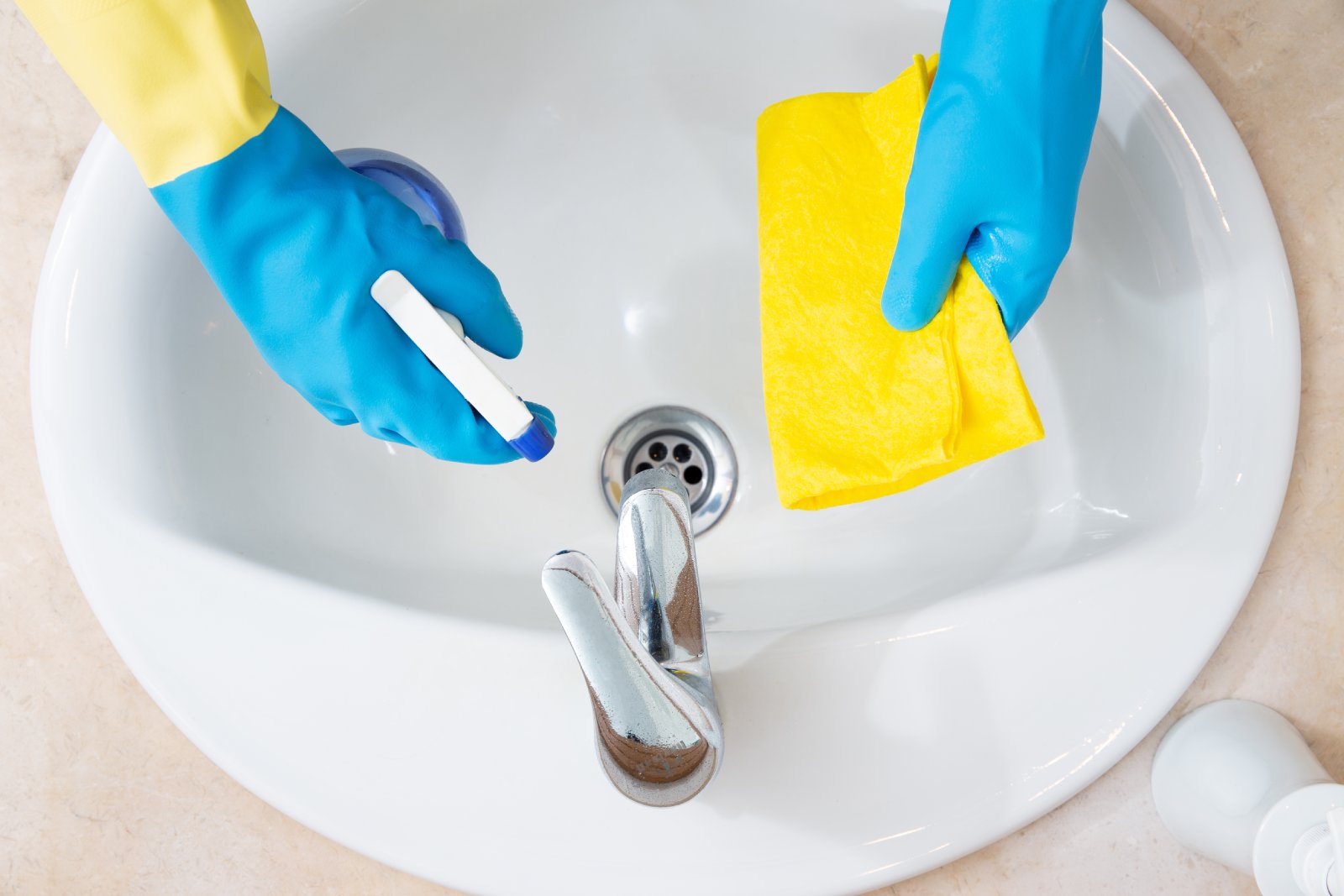
When tackling hard water stain removal in the bathroom, always protect your hands with rubber gloves, ensure proper bathroom ventilation, and use non-scratch tools. Combining these descaling methods with simple household staples for mildew and buildup keeps your entire shower space hygienic and bright.
Glass Shower Doors: Natural Descaling Solutions
Glass shower enclosures show mineral spots quickly because transparent surfaces highlight cloudy deposits.
- Mix the Descaling Spray: Combine equal parts distilled white vinegar and warm water in a spray bottle. Add one teaspoon of liquid dish soap to help the solution cling to vertical glass.
- Apply and Dwell: Spray the glass liberally from top to bottom. Allow the acid to break down the calcium bonds for 15 minutes.
- Agitate Gently: Wipe the glass with a damp microfiber cloth or a non-scratch melamine sponge. Avoid abrasive scrub pads, steel wool, or dry scrubbers that can scratch tempered glass.
- Rinse and Dry: Rinse the glass thoroughly with clean, warm water. Finish by pulling a rubber squeegee straight down the panel and buffing the edges with a dry waffle-weave microfiber towel.
Faucets and Showerheads: De-scaling Mineral Buildup
When mineral crust accumulates inside faucet aerators and showerhead spray nozzles, water pressure drops and spray patterns become uneven. You can clear these blockages without taking your plumbing fixtures apart.
- The Plastic Bag Soak: Fill a sturdy plastic sandwich bag halfway with distilled white vinegar. Slip the bag over your showerhead or the tip of your sink faucet until the mineral-encrusted nozzles are fully submerged. Secure the bag tightly around the neck with a heavy-duty rubber band or zip tie.
- Let the Acid Work: Allow the fixture to soak for 30 to 60 minutes. For heavily crusted fixtures, leave the bag in place for up to two hours.
- Scrub and Flush: Remove the bag, discard the solution, and use an old soft-bristle toothbrush dipped in warm vinegar to brush away loosened calcium flakes. Turn on the hot water at full pressure for one minute to flush dislodged mineral fragments from the internal jets.
For step-by-step guidance on keeping your shower components running smoothly, explore our favorite natural shower cleaning techniques.
Toilets and Sinks: Heavy-Duty Hard Water Stain Removal Methods
The standing water line in a toilet bowl is especially prone to thick mineral bands, often discolored orange or brown by airborne dust and trace iron.
- Lower the Water Level: Turn off the shutoff valve behind the toilet and flush once, or push the standing water down the trap with your toilet brush.
- Apply Natural Acids: Pour one cup of distilled white vinegar into the bowl, followed by one cup of baking soda. The mixture will foam actively, helping lift loose surface deposits. Let this sit for 30 minutes.
- Use a Wet Pumice Stone: For heavy limescale rings on standard vitreous china porcelain, submerge a natural pumice stone in water until saturated. Keep both the stone and porcelain wet at all times. Gently rub the mineral ring using light, even strokes. The soft volcanic stone abrades the brittle calcium without scratching hard porcelain. (Note: Never use pumice on fiberglass, plastic, colored porcelain, or coated fixtures.)
- Heavy-Duty Commercial Options: For stubborn stains, use a specialized acidic bowl cleaner containing sulfamic or hydrochloric acid. Apply the gel beneath the rim, allow 15 minutes of dwell time, scrub with a stiff nylon toilet brush, and flush. Reviewing specialized bathroom descaling methods can provide additional techniques for older plumbing fixtures.
Comparing DIY Natural Remedies and Chemical Hard Water Cleaners
Deciding between homemade natural remedies and commercial chemical formulas depends on mineral thickness, fixture materials, and safety preferences.
| Cleaner Category | Common Active Ingredients | Best Suited Surfaces | Key Safety Precautions |
|---|---|---|---|
| Natural DIY Solutions | Acetic acid (distilled vinegar), Citric acid (lemon juice) | Glazed ceramic tile, tempered glass, chrome fixtures, fiberglass tubs | Keep away from natural stone (marble, limestone, granite); test finishes first. |
| Mild Commercial Sprays | Lactic acid, Gluconic acid, Citric acid blends | Acrylic enclosures, porcelain sinks, stainless steel fixtures, modern faucets | Ensure adequate ventilation; avoid leaving on plated metals beyond label instructions. |
| Heavy-Duty Descalers | Sulfamic acid, Hydrochloric acid, Phosphoric acid | Vitreous china toilets, heavy exterior masonry, commercial tile | Wear chemical-resistant gloves and eye protection; never combine with bleach or ammonia. |
Natural acids like white vinegar (which contains about 5% acetic acid) are safe, inexpensive, and effective for light to moderate maintenance. However, older, thick mineral crusts may require commercial products containing lactic, sulfamic, or buffered hydrochloric acids for rapid breakdown.
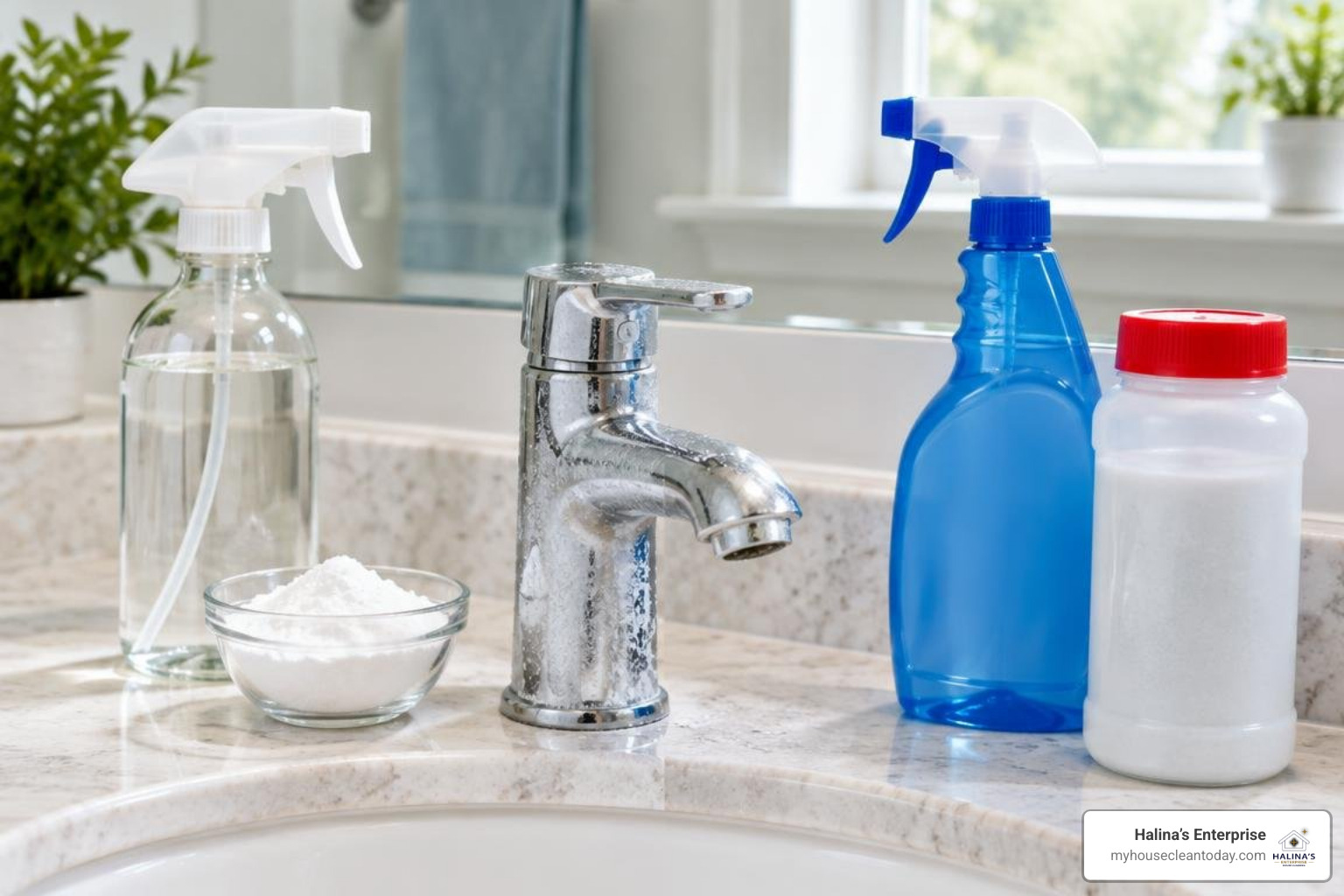
When selecting products, choosing eco-friendly cleaning products safe for families ensures effective mineral removal without harsh indoor fumes.
Crucial Safety Rule: Never mix acidic hard water cleaners with household bleach or chlorine-based mold removers. Combining acid and bleach instantly generates toxic chloramine and chlorine gases, which cause severe respiratory damage.
Long-Term Prevention Strategies to Stop Hard Water Buildup
Removing hard water deposits is only half the battle. Preventing minerals from bonding to your bathroom surfaces saves hours of scrubbing.
- Daily Squeegee Routine: Keep a durable silicone or rubber squeegee inside the shower stall. Spending 30 seconds wiping down glass doors and acrylic wall panels after every shower removes moisture before it can evaporate and deposit minerals.
- Apply Hydrophobic Surface Sealants: Treat clean glass shower doors and ceramic tile with a water-repellent glass sealant. These polymer coatings fill microscopic pores in the glass, causing water droplets to bead up and slide down the drain.
- Dry High-Touch Fixtures: Keep a plush waffle-weave microfiber cloth near the sink vanity to quickly wipe faucet necks, handles, and escutcheon plates after use.
- Whole-Home Water Conditioning: For a permanent reduction in household limescale, consider installing ion-exchange water softeners. These systems replace calcium and magnesium ions with sodium or potassium ions, stopping scale formation at the water main.
Frequently Asked Questions About Bathroom Hard Water Removal
Can hard water stains cause permanent damage to bathroom fixtures?
Yes. When hard water sits on glass or polished fixtures for months or years, minerals chemically bond with silicate structures in the glass. This process, known as stage-two corrosion or etching, creates permanent microscopic pits that make glass look perpetually cloudy even after limescale is stripped away.
Why is standard bleach ineffective against hard water stains?
Household bleach (sodium hypochlorite) is a strong alkaline disinfectant that sanitizes surfaces and removes organic stains. However, calcium carbonate and magnesium scale require an acid (low pH) to chemically dissolve their solid mineral bonds. Bleach cannot dissolve mineral deposits.
Which bathroom surfaces can be damaged by acidic hard water cleaners?
Natural stones—such as marble, travertine, limestone, and unsealed granite—contain high amounts of calcium carbonate. Applying acidic cleaners like vinegar, lemon juice, or commercial descalers will instantly etch and dull these stone surfaces. Additionally, avoid prolonged acid contact on oil-rubbed bronze, matte black, or unlacquered brass faucet finishes.
Conclusion
Conquering stubborn limescale requires understanding water chemistry, choosing surface-safe cleaners, and maintaining practical prevention habits. A simple routine of post-shower squeegeeing and regular acid-based descaling will keep your glass, porcelain, and metal fixtures sparkling clean.
If tough mineral stains, soap scum, or busy schedules make bathroom care overwhelming, let Halina’s Enterprise handle the heavy lifting. With more than 30 years of cleaning experience, we provide award-winning, health-focused residential cleaning services throughout Roselle, Schaumburg, Bloomingdale, Naperville, and the greater Chicagoland area. Our bonded and insured professionals use safe, non-toxic products to protect your home’s surfaces and restore your bathroom’s shine.
Discover how easy home care can be with our expert residential cleaning services. Contact us today to schedule your customized deep cleaning.