
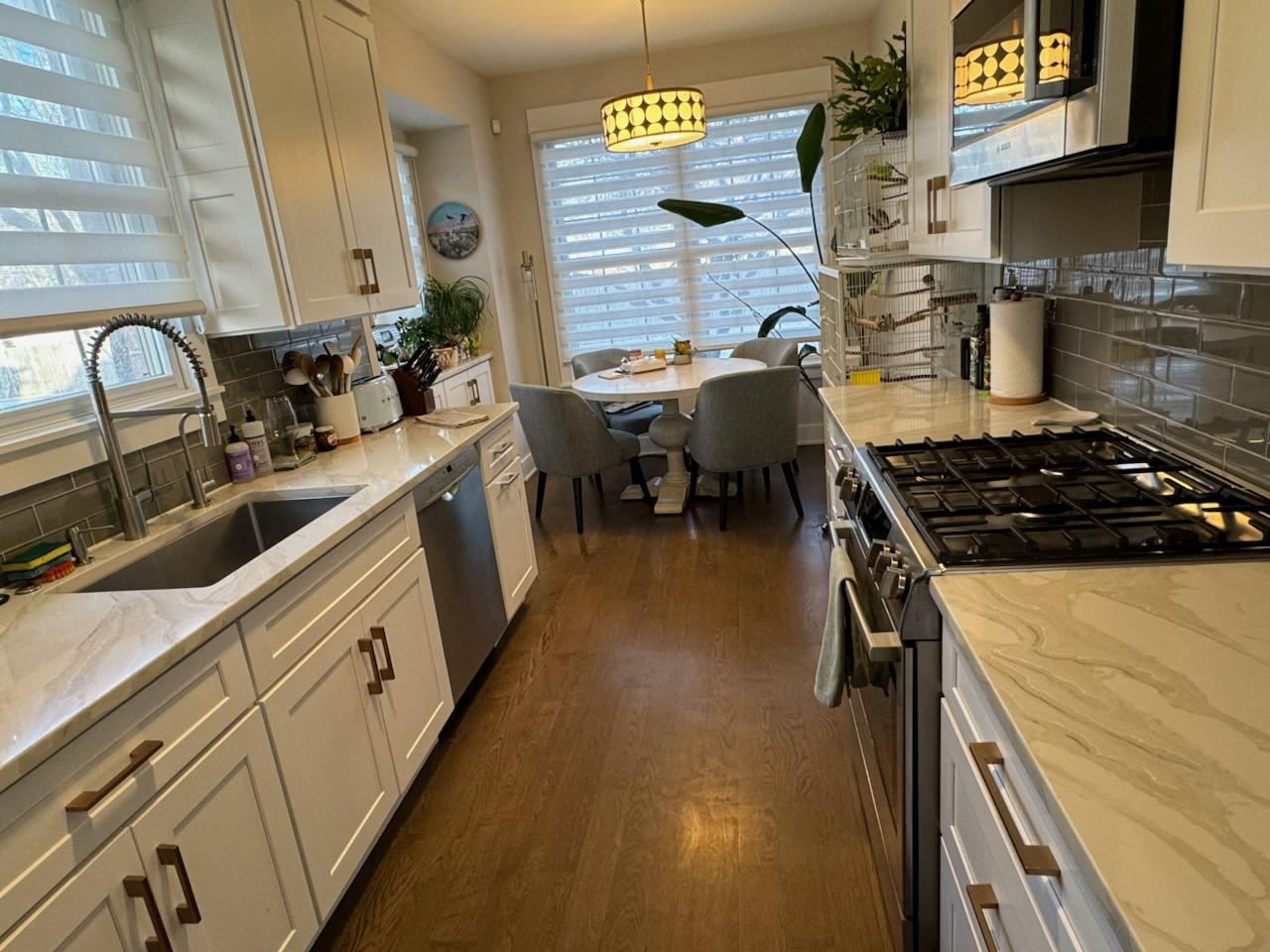
The Best Kitchen Cabinet Cleaner Depends on the Finish
For most sealed wood and painted cabinets, start with a few drops of mild dish soap in warm water. It cuts everyday grease without the strength of a heavy-duty degreaser. For a store-bought option, Final Touch Kitchen Cabinet Cleaner is made for wood and painted finishes. Amway Home Kitchen Cleaner is another option for tougher grease, but follow its dilution directions and test it on a hidden spot first.
Laminate can handle a gentle kitchen cleaner, but avoid soaking any cabinet, especially around seams. Whatever you choose, wipe with a damp microfiber cloth, remove any cleaner left behind, and dry right away. That last step helps prevent streaks and sticky residue.

Best kitchen cabinet cleaner glossary:
Introduction
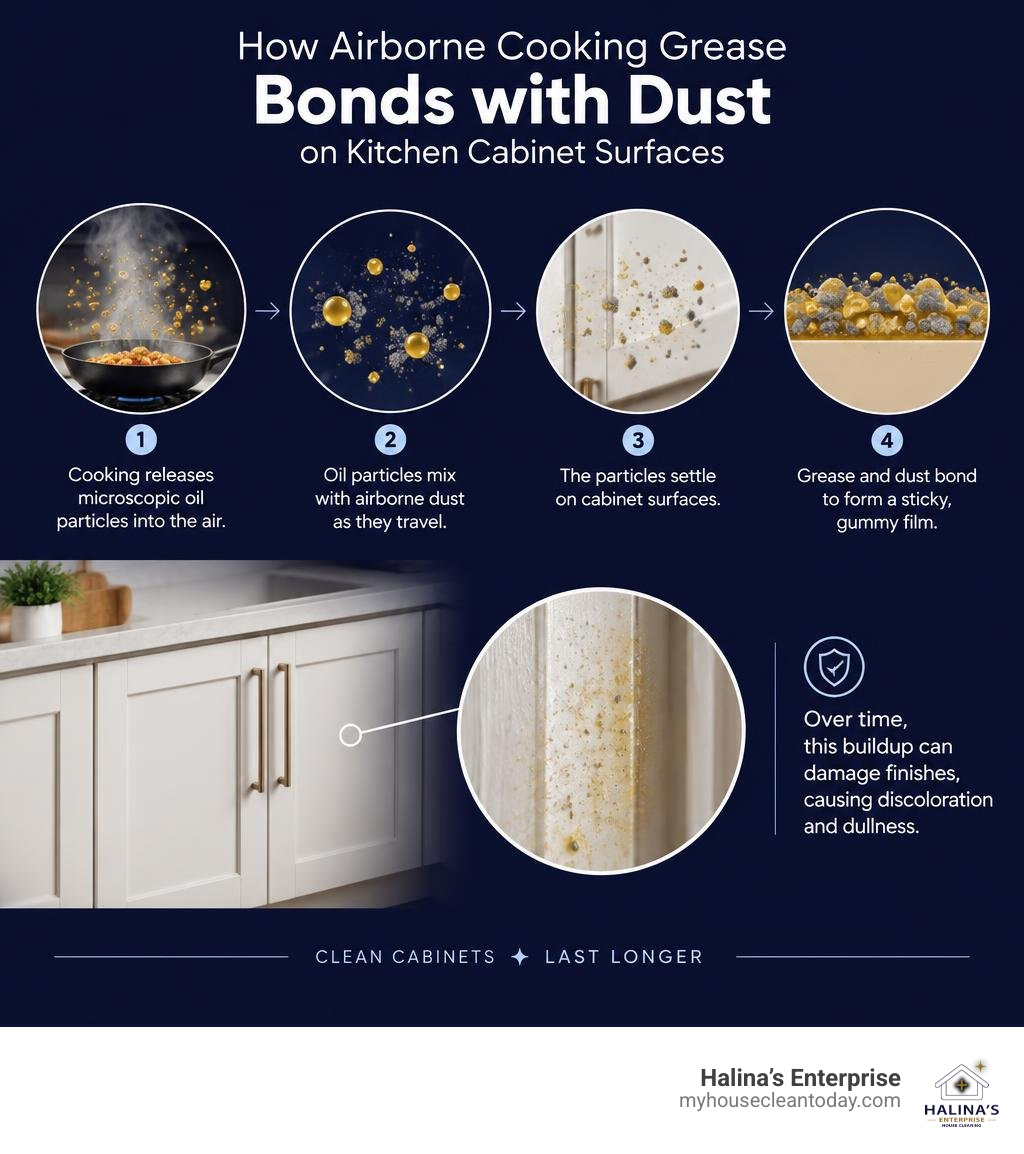
Every time you sear a steak, fry bacon, or simmer a savory tomato sauce, microscopic airborne cooking oil particles lift into the air. Over time, these aerosolized lipids settle across vertical surfaces, bonding tightly with airborne household dust. The result is that stubborn, gummy yellow film coating your beautiful kitchen cabinetry.
Leaving this grime in place doesn’t just look untidy; over months and years, oil acidity can slowly degrade protective topcoats, causing discoloration and finish breakdown. Finding the right balance between powerful grease-cutting action and gentle surface protection is essential for keeping your cabinetry looking pristine for decades.
Choosing the Best Kitchen Cabinet Cleaner for Your Cabinet Material
No single formula works universally across every kitchen finish. Natural hardwood, painted MDF, and melamine laminate react differently to moisture, acidity, and chemical solvents. Choosing the right product begins with understanding what your cabinetry is constructed from and pairing it with effective kitchen cleaning methods that protect the underlying material.
A dedicated cabinet cleaner differs significantly from a generic multi-purpose kitchen spray. Multi-surface sprays are engineered for non-porous fixtures like porcelain sinks, quartz countertops, or stainless steel range hoods. They frequently contain high solvent concentrations or alkaline degreasing agents that break down surface grime fast—but can gradually strip clear coats, dull paint sheens, or cause laminate edge banding to delaminate. Dedicated cabinet formulations prioritize low-solvent, pH-balanced cleaning agents designed to lift grease while leaving clear sealants and paint binders completely intact.
Safe Ingredients to Look For and Harsh Chemicals to Avoid
When evaluating cleaning formulas, reviewing the ingredient list protects both your kitchen investment and your household air quality.
Ingredients to Look For:
- Plant-Derived Surfactants: Gentle cleaning agents derived from coconut, corn, or palm oils that lower water surface tension to emulsify grease naturally.
- Neutral pH Formulations: Cleaners balanced near a 7.0 pH value clean surfaces without chemically reacting with delicate polyurethanes or conversion varnishes.
- Nanotechnology & Protective Polymers: Modern solutions that leave behind an invisible, non-greasy barrier to slow future oil adhesion.
- PFAS-Free and Alcohol-Free Bases: Formulas that won’t flash-evaporate too quickly or strip natural oils from sealed wood.
Ingredients to Avoid:
- Undiluted Ammonia: High-alkalinity compounds that can soften and discolor wood varnishes, causing cloudy white blemishes.
- Chlorine Bleach: Highly reactive oxidizers that permanently strip wood stains and break down acrylic or latex paint binders.
- Harsh Chemical Solvents: Petroleum distillates that eat away at lacquer finishes and modern cabinet glues.
- Abrasive Powders: Micro-scratch clear coats, creating dull spots that trap grease deeper into the grain.
For homes with sensitive family members, opting for gentle formulas supports safe hypoallergenic cleaning without compromising grease-dissolving performance.
Surface Compatibility: Sealed Wood, Laminate, and Painted Finishes
Matching your cleaner to your specific door construction prevents costly finish damage and structural swelling:
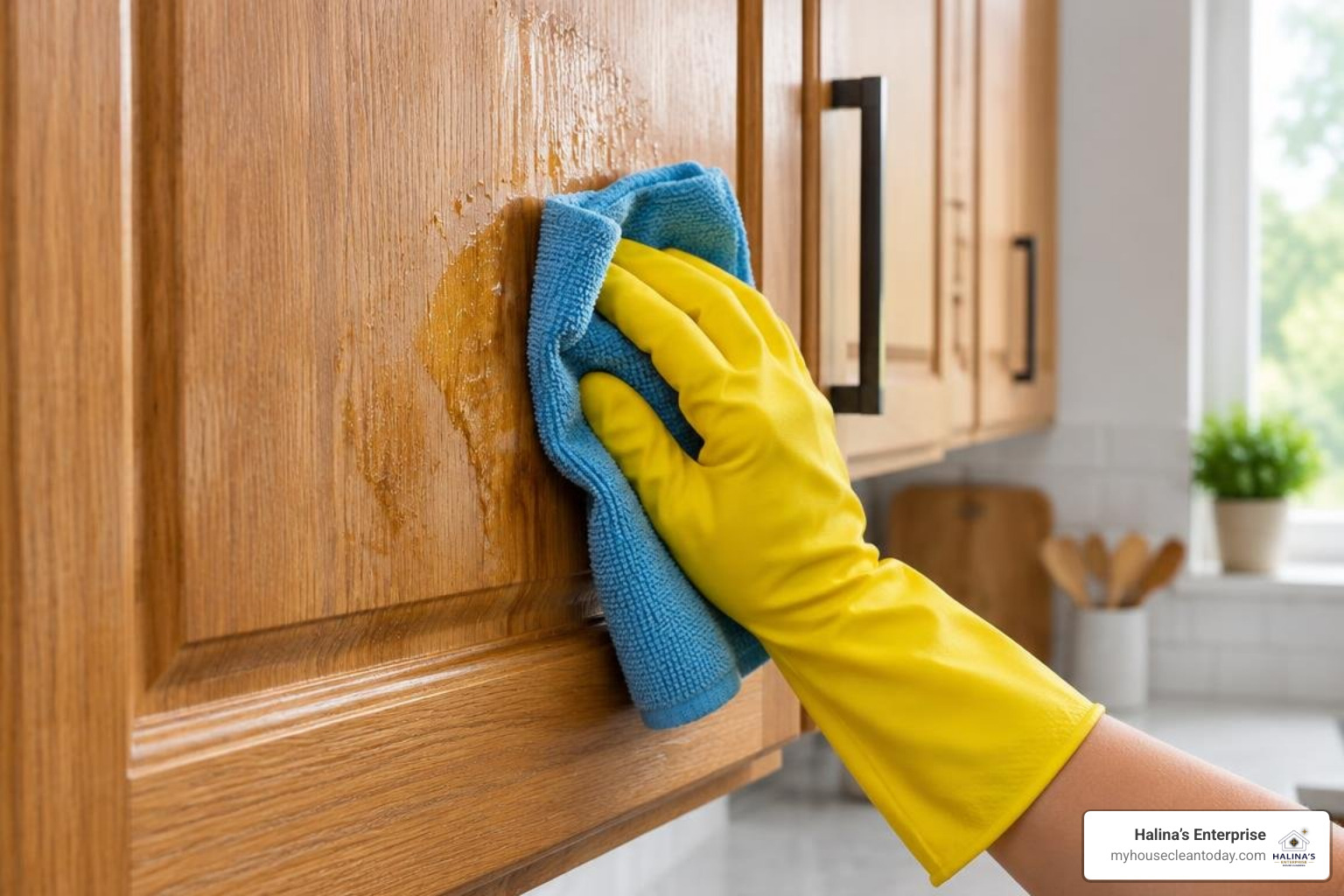
- Sealed Wood (Polyurethane, Conversion Varnish, or Lacquer): Natural wood expands and contracts with moisture. Modern sealed wood cabinets withstand damp wiping, but excessive water can penetrate joints and hairline cracks. Choose pH-neutral soaps or plant-based cleaners, wipe strictly along the natural grain line, and dry immediately.
- Painted Cabinets (Latex, Enamel, or Acrylic): Painted doors hide grain, but their top layer can be vulnerable to aggressive scrubbing and strong acids. Avoid high-concentration vinegars or alkaline degreasers that cause paint chalking or sheen loss. Soft microfiber cloths paired with gentle soapy warm water are ideal.
- Laminate and Thermofoil (Melamine and Vinyl Wraps): Highly durable and resistant to chemical staining, laminate handles standard degreasers well. However, thermofoil and laminate are vulnerable to moisture intrusion along edge seams. If water seeps beneath the surface layer, the underlying core board can swell irreversibly. Always use a damp, well-wrung cloth rather than soaking the panel.
Top Commercial Cleaners vs. DIY Degreasing Solutions
Homeowners often debate whether to purchase commercial cleaning sprays or mix up a homemade degreaser from pantry staples. Both approaches offer clear advantages depending on your budget, cleaning frequency, and the severity of grease buildup.
| Cleaner Option | Type | Approximate Cost | Finish Safety | Grease Removal Speed | Best For | |
|---|---|---|---|---|---|---|
| DIY Dawn & Warm Water | Homemade | < $0.15 / batch | Excellent (All Finishes) | Fast (Light to Moderate Grease) | Routine maintenance & painted cabinets | |
| DIY Dawn + Vinegar Mix | Homemade | < $0.35 / batch | Good (Sealed Wood/Laminate) | Very Fast (Heavy Buildup) | Restoring gummy, neglected cabinet doors | |
| Kitchen Cabinet Cleaner | Commercial (Plant-Based) | $24.99 / 16 oz | Excellent (Wood & Painted) | Fast (Moderate to Heavy) | Premium cabinetry care & detailed grooves | |
| Amway Home™ Kitchen Cleaner | Commercial (Concentrate) | $16.50 / 1 L | Excellent (EPA Safer Choice) | Very Fast (Heavy Soils) | Whole-kitchen degreasing & stainless steel | |
| Zep Home Pro Complete Kitchen Cleaner | Commercial (Color-Changing) | $6.99 / 24 oz | Good (Finished Surfaces) | 2X Power (Heavy Grease) | Visual indicator cleaning on tough splatter | |
| **[All-Purpose Cleaner EcoClean 1L | 2-in-1 Clean & Protect ](https://www.gogonano.com/product/all-purpose-cleaner-ecoclean-1l/?lang=en)** | Commercial (Nano-formula) | ~$17.00 / 1 L | Excellent (PFAS/Alcohol-free) | Moderate (Everyday Grime) | Homes wanting kid- and pet-safe cleaning options |
Store-Bought Formulas: Finding the Best Kitchen Cabinet Cleaner for Stubborn Grease
When tackling thick, polymerized cooking splatter, commercial formulations save significant time and elbow grease:
- Final Touch Kitchen Cabinet Cleaner: Priced at $24.99, this specialty spray is formulated specifically by cabinet refinishing professionals. It uses a gentle plant-based formula that leaves zero sticky residue on painted or natural wood doors, and it comes paired with a custom detail brush for cleaning carved trim and recessed shaker panels.
- Amway Home™ Kitchen Cleaner: An EPA Safer Choice-certified concentrated formula powered by natural orange oil, washing soda, and coconut derivatives. A single 1-liter bottle ($16.50) can refill a standard 500 mL spray bottle 8 times at a standard 1:3 dilution, delivering exceptional value while effectively lifting grease from cabinets and stainless steel appliances.
- Zep Home Pro Complete Kitchen Cleaner: Renowned for its patent-pending Colorflash technology, this formula sprays on blue and turns white as it breaks down stubborn oils. It delivers 2X the grease-cutting power of standard cleaners, making it popular with homeowners tackling thick grease near stovetops (82% of its 44 customer reviews carry a 5-star rating).
- EcoClean 2-in-1 Clean & Protect: Rated 4.81 out of 5 across 21 customer reviews, this water-based nanotechnology cleaner is PFAS-free, alcohol-free, and fragrance-neutral. It leaves behind a protective surface layer that repels subsequent grease deposits on finished surfaces.
DIY Solutions: The Best Kitchen Cabinet Cleaner Recipe for Fast Degreasing
You don’t need expensive specialty products to cut through grease. The classic dish soap and vinegar formula costs under $1 per batch and safely cleans a standard 10-cabinet kitchen in roughly 15 minutes without damaging durable wood finishes.
The Proven DIY Degreaser Recipe:
- 2 Cups Warm Water (softens hardened cooking grease)
- 1 Tablespoon Dawn Dish Soap (cuts lipid bonds and emulsifies oils)
- ¼ Cup Distilled White Vinegar (mild acid that cuts mineral grime and cuts soap film)
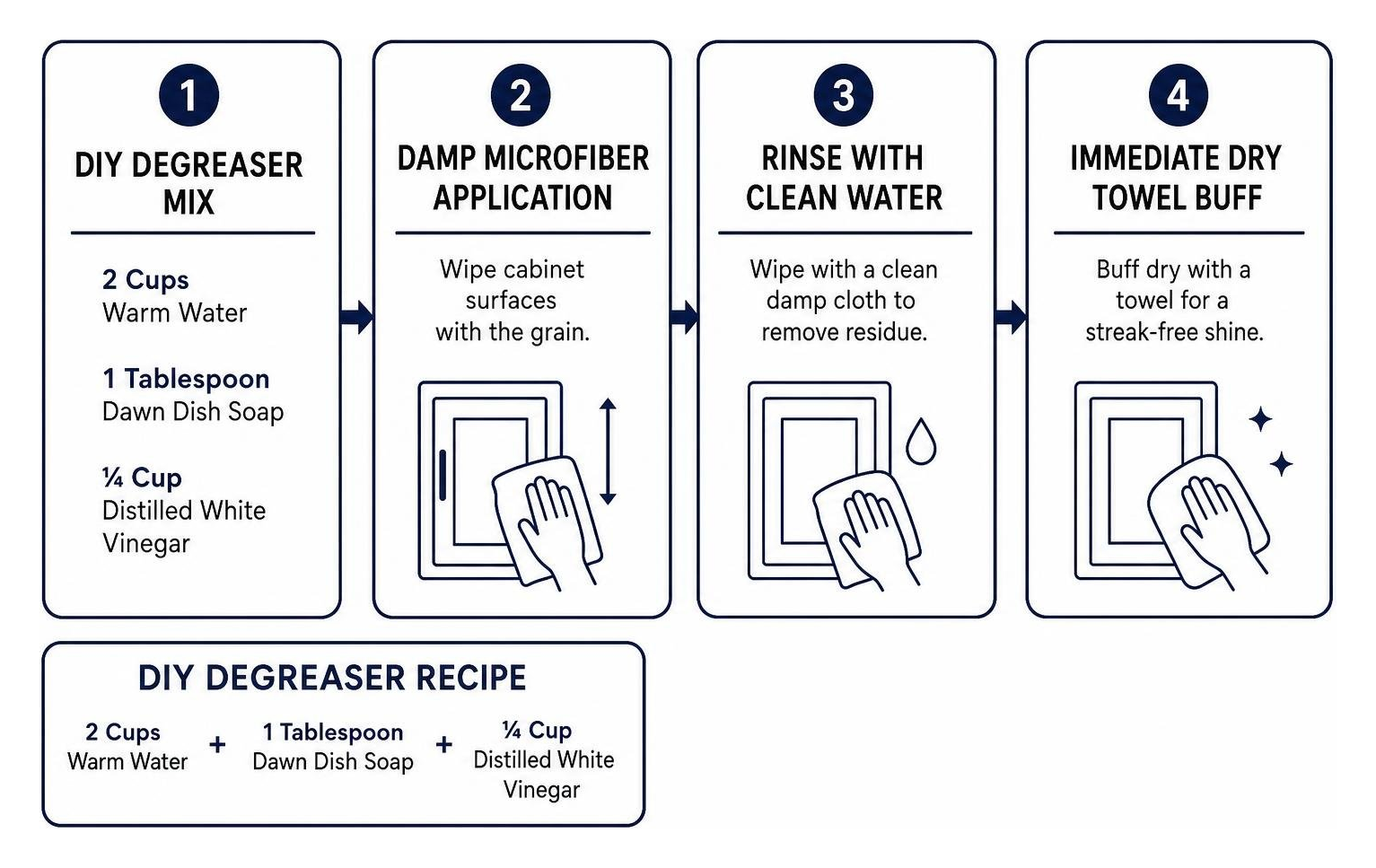
This balanced solution leverages the surfactant power of dish soap with the clarifying properties of dilute acetic acid. Because the vinegar is heavily diluted, it remains safe for polyurethane-sealed wood cabinets while dissolving grease fast. When you are finished with your cabinetry, you can easily use similar gentle cleaning methods as shown in our guide on how to clean your dirty oven.
Step-by-Step: The 15-Minute Cabinet Degreasing Method
Tackling a kitchen full of cabinets does not have to be an all-day chore. Using a structured two-cloth method allows you to degrease all exterior cabinet faces in 15 minutes.
- Prep Your Cleaning Tools: Fill a bucket with your warm DIY solution or ready your commercial spray. Gather three clean microfiber cloths and a soft-bristle detail brush (or clean toothbrush).
- Work Top to Bottom: Always begin on upper cabinets so any accidental drips run onto uncleaned surfaces below. Lightly mist your cloth—never spray directly onto wood doors to avoid pooling in panel seams.
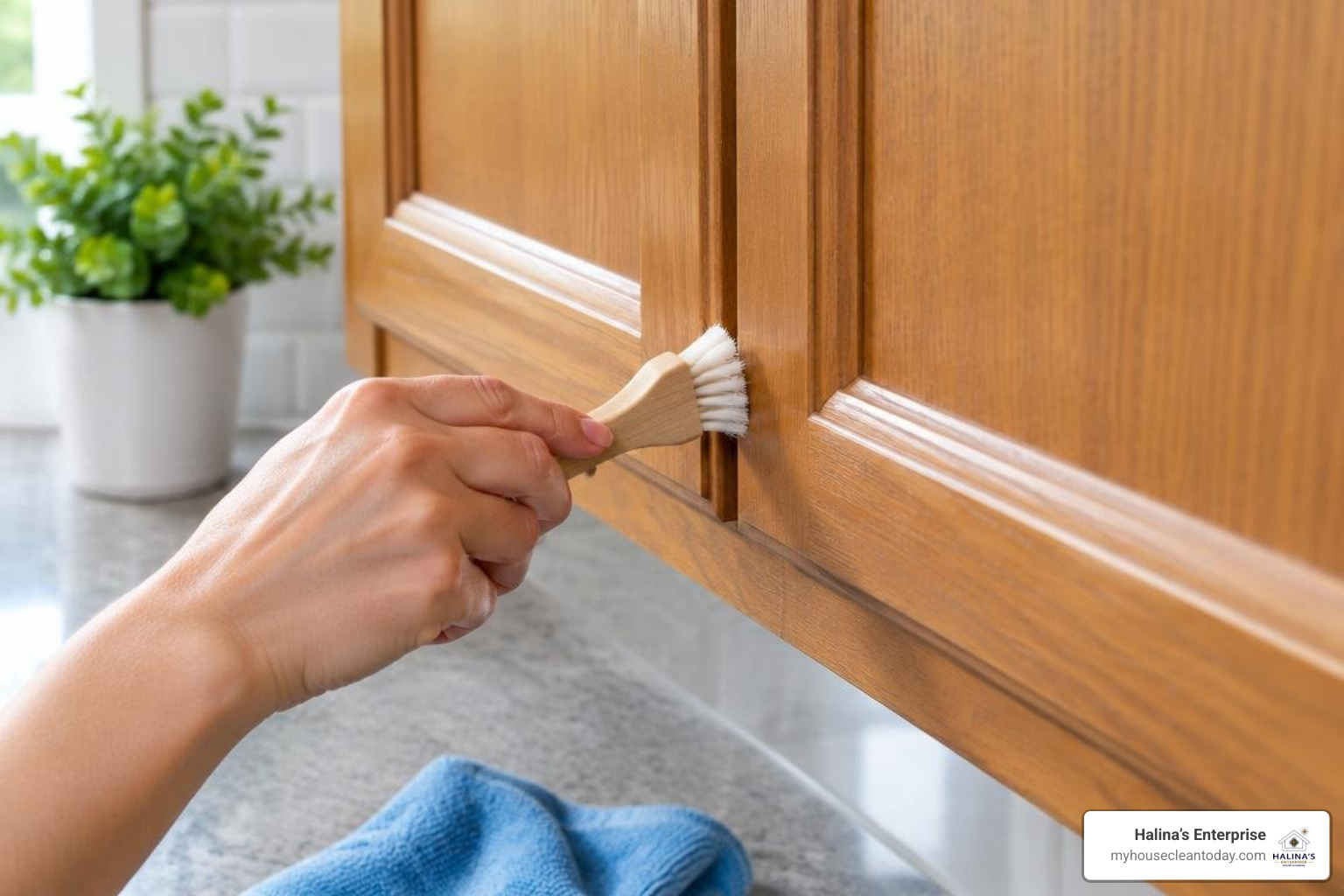
- Wipe Along the Wood Grain: Gently wipe the door panel following the natural direction of the wood grain. For recessed shaker profiles or raised molding, gently agitate trapped grime with your soft detail brush.
- Clean Around Handles and Knobs: Cabinet hardware collects concentrated skin oils, food residue, and grease. Pay special attention to the 3-inch radius surrounding every pull.
- Rinse with a Damp, Water-Only Cloth: Immediately wipe down the cleaned door using a second microfiber cloth dampened with fresh, clean water. This critical step lifts emulsified oils and surfactant residues before they dry into a cloudy haze.
- Dry Immediately for a Streak-Free Finish: Take a third dry, plush microfiber towel and buff the surface dry. Removing moisture prevents swelling at the joints and leaves a clear, streak-free shine.
Pro Tip: Turn on your kitchen range hood every time you cook with oils. Operating your exhaust fan can reduce airborne cooking grease accumulation on nearby cabinets by up to 70%, keeping your doors cleaner between washes. Incorporating this routine into your regular residential cleaning schedule makes maintenance practically effortless.
Frequently Asked Questions About Kitchen Cabinet Cleaning
Can you use vinegar and dish soap on kitchen cabinets without damaging them?
Yes, provided the vinegar is properly diluted. A mixture containing 1 part white vinegar to 8 parts warm water, combined with mild dish soap, is safe for factory-sealed wood, laminate, and metal finishes. The dish soap neutralizes the potential harshness of the acid while emulsifying grease. However, never apply straight, undiluted vinegar to clear-coated wood or natural stone, and avoid vinegar entirely on unsealed wood or chalk-style painted cabinets.
Why do kitchen cabinets feel sticky after cleaning?
Sticky residue on cabinets usually stems from two main causes:
- Drying Soap Residues: Many all-purpose cleaners leave behind surfactants that evaporate into a tacky film if not wiped away with a fresh water-damp cloth.
- Incomplete Grease Emulsification: Using cold water or an under-strength cleaner softens grease without lifting it off the surface, spreading a thin, tacky oil layer across the door face. Always use warm water and dry thoroughly with a clean microfiber cloth.
How often should you deep clean or degrease kitchen cabinets?
For households that cook daily using cooking oils, wipe down cabinet faces near the range once a week with a warm, damp microfiber cloth. A full deep degreasing of all cabinet exteriors should be performed every 3 to 4 months to prevent oils from curing into a tough, polymerized yellow varnish. If grease buildup has accumulated over years, pairing your kitchen care with a professional deep house cleaning restores surfaces across your entire home.
Conclusion
Keeping your kitchen cabinetry looking fresh and streak-free comes down to using the right cleaner for your specific finish, avoiding harsh chemicals, and drying thoroughly after every wipe down. By establishing simple habits—like running your range hood while cooking and wiping doors down quarterly—you protect your kitchen’s focal point from stubborn grease and costly finish damage.
When life gets busy and you would rather leave deep scrubbing to the experts, Halina’s Enterprise is here to help. Serving homeowners across Roselle, IL, and the surrounding Chicagoland area—including Schaumburg, Elk Grove Village, Streamwood, Bartlett, Naperville, and Chicago—our bonded and insured team brings over 30 years of award-winning experience to every home. We use safe, non-toxic products that restore kitchen cabinetry, countertops, and appliances to spotless condition. Explore our customizable professional cleaning services today to keep your home shining year-round.