How to Deep Clean Your Home After Construction
Start once the messy building work is finished. Remove leftover materials, then use a HEPA-filtered vacuum to collect dust from high surfaces, shelves, cupboards, floors, and edges. Wipe hard surfaces with a damp microfiber cloth. Clean kitchens, bathrooms, windows, and floors last, so falling dust does not undo your work.
Avoid dry sweeping, which can send fine dust back into the air. If contractors still need to fix defects, save the final polish until after they leave. For heavy dust from cutting concrete, brick, or stone, ask a qualified cleaning contractor how they will control silica dust rather than treating it as ordinary household dust. The U.S. Occupational Safety and Health Administration provides detailed guidance on controlling silica dust in construction, which can help you understand the health risks and proper containment methods.
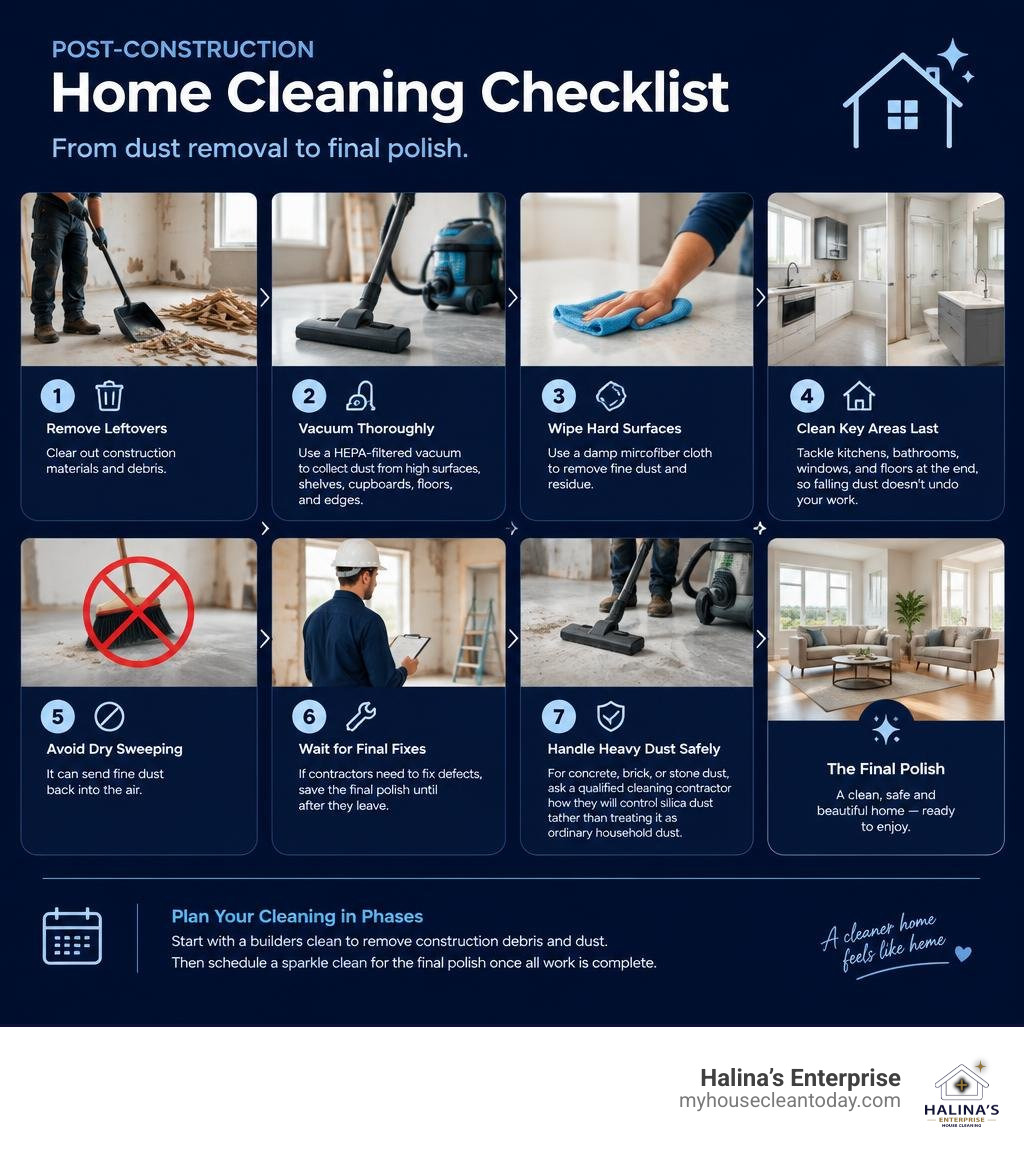
Deep cleaning after construction word roundup:
Phased Methodology: When to Schedule Builders Cleans vs Sparkle Cleans
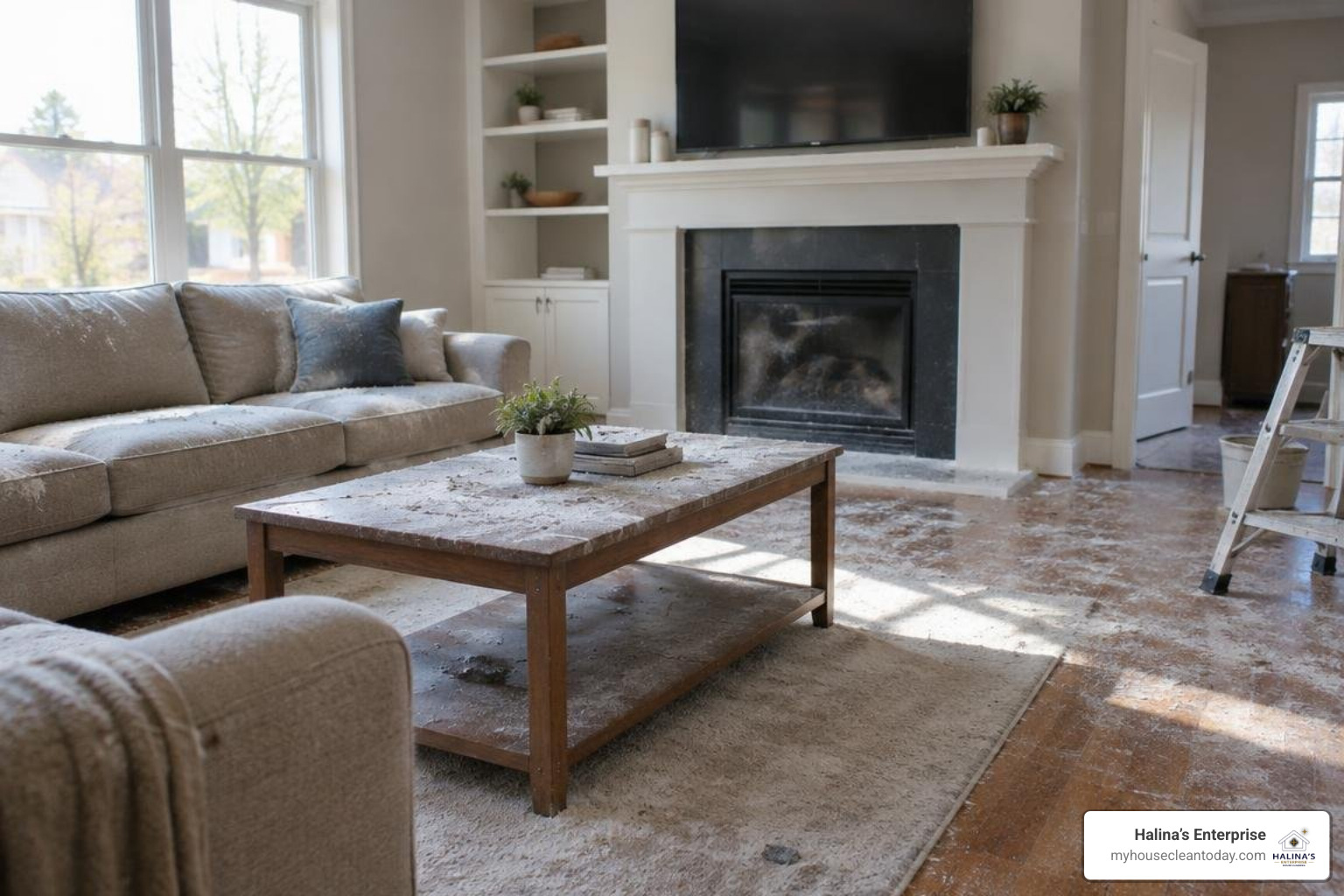
Stepping into a newly remodeled space feels incredible until you realize that microscopic plaster dust has settled across every conceivable surface. Managing this mess requires an orderly strategy rather than a random scrubbing session. When planning the restoration of your living space, separating the process into distinct phases ensures that trade work does not ruin freshly polished finishes.
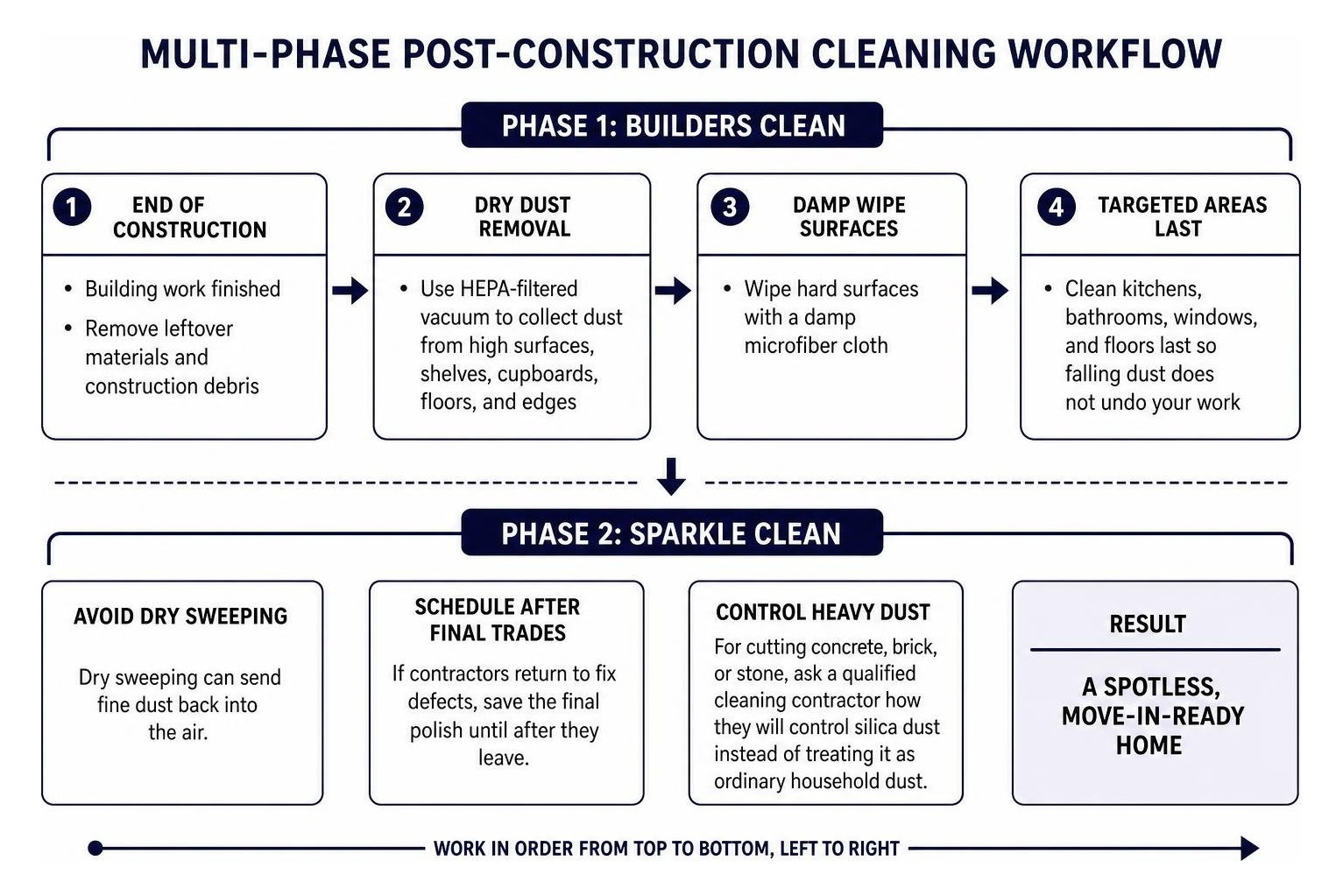
Booking a service too early often leads to frustrating re-contamination. If drywallers, painters, or flooring installers return to finish minor tasks after a full clean, dust inevitably coats the home again. Reviewing everything you need to know about cleaning up after builders helps in establishing realistic expectations between trade handoffs and sanitization phases.
| Factor | Builders Clean (Phase 1) | Sparkle Clean (Phase 2) |
|---|---|---|
| Primary Goal | Remove construction debris, plaster splatter, and bulk dust | Deliver a spotless, move-in-ready showroom shine |
| Typical Timing | Immediately after heavy structural trades finish | After snagging repairs and defect corrections are complete |
| Key Tools | HEPA-filtered shop vacuums, scrapers, degreasers | Microfiber cloths, glass polishes, neutral floor cleaners |
| Focus Areas | Subfloors, rough surfaces, window frames, inside carcasses | Fixtures, mirrors, sanitaryware, polished countertops |
| Dust Level | Heavy, settling airborne particulates | Light settling film and lingering fingerprints |
Phase 1: Rough Builders Clean vs Sparkle Deep Cleaning After Construction
The initial phase—often termed the builders clean—tackles the rugged aftermath left behind by general contractors. During this stage, specialists remove leftover packaging, vacuum heavy sawdust, scrape off dropped mortar or plaster splashes, and strip protective plastic from windows and appliances. The objective is not perfection; it is transforming a hazardous job site into a safe, visible environment.
The sparkle clean serves as the final polish. Once the home is structurally finished and clear of trades, our team focuses on detailing. This stage targets fine film on light fixtures, cleans interior cabinetry, buffs stainless steel appliances, polishes mirrors, and restores baseboards so the property reaches a pristine, ready-to-occupy state.
Navigating the Snagging Process and Handover Timelines
Snagging is the formal inspection where homeowners and project managers identify defects—such as uneven paint, scratched glass, loose trim, or misaligned cabinets—that the contractor must fix before final payment.
Conducting a pre-snag builders clean allows you to see the true condition of surfaces without being blinded by layers of drywall powder. Once your builder finishes resolving the snag list, scheduling a sparkle clean removes the final trace of repair dust, ensuring a seamless handover.
Room-by-Room Walkthrough: Executing a Deep Cleaning After Construction
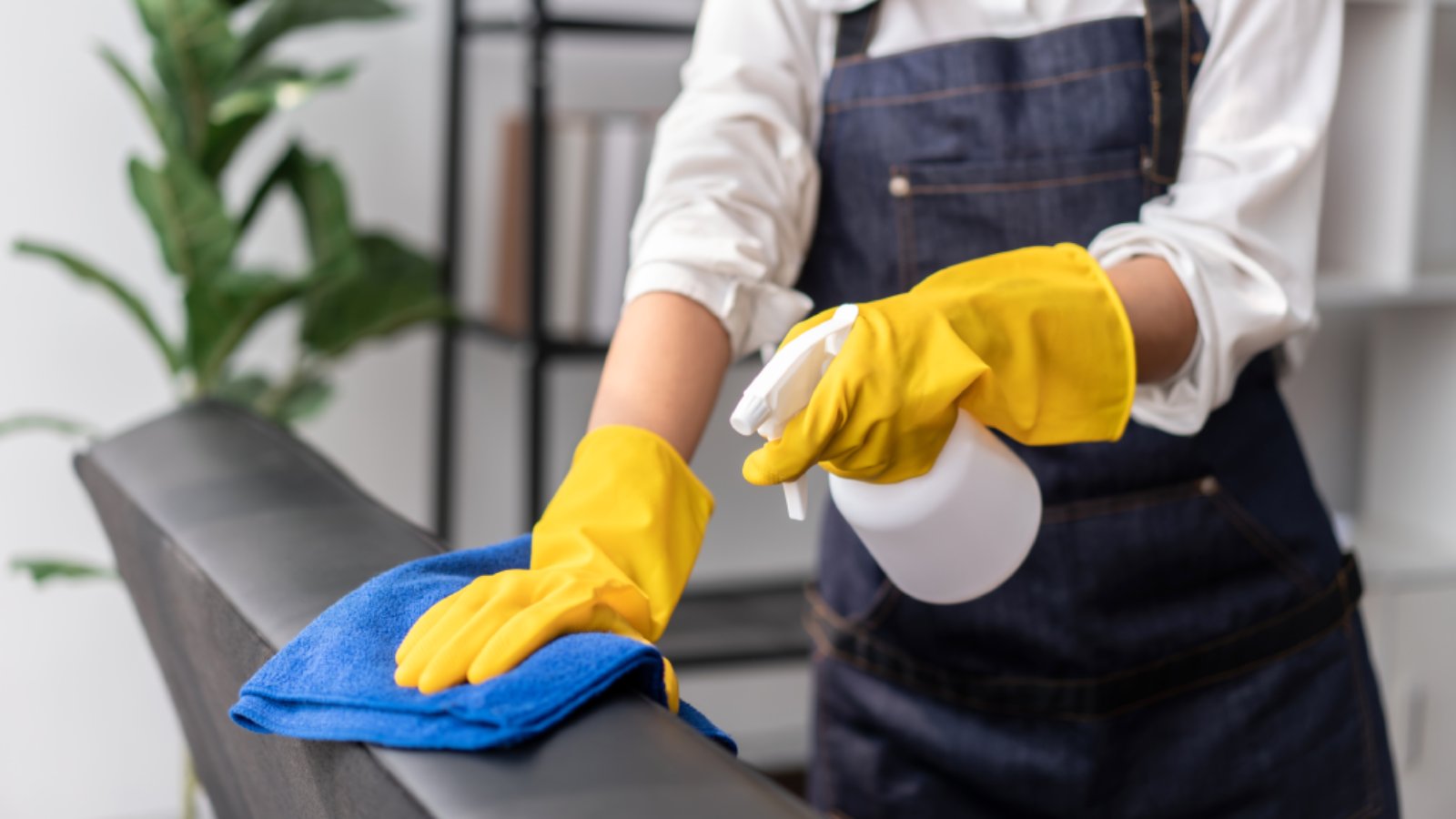
A successful post-renovation cleanup demands a strict top-to-bottom, dry-to-wet progression. If you mop the floors before wiping ceiling fan blades, airborne dust settles downward and ruins your work. Implementing proven post-construction cleanup techniques guarantees that every room receives methodical sanitization without cross-contaminating adjoining living areas.
Kitchens and Bathrooms
Kitchens and bathrooms endure heavy trade activity and feature intricate surfaces that capture fine particulates:
- Cabinetry and Drawers: Vacuum sawdust out of drawer glides, hinges, and interior corners before wiping with damp microfiber cloths.
- Protective Film Removal: Peel factory films from new cabinets and appliances carefully to avoid leaving adhesive residue.
- Grout Haze and Tile Detailing: Remove dried grout haze using specialized pH-neutral solutions that lift cementitious film without etching fresh stone or ceramic.
- Sanitaryware and Fixtures: Clean tubs, shower basins, sinks, and toilets, followed by chrome and matte black hardware polishing.
- Appliance Interiors and Exteriors: Wipe range hoods, ovens, refrigerators, and dishwashers inside and out to eliminate factory oils and installation dust.
Living Areas, Bedrooms, and High-Level Touchpoints
Living spaces require thorough high-dusting to capture particles suspended near ceilings. Pairing these steps with comprehensive deep house cleaning methods protects your home’s air quality:
- Ceiling Fans and Light Fixtures: Vacuum fixture canopies, wipe individual fan blades, and polish decorative glass pendants.
- Crown Molding and Trim: Run HEPA vacuum brush attachments along high ledges, followed by microfiber damp-wiping.
- HVAC Registers and Returns: Unscrew or vacuum vent grates to keep construction dust trapped inside ducts from blowing into clean bedrooms.
- Closets and Built-in Shelving: Vacuum every shelf tier, closet rod, and drawer unit from the highest tier down.
- Baseboards and Doors: Detail door panels, door frames, hinges, and baseboard ledges to remove chalky drywall residues.
Windows, Fixtures, and Flooring Residue Removal
Windows and flooring present the highest risk for accidental surface damage during post-construction cleanup. Paint overspray, silicone caulking smears, and plaster drips cling tightly to glass and delicate hardwood.
Operatives use specialized glass scrapers with fresh, unnotched blades lubricated with cleaning solution to prevent scratching glass panes. Vacuum window tracks thoroughly before wiping down latches and frames.
Flooring receives a two-stage treatment: dry HEPA vacuuming to lift abrasive grit without scratching the clear coat, followed by machine scrubbing or damp-mopping using surface-appropriate solutions.
Health, Safety, and Site Documentation Standards
Post-construction cleaning involves fine particulates and potent residues that require strict safety protocols. Using a practical guide to finding reliable post-construction cleaning services ensures you partner with trained teams who prioritize health, safety, and regulatory compliance.
Essential Contractor Credentials, RAMS, and COSHH Compliance
When choosing a post-construction cleaning partner, proper documentation protects you from liability:
- Risk Assessment and Method Statements (RAMS): Outlines specific site hazards, step-by-step cleaning procedures, and safety controls before work starts.
- Chemical Safety and Product Data: Safe management of cleaning solutions ensures materials comply with chemical safety protocols, preventing toxic fumes or surface damage.
- Comprehensive Insurance: Full commercial general liability and workers’ compensation coverage protects your property during complex remediation.
- Bonded Operatives: Background-checked and bonded crews provide security and peace of mind when working around valuable new installations.
HEPA Filtration, Silica Dust Control, and PPE
Renovations involving masonry, drywall, brick, or tile generate respirable crystalline silica dust. These microscopic particles penetrate deep into lung tissue if disturbed without proper safety measures.
Our cleaning teams use commercial-grade vacuums equipped with certified HEPA filters capable of trapping particles down to 0.3 microns with 99.97% efficiency. Technicians wear protective gear, including N95 or half-mask respirators and eye protection, preventing airborne particles from recirculating through your home.
Estimating Costs, Timelines, and Scope of Work
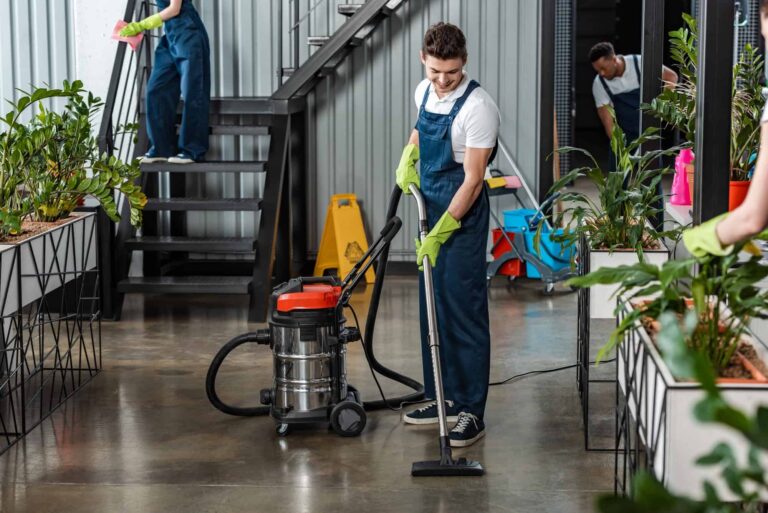
Project pricing varies based on square footage, soil levels, trade mess, and room layout. Using tools to predict your deep cleaning cost per square foot without overpaying helps homeowners budget accurately for residential restoration.
Reviewing the real cost of professional builders cleaning explained gives you a clear baseline before requesting on-site assessments.
Pricing Breakdown by Square Footage and Project Size
In the UK, post-construction cleaning generally ranges from £2 to £6 per square metre for builders cleans, while sparkle cleans average £3 to £8 per square metre. Across typical residential layouts:
- Small Home or Flat (100–150 m²): Typically requires 8 to 16 labor hours and costs between £250 and £500 depending on debris levels.
- Mid-Sized Residence (150–250 m²): Usually demands 16 to 24 labor hours, with costs ranging from £450 to £850.
- Large Custom Home (250+ m²): Often spans 2 to 3 full days with specialized crews, scaling based on high ceilings and architectural glass.
Standard Exclusions and Scope Limitations
To prevent surprises on your final invoice, professional cleaning agreements clearly outline standard exclusions:
- Structural Repairs: Fixing damaged drywall, touch-up painting, or realigning cabinetry.
- Hazardous Materials: Removal of undiscovered asbestos, lead paint chips, or biohazards.
- Heavy Jobsite Rubbish: Hauling away framing lumber, concrete chunks, or plumbing pipes (which falls under general waste hauling).
- Exterior High-Rise Glass: Exterior window washing requiring industrial scaffolding or specialized boom lifts unless quoted as an add-on.
Residential Homes vs Commercial Deep Cleaning After Construction
Residential cleaning focuses on fine touchpoints, cabinetry interiors, delicate finishes, and family safety. In contrast, commercial post-construction cleaning handles large square footage, high acoustic ceilings, and industrial flooring.
Contractors analyzing larger facilities often rely on decoding commercial post-construction cleaning rates for general contractors to balance broad floor plans with rigid handover deadlines.
Transitioning from One-Off Deep Cleans to Preventative Maintenance
Even after a meticulous sparkle clean, construction dust trapped inside air ducts and behind wall cavities settles over the following weeks. Learning how often should you deep clean your home helps keep your newly renovated space looking its best while preserving your HVAC system.
Replacing your furnace air filters 48 hours after project completion—and again 30 days later—stops settled drywall dust from recirculating. Transitioning to recurring maintenance visits protects your investment, preserves stone sealants, and maintains showroom-quality living spaces year-round.
Frequently Asked Questions About Post-Construction Cleanup
How long does a post-construction deep clean take?
A standard residential builders clean for a 150-square-metre home generally takes a two-person team 1 to 2 full working days (approximately 8 to 16 total labor hours). Commercial sites ranging from 500 to 1,000 square metres typically require 25 to 50 labor hours spread across multiple shifts, depending on dust volume and floor finishes.
Do post-construction cleaners remove paint, silicone, and plaster splashes?
Yes, standard post-construction cleaning includes the safe removal of light paint overspray, silicone smears, and plaster splatters from glass, tile, and trim. Technicians use specialized non-abrasive pads, glass scrapers, and safe solvents designed to release construction adhesives without scratching or damaging delicate new surfaces.
What is the ideal timeline for booking cleaning around contractor snagging?
The best approach follows a two-step schedule. First, book a rough builders clean once the main contractors finish heavy construction. This exposes flaws, scratches, and paint mistakes so you can complete an accurate snagging inspection. Once your contractor finishes defect repairs, schedule the final sparkle clean right before moving your furniture in.
Conclusion
Completing a home remodel should be cause for celebration, not hours spent battling stubborn plaster dust. Halina’s Enterprise brings over 30 years of cleaning experience to every project across Roselle, IL, and the wider Chicagoland area. Our fully bonded and insured teams use safe, non-toxic products and advanced HEPA filtration systems to make your property spotless and healthy. Explore our expert post-construction and residential cleaning services today to schedule your post-construction walkthrough and enjoy your newly renovated space.