Key Options for Bloomingdale Construction Waste Removal
Managing a renovation or building site across DuPage County requires matching your disposal logistics to the actual volume of trash you produce. Whether tackling a complete home gut near Old Town Bloomingdale or replacing siding on a commercial property along Army Trail Road, choosing the right method saves money, avoids site congestion, and keeps everyone safe.
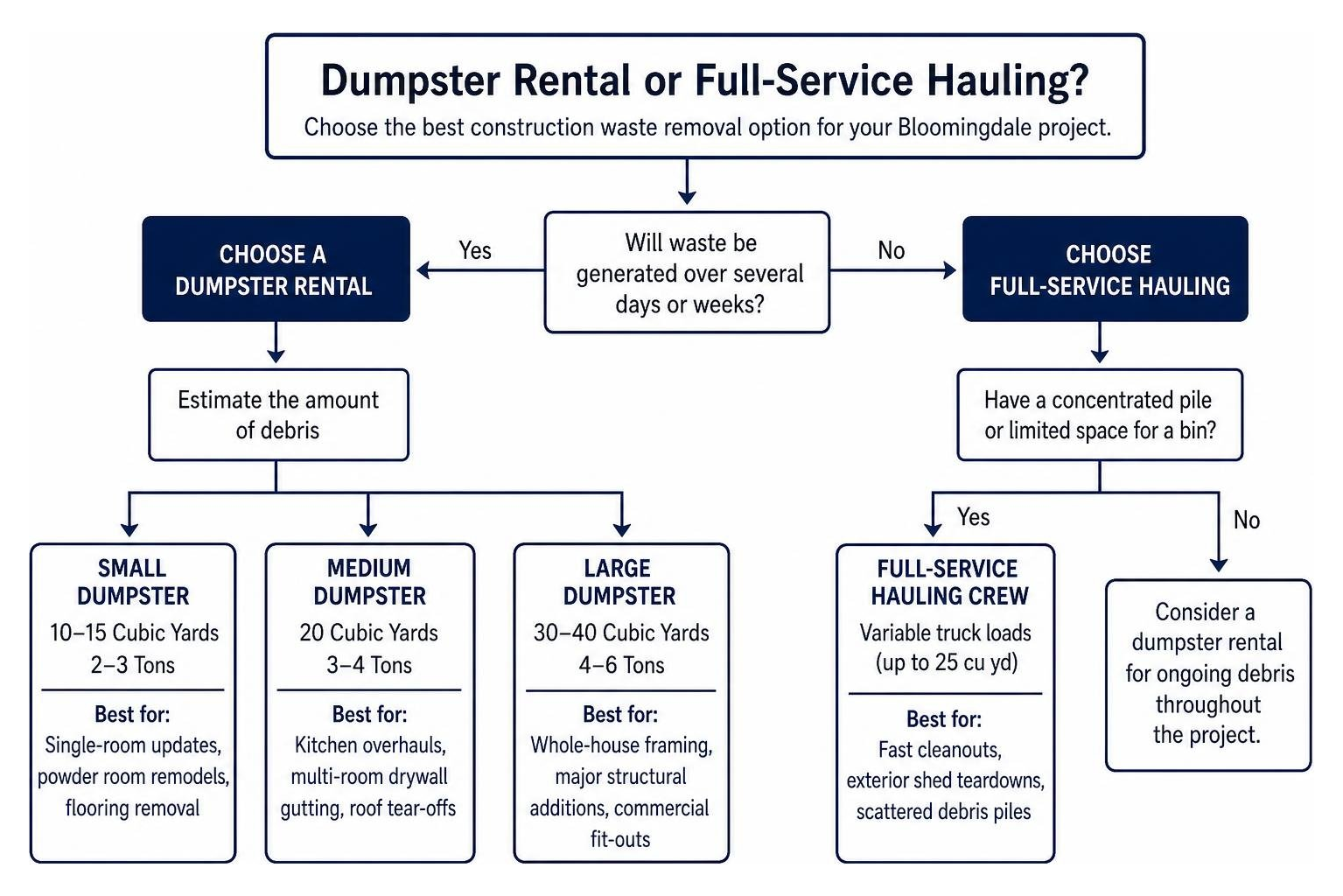
| Removal Option | Common Container Sizes | Typical Weight Allowance | Best Suited Project Types | Primary Advantage |
|---|---|---|---|---|
| Small Roll-Off Dumpster | 10 to 15 Cubic Yards | 2 to 3 Tons (4,000–6,000 lbs) | Single-room updates, powder room remodels, flooring removal | Compact footprint fits easily in residential driveways |
| Medium Roll-Off Dumpster | 20 Cubic Yards | 3 to 4 Tons (6,000–8,000 lbs) | Kitchen overhauls, multi-room drywall gutting, roof tear-offs | Versatile balance of volume and weight capacity |
| Large Roll-Off Dumpster | 30 to 40 Cubic Yards | 4 to 6 Tons (8,000–12,000 lbs) | Whole-house framing, major structural additions, commercial fit-outs | Maximum space for bulky framing and structural debris |
| Full-Service Hauling Crew | Variable Truck Loads (up to 25 cu yd) | Billed by Truck Volume / Weight | Fast cleanouts, exterior shed teardowns, scattered debris piles | Zero physical lifting required; rapid site clearance |
Roll-Off Dumpster Rentals vs. Full-Service Hauling Crews
When evaluating your site strategy, the choice generally boils down to roll-off containers versus on-demand hauling teams.
Roll-off dumpsters serve as static collection points throughout multi-week builds. As your subcontractors pull down drywall sheets, dismantle old subflooring, or saw framing timber, the refuse drops directly into an on-site container. This continuous containment keeps high-traffic walkways free of nails and splinters. However, dumpsters demand physical effort from your team, eat up driveway space, and sit outside your property for several days or weeks.
In contrast, full-service hauling crews show up with heavy-duty vehicles, load all accumulated materials directly into the truck bed, and sweep up before driving away. This option excels when you have a concentrated pile of debris from a weekend demolition, lack driveway space for a permanent bin, or cannot perform heavy lifting due to time or physical constraints.
Choosing the Right Container Size for Jobsite Debris
Estimating your cubic yardage accurately prevents paying for unused air or facing mid-project overfill surcharges.
- 10-Yard Dumpsters: Perfect for tight residential projects, such as clearing out a small master bathroom or disposing of 250 square feet of deck boards.
- 20-Yard Dumpsters: The industry workhorse for kitchen remodels, carpet removal throughout an entire home, or disposing of up to 40 squares of asphalt roofing shingles.
- 30-Yard to 40-Yard Dumpsters: Designed for major commercial renovations, total roof replacements, or structural framing projects where high-volume studs, trusses, and packaging accumulate quickly.
Keep material density in mind. Dense, heavy rubble like broken foundation concrete, brick pavers, dirt, and wet plaster quickly hits weight thresholds long before filling the physical container walls. For heavy masonry, dedicated clean-fill dumpsters with lower side walls prevent transport overages.
Local Regulations, Permits, and HOA Guidelines in Bloomingdale
Operating within Bloomingdale means staying compliant with village ordinances and local subdivision rules. Staying on top of these requirements prevents administrative delays, municipal stop-work notices, or unexpected fines.
Understanding Village Permits and Public Right-of-Way Rules
When you position a waste container on private property—such as a concrete driveway or a private commercial lot—the Village of Bloomingdale generally does not require a special dumpster permit. The bin must sit entirely within property boundaries without obstructing sidewalks or blocking utility easements.
If tight lot lines force placement on a public street, alleyway, or municipal parkway, you must secure Village authorization. Street-placed containers require high-visibility reflective markers or safety cones to protect evening traffic along residential avenues. Before setting up on-street disposal, review the Village of Bloomingdale residential collection guidelines to ensure your placement coordinates smoothly with local collection schedules.
Driveway Protection and HOA Placement Restrictions
Many Bloomingdale subdivisions and planned unit developments maintain strict Homeowners Association (HOA) covenants governing property aesthetics during construction. Common HOA regulations include:
- Duration Limits: Some associations require containers to be removed within 7 to 14 days, or require advance architectural review board approval for longer projects.
- Tarping Requirements: Mandatory containment netting or tarps over open-top dumpsters every evening to prevent windblown insulation, plastic wrapping, and sawdust from drifting into neighboring yards.
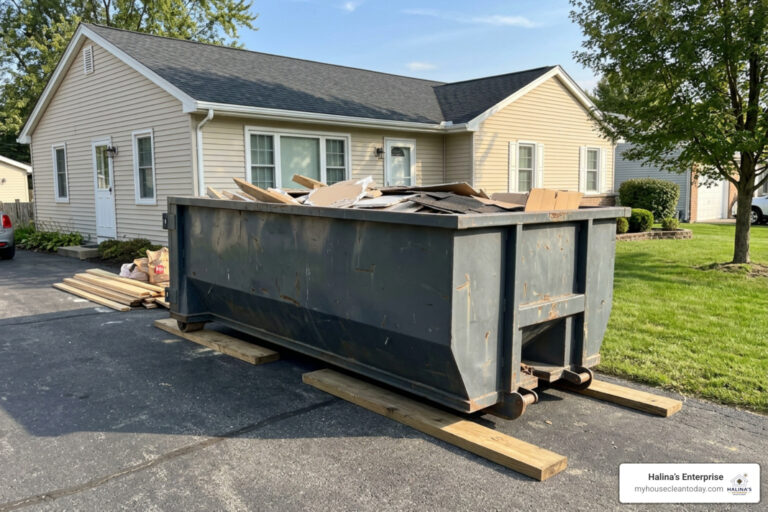
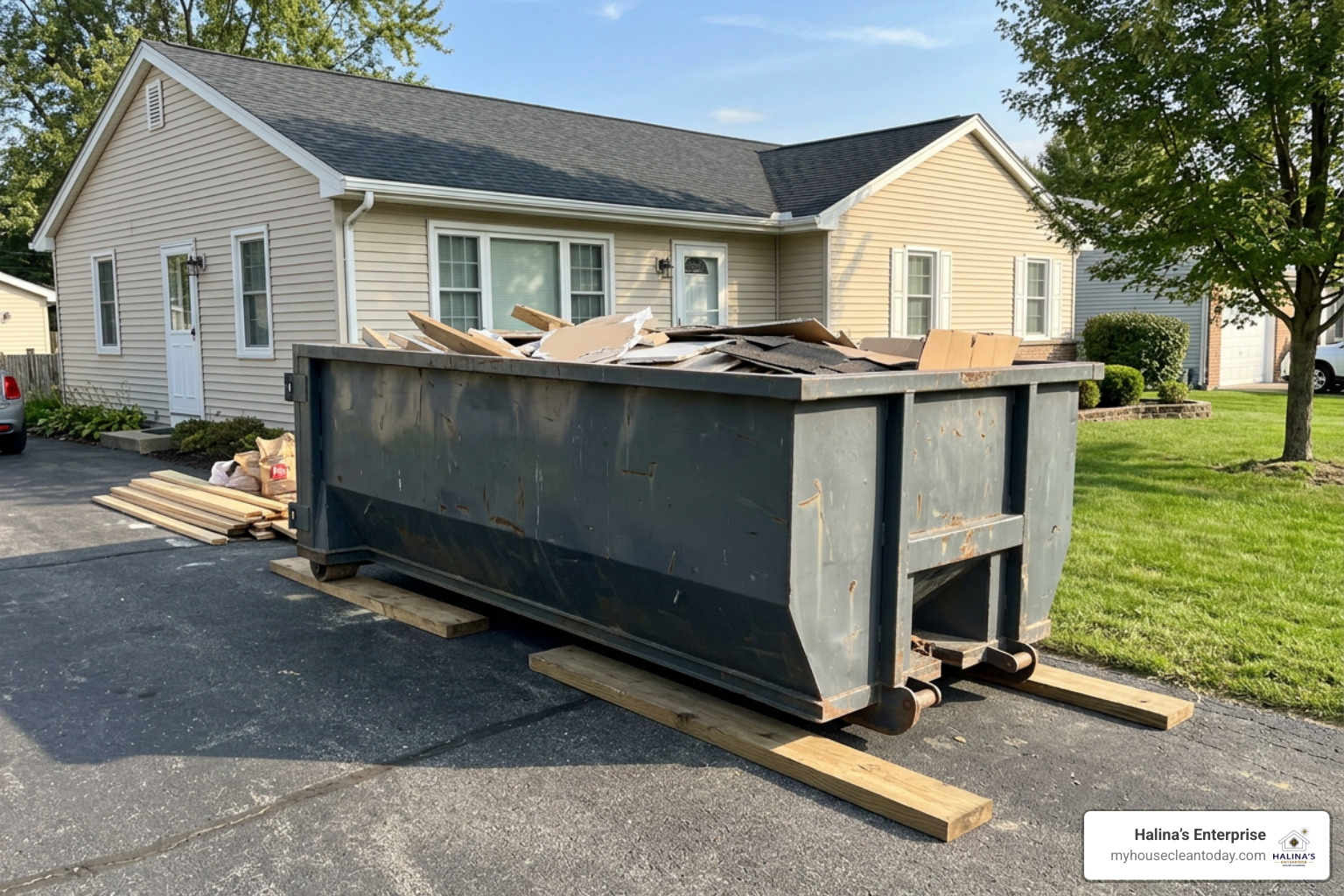
- Driveway Surface Preservation: To prevent heavy steel roll-off wheels from cracking residential concrete or marring asphalt during summer heat, place sturdy 2×10 or 3/4-inch plywood boards directly under the container’s contact rollers.
Accepted Materials and Hazardous Waste Restrictions
Sorting jobsite materials at the point of tear-out makes your disposal workflow cleaner, less expensive, and environmentally responsible.
Streamlining Bloomingdale Construction Waste Removal for Residential Sites
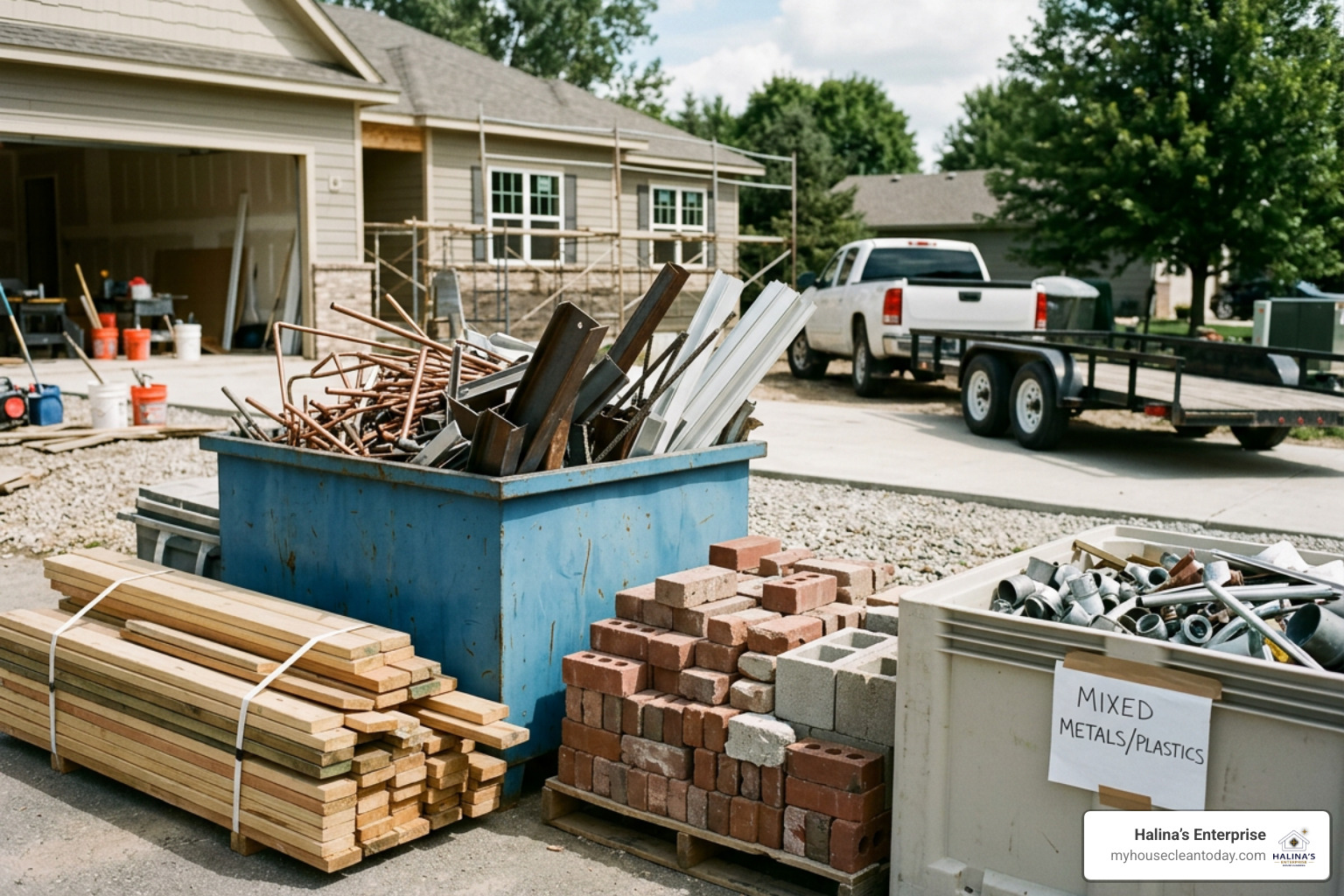
Residential renovations generate a diverse mix of materials that benefit from systematic staging. During bathroom updates, kitchen reconfigurations, and basement refinishing, designate separate areas for clean wood, metals, and standard trash.
Tossing plumbing copper, brass valves, and steel beams into a dedicated scrap pile lets you recycle valuable scrap metal rather than paying disposal weight fees on it. Once structural tearing ends and the rough debris clears out, scheduling a professional post-construction cleanup helps clear lingering residue before framing, plumbing rough-ins, and hanging drywall begin.
Prohibited Hazardous Items and Eco-Friendly Diversion
Standard waste haulers cannot transport environmental toxins or regulated chemical items. Placing prohibited items in construction bins leads to expensive trip-rejection fees or landfill penalties.
Common restricted materials include:
- Liquid paints, chemical stains, and lacquer thinners (unless dried completely into solid blocks with sawdust or cat litter)
- Asbestos siding, pipe insulation, or vintage acoustic popcorn ceiling material
- Sealed pressurized tanks (propane, freon cylinders, aerosol cases)
- Lead-acid automotive batteries and high-capacity lithium tool batteries
- Fluorescent light ballasts containing mercury or PCB components
Responsible contractors divert salvageable items whenever possible. Unopened drywall sheets, unbroken architectural trim, functional solid-wood cabinetry, and excess dimensional lumber can be donated to regional building material reuse organizations, keeping usable goods out of regional landfills.
Pricing Structures, Scheduling, and Timelines
Understanding how waste hauling is billed helps you budget accurately and avoid surprise fees on your final invoice.
Budgeting for Waste Disposal: Flat Rates vs. Volume Pricing
Waste removal companies generally use one of two primary pricing structures:
- Flat-Rate Dumpster Rentals: You pay a single upfront price covering drop-off, pickup, a fixed rental duration (typically 7 to 10 days), and a predefined weight allowance (e.g., 2 to 4 tons). If you exceed the allocated weight limit, disposal yards charge a pro-rated per-ton overage fee.
- Volume-Based On-Demand Pricing: Common with full-service hauling crews, where you pay based on the percentage of the truck bed your junk fills (e.g., 1/4 truck, 1/2 truck, full 25-cubic-yard load). This structure includes all heavy lifting, labor, and transfer station disposal fees in one number.
To protect your budget, always ask if fuel surcharges, road transit fees, or municipal transfer surcharges are bundled into the initial estimate.
Fast Scheduling: Optimizing Bloomingdale Construction Waste Removal Timelines
Tight build schedules depend on prompt waste handling so sub-trades don’t trip over discarded framing scraps. When ordering a container or booking an on-demand crew:
- Morning Cutoffs: Many regional hauling services provide same-day or guaranteed next-day dispatch when orders are confirmed before 12:00 PM.
- Swap-Out Logistics: For major multi-phase builds, schedule a “swap-out” 24 hours in advance so an empty container drops off the moment the full bin leaves, preventing site downtime.
- Weather Planning: Summer storms and winter snows across northeastern Illinois affect driveway safety. Keep driveways salted or cleared of ice so heavy tandem-axle roll-off trucks can maneuver safely.
Transitioning from Heavy Debris Disposal to Final Post-Construction Cleaning
Hauling away heavy timber offcuts, shattered drywall panels, and scrap siding is only the first stage of jobsite clearance. Once the bins are gone, fine particulate matter and airborne dust settle across every exposed surface.

Removing Airborne Dust and Fine Particulate Matter
Drywall sanding, tile cutting, and subfloor prep produce micro-fine crystalline silica and gypsum dust. This fine powder bypasses standard broom sweeping, finding its way into HVAC return vents, baseboard grooves, light fixtures, and cabinet interiors.
Cleaning this particulate requires a meticulous top-to-bottom strategy using commercial-grade HEPA filtration vacuums, microfiber damp-wiping techniques, and air scrubber filtration. Skipping proper containment spreads renovation dust across untouched living spaces every time the furnace or air conditioner kicks on. Following proven cleaning best practices helps keep your indoor air safe and breathable for occupants.
For broader commercial jobs, educational spaces, or office fit-outs, comprehensive commercial cleaning ensures high-traffic flooring, restrooms, entry vestibules, and commercial glass meet corporate presentation and health standards.
Preparing Remodeled Properties for Move-In and Occupancy
The final handoff from active construction zone to finished living space demands detailed sanitization:
- Glass and Frame Detailing: Removing manufacturer stickers, adhesive tape residue, mortar spatters, and paint overspray from new window panes and sashes.
- Interior Cabinetry Wiping: Vacuuming and wiping down shelving, drawer tracks, and pantry interiors where fine dust settles during installation.
- Fixture and Hardware Polishing: Buffing matte black or brushed nickel plumbing fixtures, sanitizing door hardware, and detailing electrical switchplates.
- Hard Surface Floor Restoration: Machine scrubbing, neutralizing grout residue on tile, and treating finished hardwoods to remove footprints and dust films.
For property owners throughout Bloomingdale, Roselle, and neighboring DuPage communities, booking specialized post-construction cleaning in Roselle and neighboring towns delivers a move-in-ready property that lets new architectural details shine without a trace of leftover dust.
Frequently Asked Questions About Jobsite Waste in Bloomingdale
Do I need a municipal permit for a roll-off dumpster in Bloomingdale?
A municipal permit is not required when the dumpster sits entirely on your private property, such as your driveway or a designated staging pad. If the container must be placed on a public roadway, alley, or village right-of-way, you must apply for village permission and ensure the bin is outfitted with proper safety reflectors.
How quickly can same-day construction waste pickup be scheduled?
Same-day dispatch is widely available from local hauling services when you book before 12:00 PM on business days. For weekend pickups or emergency cleanouts following unexpected weather damage, booking 24 to 48 hours in advance guarantees truck availability.
What construction materials can be recycled instead of sent to landfills?
Clean untreated lumber, corrugated packaging cardboard, metal conduit, copper plumbing pipes, aluminum siding, and asphalt roofing shingles can all be diverted into dedicated recycling streams. Keeping masonry, concrete, and brick separate from general renovation trash also allows those materials to be crushed into recycled road base aggregate.
Conclusion
A successful renovation project requires careful planning from the initial demolition through the final wipe-down. Choosing the right disposal strategy keeps your work site safe, code-compliant, and on schedule. Once the heavy waste has been hauled away, the final step is clearing out the lingering fine dust so your new space is truly ready to enjoy.
At Halina’s Enterprise, our fully insured and bonded specialists bring over 30 years of industry-awarded cleaning experience to your post-construction detailing. We use safe, non-toxic products to eliminate drywall dust, wipe out cabinets, detail new fixtures, and restore your surfaces.
Contact us today to explore our full range of residential, commercial, and post-construction cleaning services and schedule your project walkthrough!