A Master Bedroom Cleaning Checklist for a Busy Weekend
For a weekend refresh, use this master bedroom cleaning checklist: Clear clutter and start the laundry. Dust the ceiling fan, lights, and other high surfaces. Wipe furniture, windows, and baseboards. Vacuum the mattress and bed frame, then clean the floor, including under the bed. Put on fresh bedding last.
Working from high surfaces down to the floor helps you avoid cleaning the same spot twice. Save closet sorting and other bigger jobs for a monthly or seasonal clean.
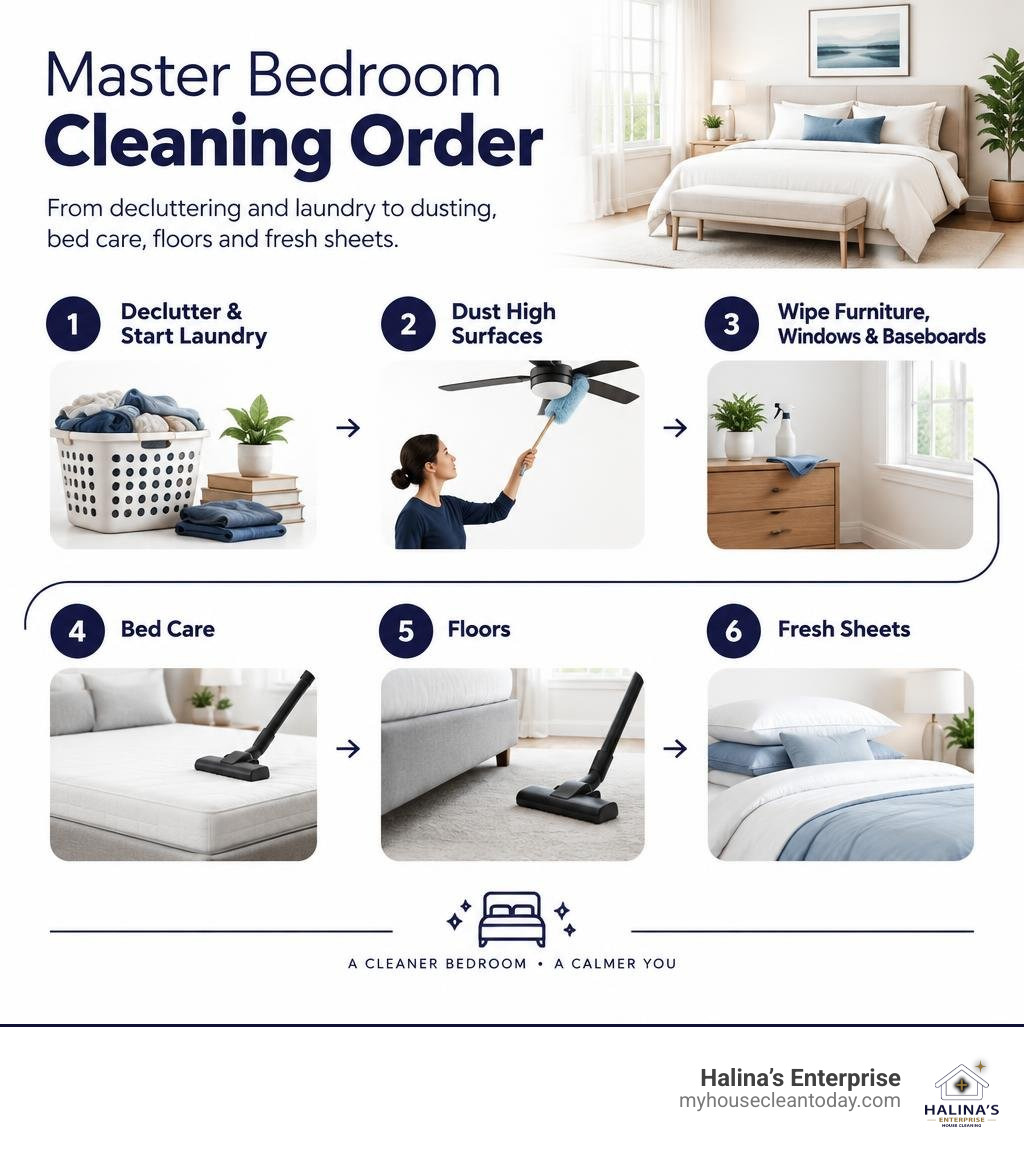
Quick master bedroom cleaning checklist terms:
The Essential Master Bedroom Cleaning Checklist: Supplies and Preparation
We spend roughly a third of our lives in our bedrooms—and even more if your primary bedroom doubles as a home office during the week. When Saturday rolls around, the last thing anyone wants is to waste precious downtime searching for misplaced spray bottles or running back and forth to the laundry room.
Preparation makes all the difference. Staging your tools beforehand keeps your momentum going and turns what feels like an overwhelming chore into a streamlined, satisfying process.
| Supply Category | Essential Supplies | Optional / Deep-Clean Upgrades |
|---|---|---|
| Dusting & Wiping | Microfiber cloths, extendable duster | Kitchen tongs (for blinds), upholstery brush |
| Floor & Textile Care | HEPA vacuum with crevice tool, mop | Carpet shampooer, fabric defuzzer |
| Cleaning Solutions | Warm water with mild dish soap, glass cleaner | Enzyme stain remover, distilled white vinegar |
| Deodorizing & Refreshing | Baking soda | Pure essential oil room spray |
| Decluttering | 3 laundry baskets or sturdy bins, trash bags | Velvet hangers, drawer organizers |
Must-Have Tools and Eco-Friendly Cleaners
High-grade microfiber cloths are the true workhorses of bedroom cleaning because their split fibers physically trap dust, pet dander, and microscopic debris rather than just pushing particles into the air. Paired with a vacuum equipped with a true HEPA filter—which captures particles as tiny as 0.3 microns—you protect your indoor air quality as you work.
For cleaning sprays, harsh chemicals have no place in a sanctuary where you breathe deeply for seven to eight hours every night. Choosing eco-friendly cleaning products safe for kids and pets ensures that volatile organic compounds (VOCs) and artificial fragrances do not linger on your nightstands or headboard. A simple solution of warm water and mild Castile soap handles 90% of bedroom surfaces safely and effectively.
The Pre-Clean Declutter and Staging Strategy
Before opening a single cleaning bottle, tackle surface clutter. Trying to dust around stacks of unread books, stray coffee mugs, and discarded clothing slows you down and scatters debris.
We recommend the classic three-box method:
- Trash/Recycle: Toss receipts, empty tissue boxes, and junk mail.
- Relocate: Gather water glasses, stray dishes, shoes, and items belonging in other rooms into a single laundry basket to distribute later.
- Donate: Set aside clothing, accessories, or decorative pieces that no longer serve you.
Clear nightstands, dressers, and the top of the bed completely. Once surfaces are bare, stage your cleaning caddy in the center of the room so everything you need is within arm’s reach.
Step-by-Step Cleaning Order to Avoid Re-Dusting Surfaces
Random cleaning leads to wasted energy. If you vacuum your plush area rug first and then dust your ceiling fan blades, you will end up having to vacuum the entire floor a second time. Establishing a structured cleaning sequence guarantees you only touch each surface once, as outlined in The Ultimate Room-by-Room Cleaning Guide.
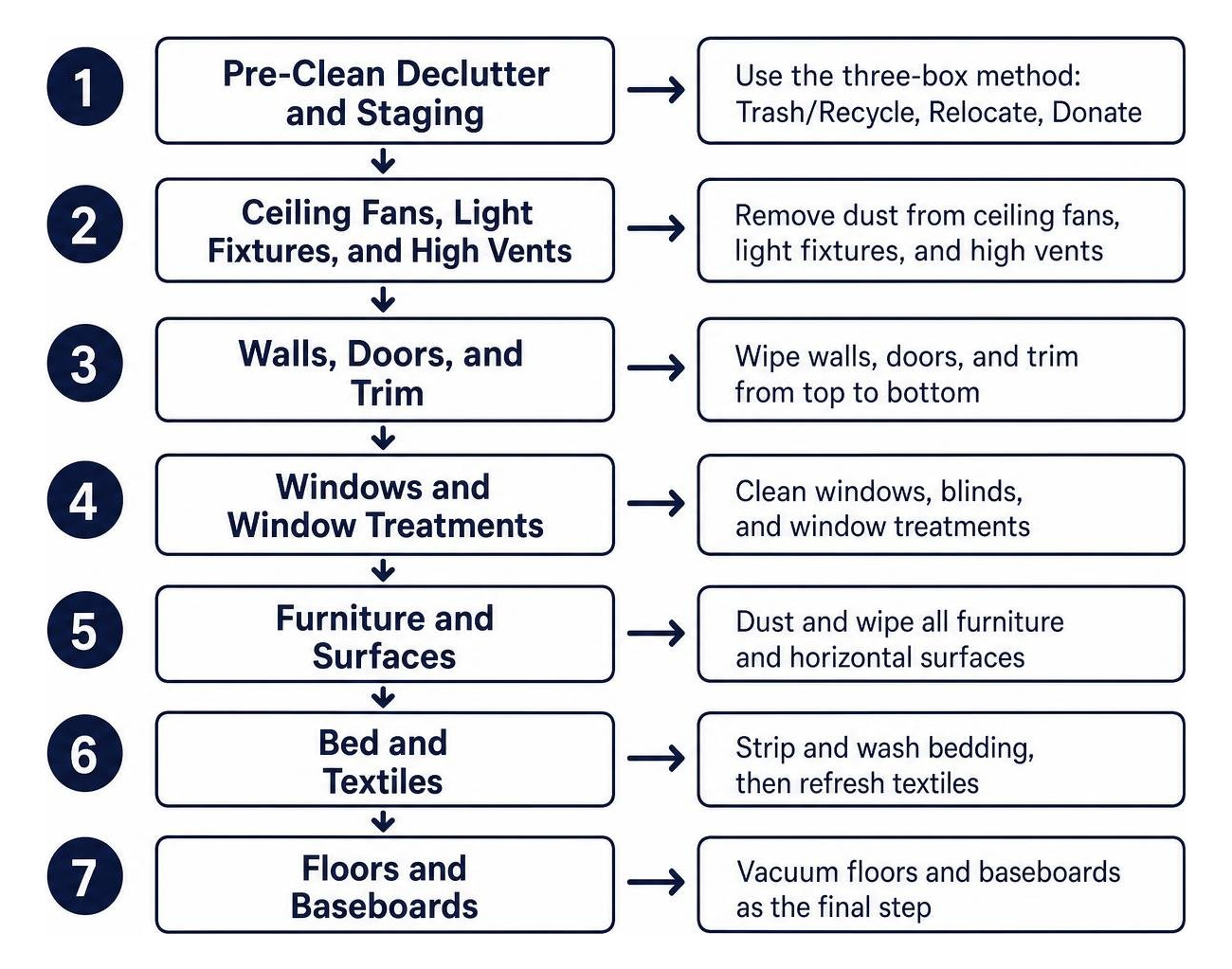
Top-to-Bottom Master Bedroom Cleaning Checklist Workflow
Gravity dictates where dust falls. By following a strict top-to-bottom and clockwise workflow around the perimeter of the room, you push airborne particles downward toward the floor, where your HEPA vacuum can capture them at the very end. Our detailed step-by-step guide to cleaning your bedroom highlights how this system cuts your total cleaning time in half.
Ceiling Fans, Light Fixtures, and High Vents
Start at the highest point of the room:
- Ceiling Fan Blades (The Pillowcase Hack): Slide an old pillowcase over each individual fan blade and pull it back toward you. The cloth traps all the caked-on dust inside the case instead of letting it rain down onto your furniture.
- Light Fixtures and Recessed Lighting: Turn off the light switches first. Gently wipe down light fixtures, globes, and bulbs with a dry microfiber cloth to remove heat-baked dust.
- HVAC Return and Supply Vents: Vacuum vent grates using your vacuum’s brush attachment. If vents have sticky buildup, unscrew the covers and soak them in warm soapy water before wiping them dry and reinstalling.
Windows, Blinds, Walls, and Baseboards
Move down to the vertical surfaces of your master bedroom:

- Blinds: Wrap a pair of kitchen tongs with microfiber cloths secured by rubber bands. Grip each blind slat with the tongs and slide horizontally from left to right to clean both the top and bottom of the slat simultaneously.
- Windows and Sills: Spray glass with a 50/50 mixture of water and distilled white vinegar (or an eco-friendly glass cleaner) and wipe dry with a waffle-weave microfiber towel for a streak-free shine. Wipe down interior window sills and inspect corner joints. (Safety note: If your home was built before 1978, inspect painted window sills carefully for flaking or chipped lead-based paint and use wet-wiping methods rather than dry scraping to prevent hazardous dust dispersal).
- Walls and Switch Plates: Spot-clean scuff marks near headboards, doorframes, and light switches with a damp cloth and a drop of mild dish soap. Disinfect switch plates and door handles.
- Baseboards: Wipe baseboards using a damp microfiber cloth or an extendable mop head to capture settled dust along the room’s perimeter.
Deep Cleaning the Bed, Mattress, and Bedding Textiles
The centerpiece of your master suite is also the primary gathering ground for dead skin cells, pet dander, body oils, and microscopic dust mites. Maintaining immaculate bedding and mattress hygiene is vital for reducing allergen loads and supporting restful sleep, as detailed by the EPA’s guidance on Biological Contaminants and Indoor Air Quality.
Washing Sheets, Duvets, and Pillows at Proper Temperatures
Most standard residential washing machine cycles only achieve water temperatures between 90°F and 105°F. However, research demonstrates that denaturing dust mite allergens and neutralizing living mites requires water temperatures of at least 130°F for a minimum of 10 minutes.
- Sheets and Pillowcases: Wash weekly on your machine’s hottest setting or sanitize cycle.
- Duvet Covers: Launder every 2 to 4 weeks.
- Comforters, Quilts, and Blankets: Wash every 2 to 3 months.
- Bed Pillows (Down Alternative or Washable Down): Launder every 3 to 6 months (wash two pillows at once to balance the washing machine drum).
Sanitizing, Deodorizing, and Rotating the Mattress
While your bed linens are spinning in the laundry, give your bare mattress some attention:
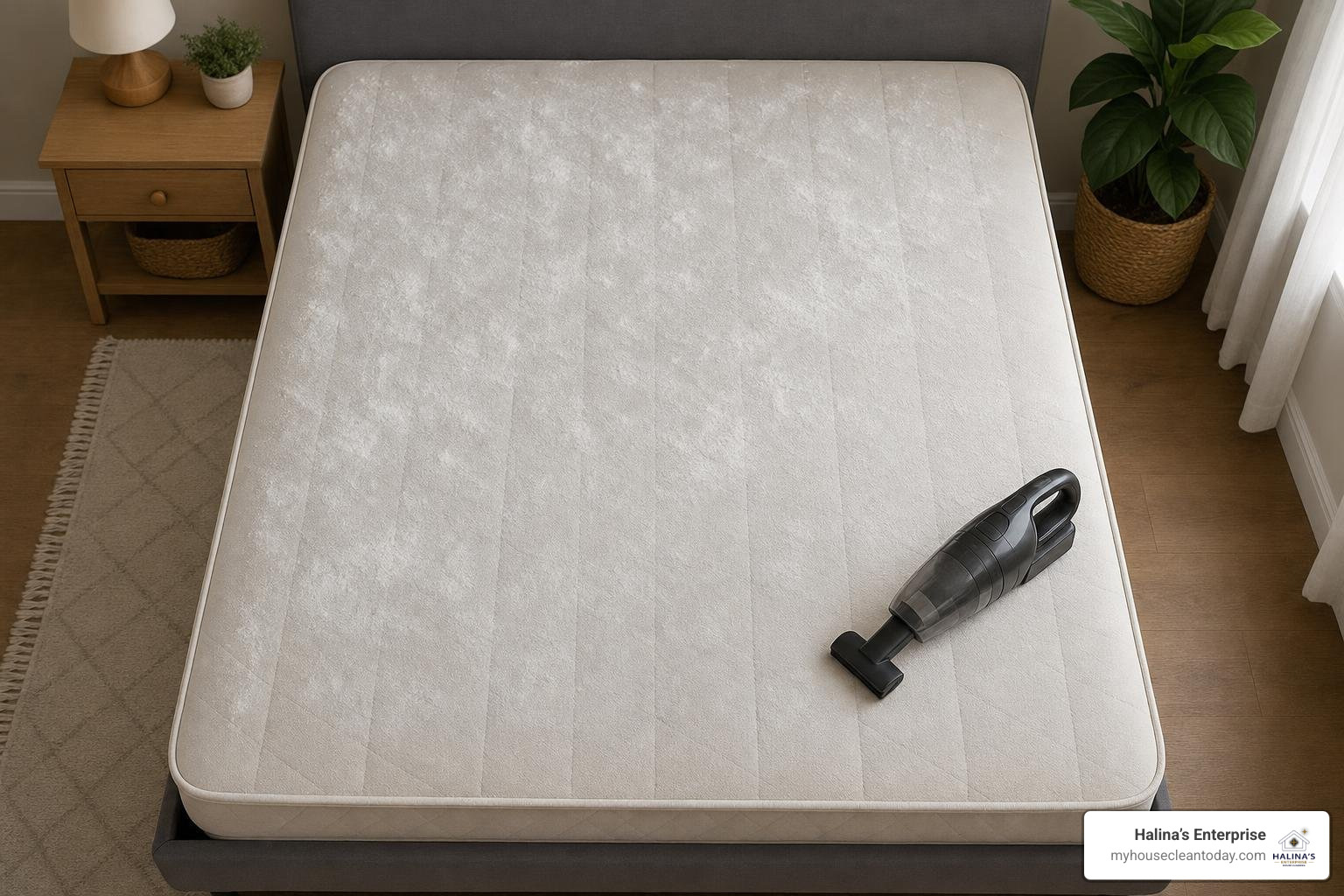
- Thorough Vacuuming: Using a clean upholstery attachment, slowly vacuum the entire surface of the mattress, paying special attention to seams, tufting buttons, and quilted piping where dead skin cells gather.
- Spot-Treat Stains: Treat organic stains with a gentle enzyme cleaner or a paste of baking soda, mild dish soap, and water. Dab lightly with a damp cloth—never over-saturate memory foam or inner-spring mattresses.
- Deodorize with Baking Soda: Sift a generous layer of plain baking soda across the mattress surface. Let it sit undisturbed for 45 to 60 minutes to neutralize odors and absorb residual body moisture. Vacuum thoroughly a second time.
- Rotate: Rotate your mattress 180 degrees (head-to-toe) at least once or twice a year to promote even wear and prevent body indentations. These hypoallergenic cleaning techniques keep your sleep environment fresh and allergy-free.
Tackling Master Closets, Furniture, and Flooring
With high surfaces, vertical walls, and the bed thoroughly sanitized, focus on master bedroom storage, wooden furniture, and floor surfaces.
Closet Decluttering and Storage Organization
You do not need to overhaul your entire wardrobe on a regular weekend clean, but maintaining basic order prevents closet chaos from spilling into your bedroom:
- Pick up all discarded clothes, hangers, and shoe boxes off the closet floor.
- Hang loose garments facing the same direction on matching hangers.
- Wipe down exposed shoe racks and upper shelving with a damp microfiber cloth.
- Clear seasonal items off dresser tops and organize nightstand drawers so surface clutter stays minimal.
Vacuuming, Mopping, and Dust Mite Allergen Reduction
Flooring is your final step. Because all the dust from your ceiling fans, blinds, and dressers has settled downward, this stage captures every last allergen:
- Under-Bed Dust Clearing: Use an extendable vacuum wand or long-reach duster to sweep out dust bunnies under your bed frame, dressers, and bedside tables.
- Edge and Corner Vacuuming: Run the crevice tool along the boundary where your carpet meets the baseboards to pull out trapped dirt.
- Thorough Vacuuming / Mopping: Vacuum carpets in slow, overlapping passes to allow the brush roll and suction to agitate deep fibers. For hardwood, engineered wood, or laminate, follow up with a damp microfiber mop and a floor-safe neutral cleaner.
If your home has not had a deep reset in several months, scheduling a comprehensive deep house cleaning service can eliminate built-up grime throughout your bedrooms and living spaces so weekend maintenance stays effortless.
Cleaning Frequency: Daily, Weekly, and Seasonal Maintenance
Consistency transforms cleaning from an exhausting chore into quick, stress-free maintenance habits. Using structured checklists—similar to comprehensive whole-home cleaning routines—keeps your primary bedroom pristine without consuming your entire weekend.
| Frequency | Master Bedroom Tasks | Time Required |
|---|---|---|
| Daily | Make bed, put dirty clothes in hamper, clear dishes from nightstands, quick 2-minute floor tidy | 5–10 minutes |
| Weekly | Strip and wash sheets/pillowcases, dust hard surfaces, disinfect high-touch points, vacuum/mop floors, empty trash | 30–45 minutes |
| Monthly | Wash duvet covers, dust ceiling fans/vents, clean mirrors and interior windows, wipe baseboards, organize closet floor | 1–1.5 hours |
| Seasonally | Deep clean and rotate mattress, wash pillows/comforters, wipe door panels/walls, declutter wardrobes, shampoo rugs | 2–3 hours |
Creating a Sustainable Master Bedroom Cleaning Checklist Routine
Start each morning with small wins: making your bed immediately creates visual order and discourages tossing clothes across the mattress. During your weekend clean, follow the top-down sequence so you can finish in under an hour.
Understanding how often to deep clean your home helps you time seasonal bedroom refreshes—such as washing heavy quilts and deep-cleaning carpets—around seasonal transitions or right before cold and flu season.
Frequently Asked Questions About Bedroom Cleaning
How often should a master bedroom be deep cleaned?
A master bedroom should receive a thorough deep clean every 1 to 3 months. This includes washing duvet covers and bed skirts, vacuuming under heavy furniture, wiping down baseboards and doors, and deodorizing the mattress with baking soda. High-traffic households with pets or severe seasonal allergies benefit from monthly deep cleaning cycles.
What is the most effective way to eliminate dust mites from bedding?
The most reliable method to eliminate dust mites and denature their allergens is laundering bedding in water heated to at least 130°F for a minimum of 10 minutes, followed by a high-heat dryer cycle. Enclosing mattresses and pillows in zippered, allergen-impermeable covers provides an effective physical barrier against ongoing dust mite colonization.
How do you clean bedroom walls without ruining paint?
Mix a few drops of mild, dye-free dish soap into a bucket of warm water. Dip a soft microfiber cloth into the solution, wring it out until barely damp, and gently wipe the wall using circular motions. For stubborn marks or scuffs, apply a paste of baking soda and water lightly, then wipe clean with a damp towel and dry immediately to protect matte or eggshell paint finishes.
Conclusion
Your master bedroom should serve as a calming, healthy sanctuary where you can recharge without being surrounded by dust, clutter, or lingering allergens. By implementing a top-to-bottom cleaning sequence, washing textiles at temperature thresholds that eliminate dust mites, and tackling high surfaces first, you can maintain a spotless master suite in just a fraction of your weekend.
When busy work weeks or family commitments leave you with little time for deep scrubbing, let our experienced team handle the heavy lifting. With over 30 years of trusted expertise and recognized by industry honors such as the Best of 2025 and Angi Super Service awards, Halina’s Enterprise provides bonded, insured, and health-focused cleaning solutions across Roselle, Schaumburg, and the greater Chicagoland area. Explore our professional residential cleaning services to keep your master bedroom and entire home fresh, pristine, and welcoming year-round.