Why Switching to the Best Natural Shower Cleaner Matters for Your Health
The best natural shower cleaner for most bathrooms is a plant-based surfactant formula with citric acid for hard water and soap scum, or a baking soda and hydrogen peroxide paste for mildew and grout. These non-toxic options dissolve buildup without the harsh fumes that linger in enclosed shower stalls.
Cleaning your bathroom should leave you feeling refreshed, not gasping for fresh air. Traditional bathroom cleaners often rely on aggressive chemicals that linger long after you put the sponge down. In an enclosed, humid space like a shower stall, warm water vapor amplifies these chemical vapors, making them easy to inhale.
According to findings from the Environmental Protection Agency (EPA), air pollution levels inside homes can be two to five times higher—and occasionally up to 100% higher—than outdoor air. A significant driver of this indoor air quality drop is the routine use of conventional household sprays. Cleaning products used inside the home represent the third most common reason for poison exposure in adults. Using harsh chemical solutions in poorly ventilated shower stalls increases your exposure risk every week.
Switching to plant-derived and mineral cleaning solutions protects your respiratory tract, prevents skin irritation, and keeps your family safe. Many families find that choosing eco-friendly cleaning products safe for kids and pets eliminates the coughing fits and burning eyes commonly caused by commercial sprays. Furthermore, embracing safe hypoallergenic cleaning methods prevents the skin sensitization and allergy flare-ups often triggered by conventional disinfectants.
Harmful Chemicals to Avoid in Bathroom Cleaners
When you shop for bathroom products, scanning the ingredient list helps you avoid products that compromise your health:
- Chlorine Bleach (Sodium Hypochlorite): Often marketed as the ultimate mildew remover, bleach creates strong fumes that irritate the lungs and eyes. It discolors mildew without always breaking down the fungal roots beneath the surface.
- Synthetic Fragrance & Phthalates: Artificial perfumes mask chemical odors but frequently harbor phthalates—known endocrine disruptors that can affect hormone balance.
- Ammonia: Common in glass and tile cleaners, ammonia irritates mucosal tissues and poses severe respiratory hazards if inadvertently combined with other agents.
- 2-Butoxyethanol: A solvent commonly used to cut soap scum, this chemical receives low safety marks from environmental watchdogs due to its potential to cause throat irritation and organ stress.
- Quaternary Ammonium Compounds (“Quats”): Frequently used as disinfectants, quats can trigger skin dermatitis and aggravate chronic asthma symptoms.
Active Plant-Based and Mineral Ingredients That Work
Natural formulations do not require synthetic chemicals to achieve pristine results. Green chemistry utilizes plant surfactants and organic acids to dissolve grime:
- Citric Acid: Derived naturally from citrus fruits, citric acid acts as a natural chelating agent, breaking down hard water minerals, calcium deposits, and soap film without toxic fumes.
- Distilled White Vinegar: Acetic acid dissolves mineral deposits and cuts through grime, denaturing organic residue.
- Hydrogen Peroxide: A gentle alternative to bleach, hydrogen peroxide oxidizes organic matter, lifts grout discoloration, and breaks down into plain water and oxygen.
- Baking Soda (Sodium Bicarbonate): A gentle abrasive and natural deodorizer that cleans tubs, basins, and tiles without scratching delicate enamel.
- Decyl Glucoside & Coco-Glucoside: Mild, biodegradable surfactants derived from coconut and corn sugar that lift away body oils and suspend dirt for easy rinsing.
- Tea Tree & Citrus Essential Oils: Botanical oils that impart natural fragrance while offering natural grease-cutting power.
Essential Ingredients and Surface Safety for Green Shower Cleaning
Not all natural cleaners work on every bathroom surface. Using the wrong active ingredient can permanently damage porous stone or strip protective coatings.
| Surface Material | Best Natural Active Ingredients | Ingredients to Strictly Avoid | Scrubbing Tool Compatibility |
|---|---|---|---|
| Ceramic & Porcelain Tile | Citric acid, white vinegar, baking soda, decyl glucoside | Harsh scouring powders, hydrofluoric acid | Stiff nylon brushes, microfiber cloths, non-scratch pads |
| Glass Enclosures | White vinegar, citric acid, rubbing alcohol, plant surfactants | Abrasive scrub powders, coarse scouring pads | Rubber squeegees, flat-weave microfiber towels |
| Cementitious Grout | Hydrogen peroxide, baking soda paste, oxygen bleach | Undiluted strong acids (frequent use), chlorine bleach | Medium-bristle detail brushes, repurposed soft toothbrushes |
| Natural Stone (Marble, Travertine, Slate) | pH-neutral plant soaps, neutral enzyme cleaners, castile soap | All acids (vinegar, citric acid, lemon juice), hydrogen peroxide | Ultra-soft microfiber cloths, plush washing mitts |
| Fiberglass & Acrylic | Baking soda paste, castile soap, mild citrus surfactants | Acetone, abrasive scouring powders, stiff wire brushes | Non-scratch sponges, soft microfiber towels |
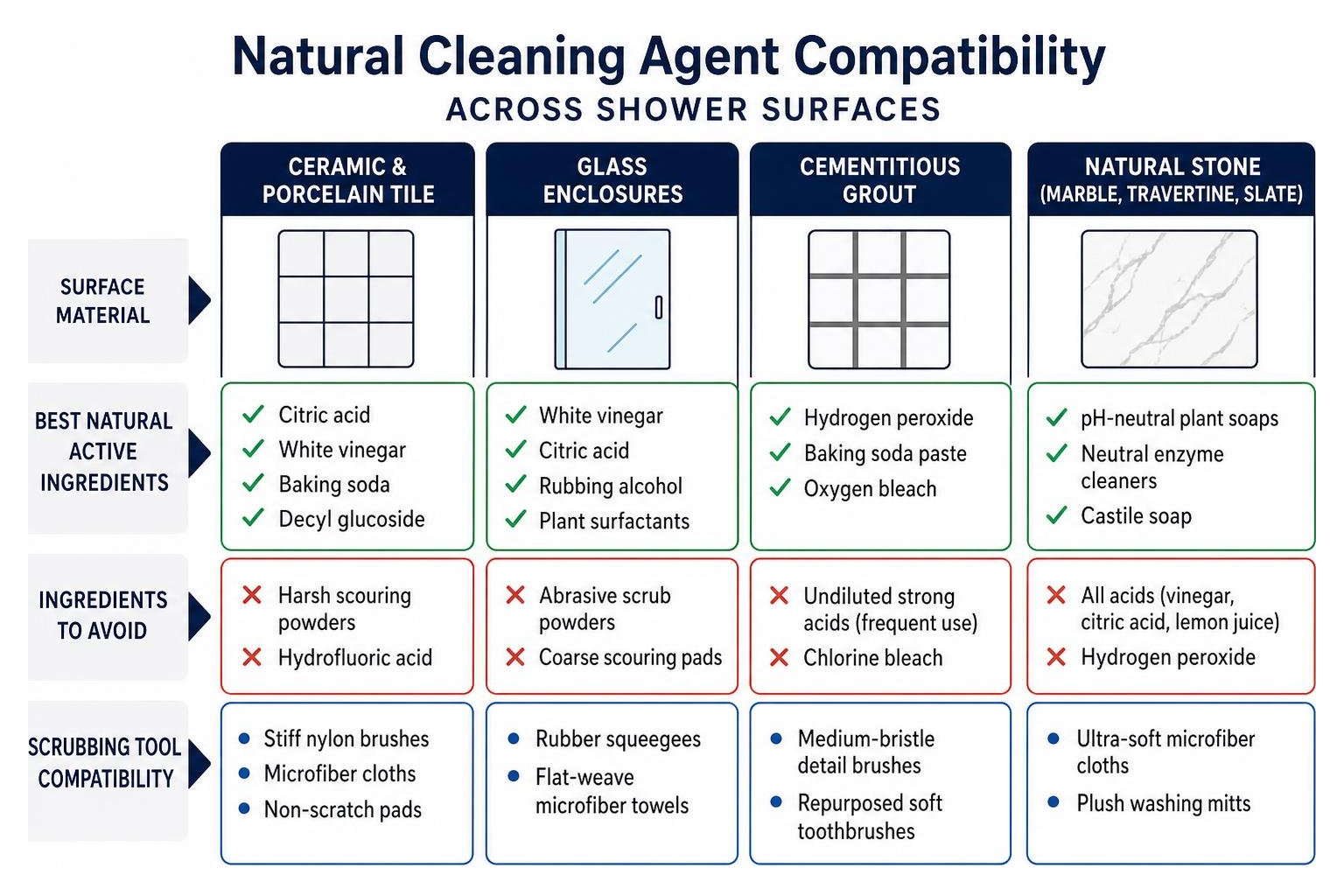
Acidic ingredients like vinegar and citric acid easily dissolve calcium deposits on glass and glazed ceramic tile. However, applying acidic cleaners to calcite-based natural stone like marble or travertine causes immediate chemical etching, dulling polished surfaces. For natural stone, rely on neutral-pH formulas or plant-derived castile soaps.
How to Choose the Best Natural Shower Cleaner for Your Routine
Finding the right cleaner depends on your schedule and water quality. If your home has hard water with high mineral content, keep a citric acid-based spray on hand to prevent cloudy scale from etching glass doors. For busy households, a low-maintenance daily mist keeps soap oils from settling onto tiles.
Pairing daily preventative habits with trusted residential cleaning support ensures your bathrooms remain fresh and hygienic without demanding all your weekend free time.
Evaluating the Best Natural Shower Cleaner Formats and Packaging
Sustainable bathroom maintenance goes beyond non-toxic ingredients to include packaging waste reduction.
- Refillable Glass & Aluminum Systems: Switching from single-use plastic bottles to durable glass or infinitely recyclable aluminum spray bottles prevents plastic waste from entering landfills.
- Concentrated Refill Pods: Concentrated liquid formulas allow you to mix active ingredients with standard tap water at home, dramatically reducing shipping weight and carbon emissions.
- Third-Party Certifications: Look for trusted certifications like EPA Safer Choice, USDA BioPreferred, and Leaping Bunny. These third-party standards confirm that formulas rely on bio-based carbon, maintain strict health safety, and remain 100% cruelty-free.
Daily Shower Spray vs. Deep-Cleaning Scrub
Maintaining a spotless shower requires balancing daily maintenance with targeted deep cleaning:
- Daily Shower Sprays: These light, rinse-free mists use mild surfactants to loosen water droplets and skin oils right after you turn off the water. Paired with a quick swipe from a silicone squeegee, daily sprays stop soap scum before it bonds to walls.
- Deep-Cleaning Scrubs: A weekly or bi-weekly deep scrub utilizes gentle abrasives like baking soda combined with hydrogen peroxide or plant soaps. This thick paste clings to vertical grout lines, lifting embedded grime, rust rings, and mineral deposits that daily sprays cannot dissolve alone.
Step-by-Step Guide: How to Make and Use a DIY Natural Shower Cleaner
Making your own shower cleaner at home is straightforward, budget-friendly, and highly effective. Homemade cleaning recipes typically cost only $1 to $2 per batch using standard pantry staples.
Step 1: Mix Your Non-Toxic Cleaning Solution
For an all-around tile, fiberglass, and glass cleaning scrub, follow this balanced recipe:
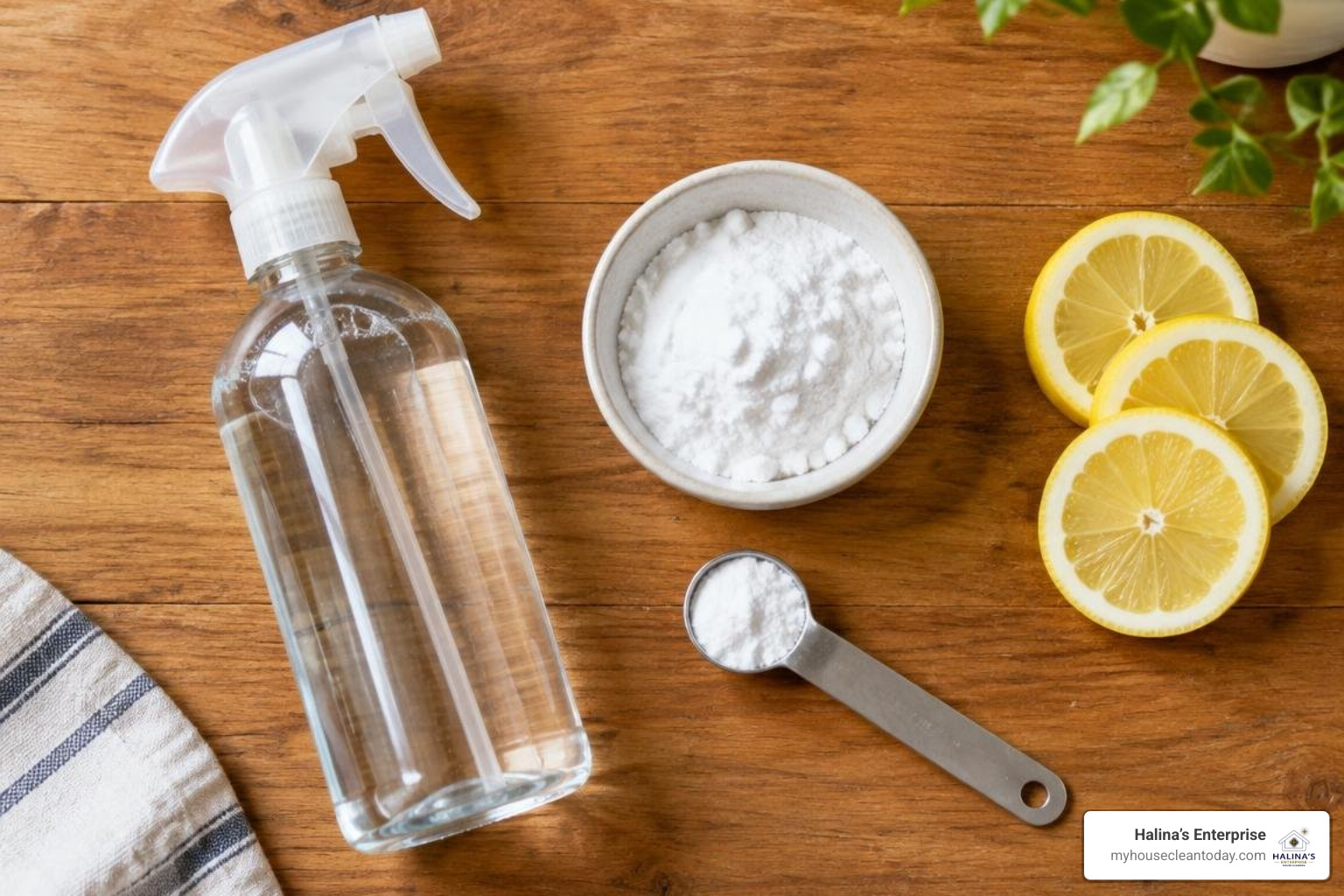
- 1 cup Baking Soda (provides gentle, non-scratch abrasive action)
- 1/4 cup Liquid Castile Soap (lifts oils and suspends surface dirt)
- 2 tablespoons 3% Hydrogen Peroxide (brightens grout and breaks down stains)
- 10 drops Lemon or Tea Tree Essential Oil (adds natural grease-cutting power and a clean botanical scent)
If you prefer a lighter spray recipe, explore this Easy DIY Shower Cleaner Recipe or reference this helpful tutorial on How to Make a Homemade Shower Cleaner. Measure the baking soda into a small bowl, add the castile soap, stir in the hydrogen peroxide, and blend in your essential oils until you achieve a smooth, spreadable paste.
Step 2: Apply and Allow Proper Dwell Time
Apply your mixture strategically across the shower:
- Target Problem Areas: Use a sponge to spread the paste over discolored grout, around metal drain rings, and across cloudy glass doors.
- Respect the Dwell Time: Let the paste sit undisturbed for 5 to 10 minutes. Giving natural cleaners adequate contact time allows the enzymes and active compounds to break down mineral deposits and greasy soap films without demanding aggressive scrubbing.
Step 3: Scrub, Rinse, and Dry for Streak-Free Results
Complete the job with proper agitation and drying:
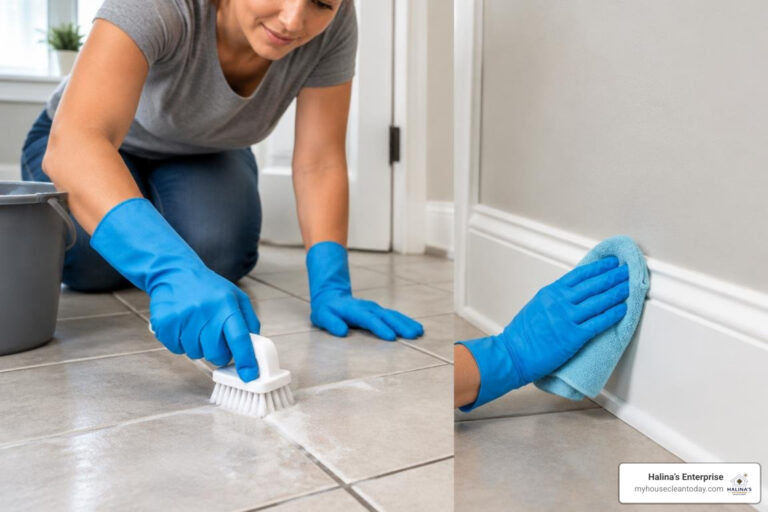
- Agitate Gently: Work over tile surfaces and grout lines using a non-scratch nylon scrub brush or an old toothbrush.
- Rinse with Warm Water: Use your handheld shower wand or a clean bucket of warm water to wash away all loosened debris and soap paste.
- Squeegee Glass: Glide a silicone squeegee down glass enclosures in straight, overlapping vertical strokes to eliminate water drops.
- Buff Dry: Wipe down chrome fixtures, acrylic edges, and tile corners using a clean, dry microfiber cloth.
- Ventilate: Run your bathroom exhaust fan for 15 to 20 minutes after cleaning to eliminate residual humidity.
Frequently Asked Questions About Natural Shower Cleaning
Are natural shower cleaners safe for natural stone and marble?
Only when formulated with neutral-pH ingredients. Acidic solutions containing lemon juice, distilled vinegar, or citric acid will react with the calcium carbonate in marble, travertine, and limestone, causing permanent surface etching. For natural stone showers, choose a pH-neutral cleaner based on castile soap or specialized plant enzymes, and always test new products on an inconspicuous corner first.
How often should you clean your shower with natural solutions?
Use a light daily shower mist and squeegee after bathing to prevent soap film and hard water marks from setting. Perform a thorough deep clean with a non-scratch scrub every one to two weeks to keep grout lines pristine. When daily upkeep becomes difficult to maintain alongside a busy work schedule, scheduling a professional deep house cleaning restores your bathrooms to baseline condition so regular natural maintenance remains effortless.
Do plant-based cleaners effectively kill mold and mildew spores?
Yes, specific plant-derived and mineral ingredients effectively treat surface mold and mildew without resorting to harsh bleach. Three percent hydrogen peroxide oxidizes organic matter and penetrates porous grout surfaces to eliminate fungal growth. Additionally, pure tea tree and thyme essential oils contain natural botanical compounds like terpinen-4-ol and thymol, which help inhibit spores and prevent musty odors from recurring.
Conclusion
Protecting your household’s health starts with improving the air you breathe every day. By eliminating harsh synthetic bleaches, synthetic fragrances, and aggressive ammoniated sprays from your bathroom routine, you protect your respiratory system while keeping your shower surfaces spotless.
Whether you prepare a simple baking soda and hydrogen peroxide paste or choose certified bio-based concentrates in refillable glass bottles, non-toxic cleaning delivers exceptional results without the chemical fumes.
At Halina’s Enterprise, we bring over 30 years of award-winning expertise to homes across Roselle, IL, and the surrounding Chicagoland area. Our fully insured and bonded team uses safe, non-toxic products to deliver deep, move-in/out, and recurring cleanings that protect your family’s indoor air quality. If you are ready for a sparkling, chemical-free home, explore our customizable professional cleaning services and schedule your visit today.