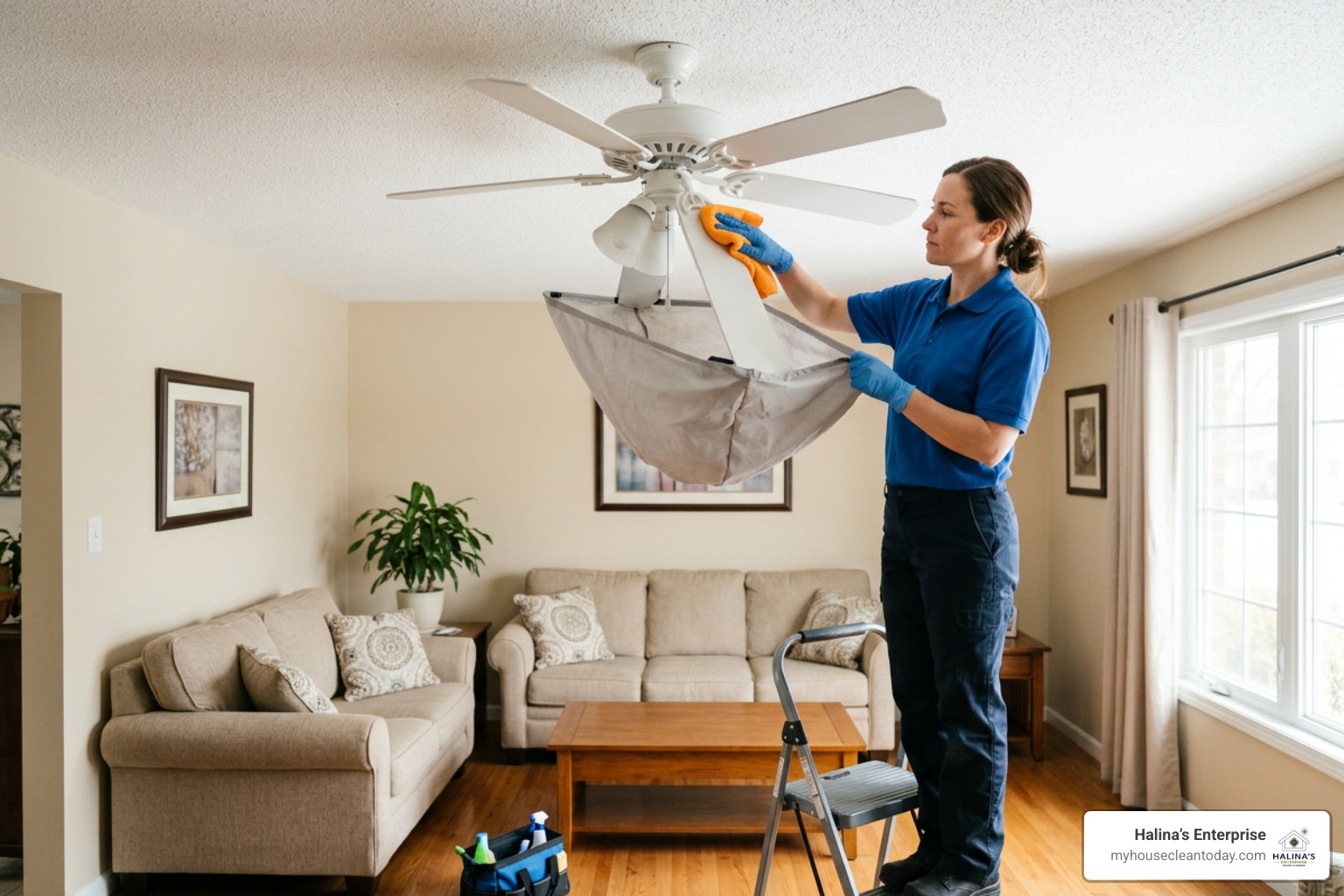
Why Regular Ceiling Fan Maintenance Matters for Your Home and Health
Hiring a professional ceiling fan cleaning service ensures thorough, mess-free removal of accumulated dust, allergens, and motor grime from overhead fixtures. A standard service includes full blade degreasing, motor housing vacuuming, light fixture detailing, and downrod dusting, typically costing between $20 and $30 per fan as an add-on. For optimal performance and health, residential fans should be cleaned every 2 to 6 months.
Ceiling fans are among the hardest-working fixtures in any home, yet they are often neglected. Every time a ceiling fan spins, the leading edges of the blades act like magnets for dust mites, pet dander, pollen, and microscopic particles. When you switch on a dusty fan, it creates an indoor vortex that redistributes those trapped particles directly into your living space. For family members dealing with seasonal allergies, asthma, or respiratory sensitivities, this circulation degrades indoor air quality and can trigger itchy eyes, congestion, and sneezing. Professional cleaning removes up to 90% more dust than surface wiping, cutting down on airborne allergens.
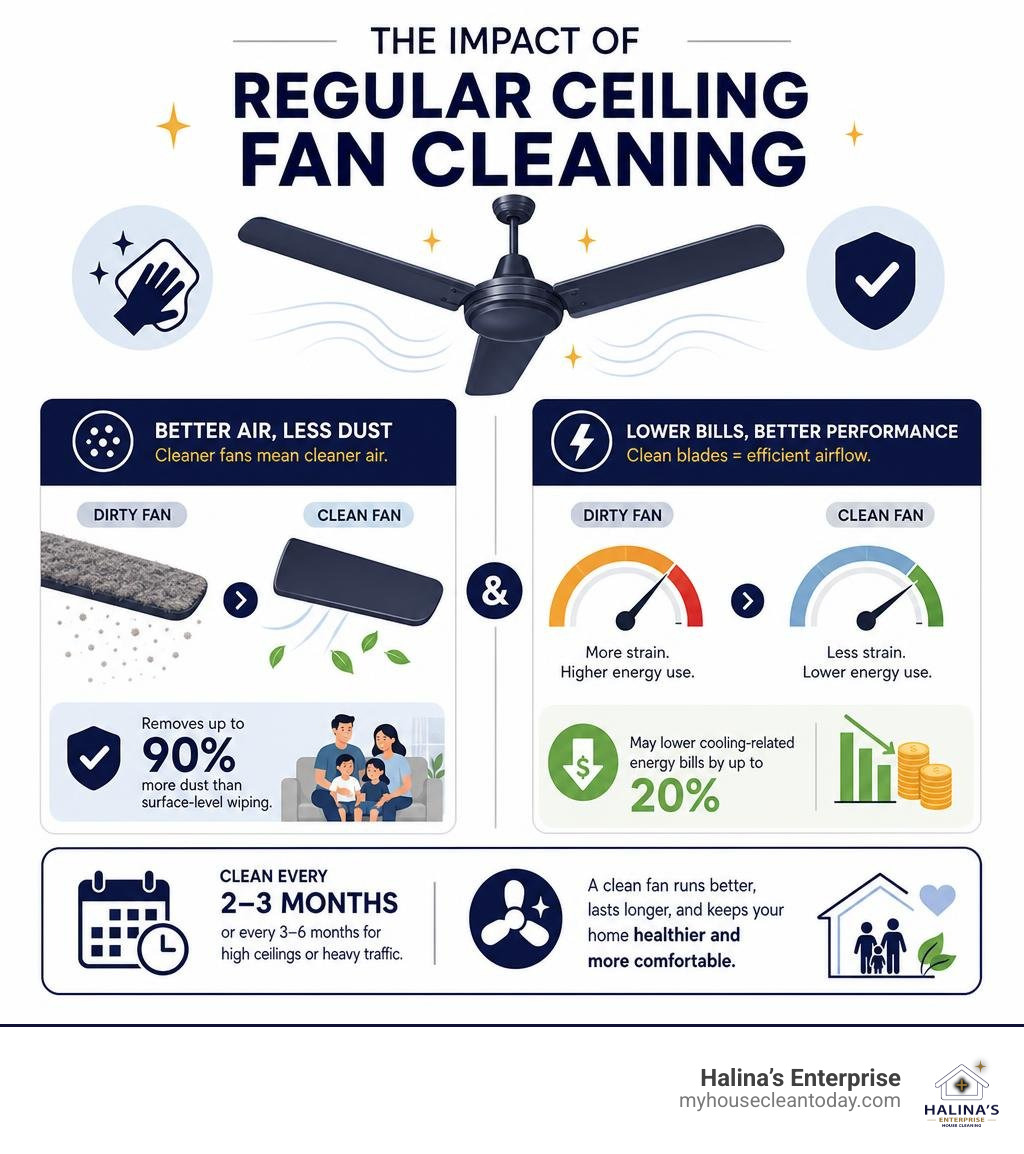
Beyond air quality, regular fan care directly impacts your utility bills and equipment longevity. A heavy coating of grime adds extra drag and weight to the fan blades. This forces the electric motor to work harder to maintain rotation speed, leading to overheating, noisy wobbling, and premature motor burnout. Thick dust buildup on fan blades can reduce airflow efficiency by up to 30%. Keeping your blades clean eases this mechanical strain, allowing the unit to circulate air freely and potentially lowering cooling-related energy bills by up to 20%.
To keep air circulating cleanly throughout the year, standard residential fans should be thoroughly cleaned every 2 to 3 months, or at least every 3 to 6 months in rooms with high ceilings or heavy traffic. To protect your living environment, we always emphasize using eco-friendly cleaning products safe for kids and pets. These non-toxic, pH-neutral solutions lift greasy grime without releasing harsh chemical fumes into your breathing zone.
What to Expect from a Professional Ceiling Fan Cleaning Service
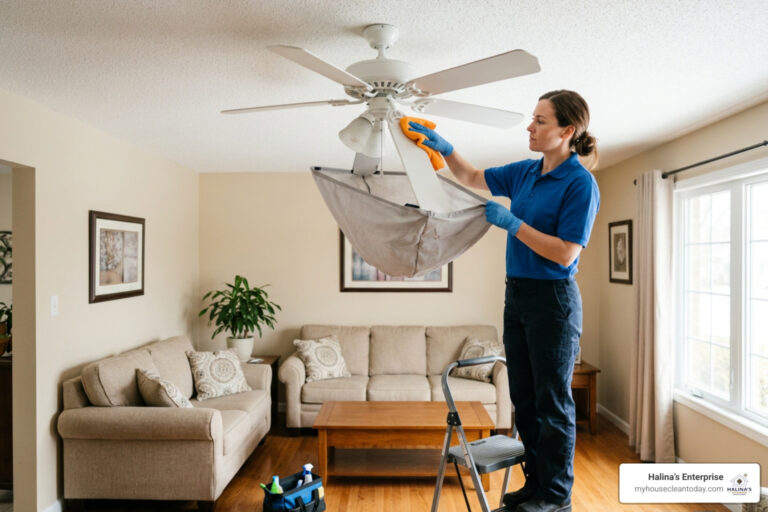
Hiring an experienced team takes the mess, hassle, and physical hazard out of overhead maintenance. Rather than just waving a feather duster and letting debris rain down onto your furniture, a comprehensive cleaning follows a controlled, methodical process designed to capture dust at the source.
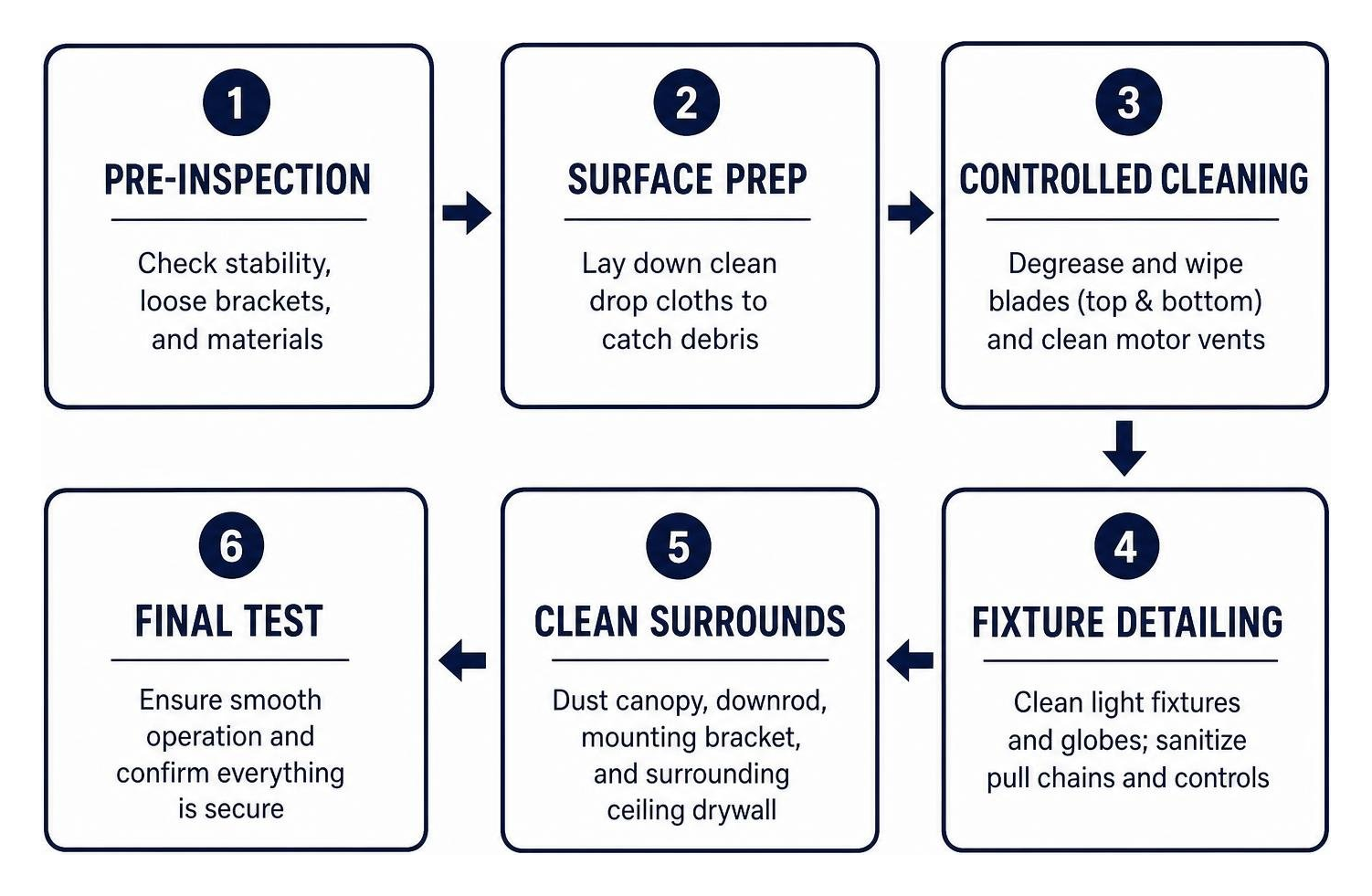
When our technicians arrive, we begin with a pre-cleaning inspection to check for loose brackets, motor wobbling, and delicate fixture materials. We then lay down clean drop cloths directly underneath the fan to catch any stray particles. A complete service includes:
- Full blade degreasing and wiping: Cleaning both the upper and lower surfaces of every blade from hub to tip using static-capturing microfiber cloths and non-abrasive cleaners.
- Motor housing detailing: Carefully vacuuming and brushing the vents around the motor casing to remove trapped lint that causes internal overheating.
- Light fixture and globe cleaning: Removing glass shades or globes to wash away trapped bugs, dust film, and fingerprints before securing them back in place.
- Canopy and downrod dusting: Removing cobwebs and grime along the downrod, mounting bracket, and surrounding ceiling drywall.
- Pull chain and switch sanitization: Wiping down pull chains, wall controls, and remote control casings.
A single standard fan usually takes between 5 to 15 minutes to clean thoroughly from top to bottom. Because our team handles everything from prep to final cleanup, integrating overhead fan care into our residential cleaning routines ensures your entire living space stays fresh and cohesive.
Vaulted Ceilings and High-Access Cleaning Techniques
Cleaning a standard 8-foot ceiling fan is manageable for some, but modern architecture often features vaulted, cathedral, or two-story great room ceilings reaching 12 to 20 feet or higher. Attempting to balance on a stepladder while stretching overhead with a rag is a recipe for serious injury.
Professional cleaners utilize specialized telescoping extension poles, articulated cleaning heads, and industrial-grade ladders to reach high fixtures safely. For fans mounted in dramatic entryways or open-concept living rooms, trained technicians use zero-drip microfiber sleeves and enclosed vacuum attachments. These tools trap debris directly against the blade rather than knocking it down into hard-to-reach floor spaces. You can explore our gallery to see examples of how our team manages high-access specialty cleaning tasks across varied architectural layouts.
Bundling Fan Maintenance with Other Specialty Cleanings
Ceiling fan maintenance is most convenient and economical when bundled with other periodic deep-cleaning services. Because specialized tools and floor protection are already in place, adding overhead fans to your routine home care plan saves both time and labor fees.
Professional ceiling fan cleaning typically costs between $20 and $30 per fan when added onto an existing service package. Many homeowners choose to pair fan care with comprehensive interior window washing to maximize natural light and airflow at the change of seasons.
Bundling fan detailing is also standard practice during whole-home deep house cleaning. If you reside in the northwest suburbs of Chicago, scheduling a seasonal deep house cleaning in Schaumburg IL ensures that top-to-bottom dusting, baseboard scrubbing, and overhead fixture care are completed in a single, stress-free visit.
Professional vs. DIY: Making the Right Choice for Your Space
Deciding whether to clean your fans yourself or bring in a professional service comes down to safety, equipment, and how thoroughly you want the job done. While quick spot-dusting is fine for routine touch-ups, periodic deep cleaning requires specialized tools and careful handling.
| Factor | DIY Fan Dusting | Professional Fan Cleaning |
|---|---|---|
| Safety Risk | High risk of ladder falls or muscle strain on high ceilings | Zero homeowner risk; insured pros use commercial safety gear |
| Dust Containment | Dust often scatters onto bedding, carpets, and furniture | High-capture microfiber and drop cloths trap up to 90% more dust |
| Component Care | Surface wipe of blades only; motor housing often ignored | Full detailing of blades, motor casing, downrod, and light globes |
| Surface Protection | Risk of scratching custom wood or metal blade finishes | Gentle, pH-neutral, non-abrasive cleaners protect delicate coatings |
| Fan Balance | Uneven pressure can bend blade irons, causing wobbles | Careful, balanced wiping prevents blade misalignment |
| Time & Effort | 30–60 minutes of setup, climbing, scrubbing, and vacuuming | 5–15 minutes per fan completed effortlessly as an add-on |
DIY vs. Professional Ceiling Fan Cleaning Service
When tackling fans on your own, the most popular DIY trick is the pillowcase method. By sliding an old pillowcase over each blade and pulling it back toward you, you can trap the top layer of loose dust inside the fabric. Handheld extendable dusters with static microfiber heads also help for quick monthly maintenance.
However, DIY methods have distinct limitations:
- Grease and kitchen residue: In dining areas or open kitchens, fan blades accumulate a sticky film of cooking oil mixed with dust. Dry dusters and pillowcases merely smear this sticky grime around. Removing it requires specialized degreasing agents that lift the film without stripping wood veneers.
- Motor housing neglect: A dry duster cannot safely clear compacted lint inside the motor housing vents. Leaving this lint in place leads to heat buildup and shortened appliance life.
- Blade warping and imbalance: Applying too much downward pressure while scrubbing a blade can easily bend the metal mounting bracket (the blade iron). Even a fraction of an inch of misalignment results in annoying clicking noises and wobbling at high speeds.
Professional technicians understand the exact pressure thresholds and chemical compatibilities needed to restore fans without risking mechanical damage or scattering allergens across clean living areas.
How to Choose the Best Ceiling Fan Cleaning Service for Your Home
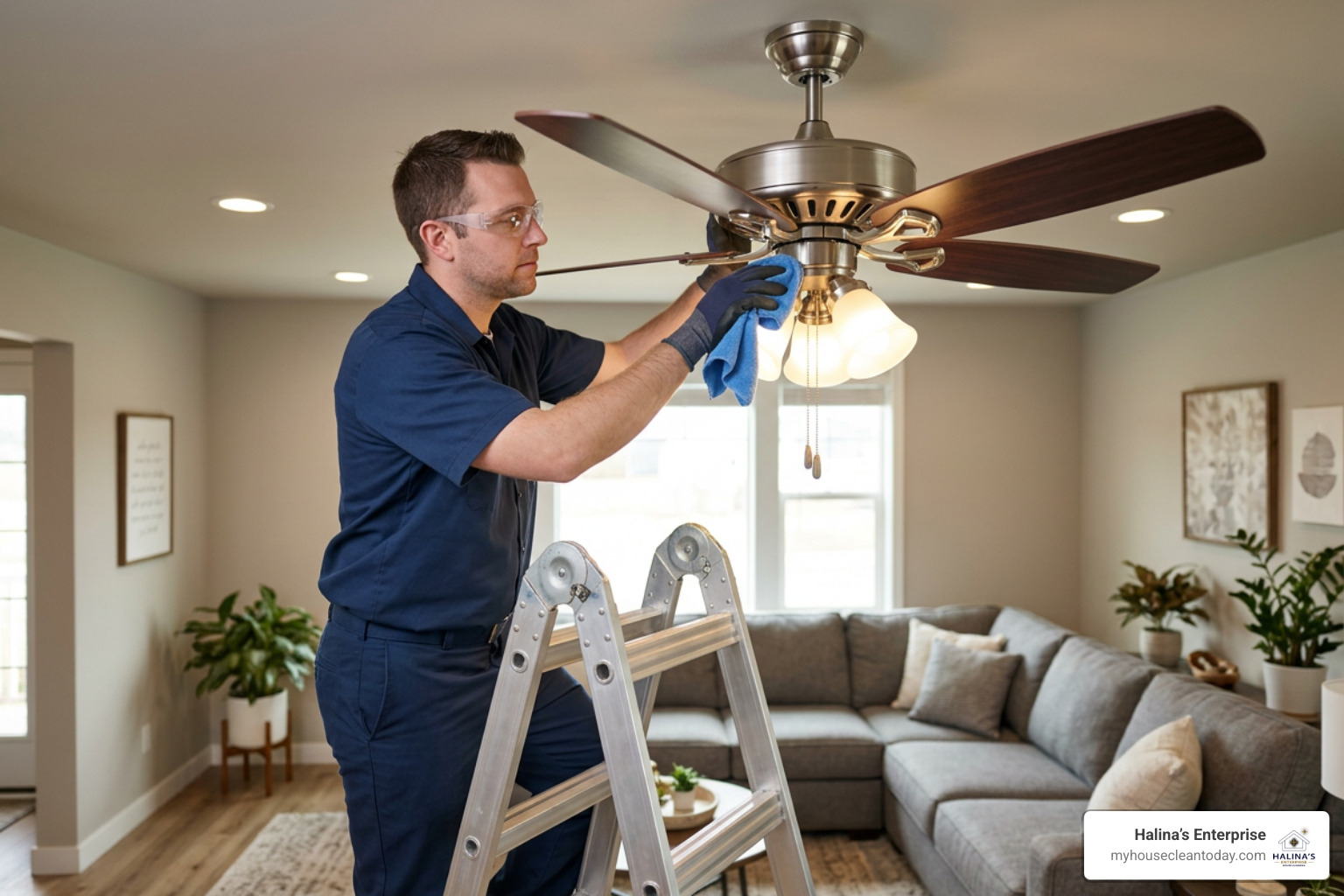
When selecting a cleaning company to care for your overhead fixtures, you want a team that values safety, transparency, and high standards of workmanship. Keep these essential criteria in mind:
- Licensing and insurance: Always verify that the company carries comprehensive general liability and workers’ compensation coverage to protect your home and their staff during high-ladder work.
- Trained, background-checked staff: Ensure the business employs professional, background-checked technicians rather than unvetted third-party contractors.
- Eco-friendly, non-toxic products: Look for services that use residue-free, family-safe formulas that will not leave chemical odors in your home.
- Clear, upfront pricing: Choose a provider with transparent rates and clear add-on structures without hidden fees for tall ceilings.
- Established local reputation: Check verified customer reviews and industry service awards to confirm consistent reliability.
When you are ready to refresh your living spaces with proven, top-rated care, you can easily contact us to discuss customized service options for your home.
Frequently Asked Questions About Ceiling Fan Cleaning
How often should high-ceiling fans be professionally cleaned?
Fans mounted on vaulted or two-story ceilings (12 to 20+ feet high) should be professionally cleaned every 3 to 6 months. Because high fixtures are difficult to reach with standard household tools, dust layers accumulate quickly. Homes with shedding pets, active HVAC systems, or nearby open windows benefit most from a quarterly cleaning schedule.
How much does professional ceiling fan cleaning typically cost?
When booked as an add-on to residential cleaning or interior window washing, professional fan cleaning generally costs $20 to $30 per fan. Standalone visits for a single fan may be subject to a company’s basic trip minimum, which is why bundling multiple fans or combining them with whole-home deep cleaning offers the best overall value.
Are professional fan cleaning solutions safe for delicate finishes and pets?
Yes. Professional cleaning teams use non-toxic, pH-neutral, and biodegradable solutions specifically designed for delicate finishes. These formulas safely clean solid wood, sealed veneers, brushed nickel, brass, and matte plastic blades without etching surfaces or leaving behind chemical residues that could harm pets or children.
Conclusion
Ceiling fans play a major role in keeping your home comfortable and energy-efficient throughout the year. However, when left uncleaned, they quickly turn into overhead dust distributors that compromise your indoor air quality and strain internal motors. Routine maintenance keeps your fixtures spinning quietly, lowers energy use, and protects your living areas from circulating allergens.
With over 30 years of experience serving Roselle and communities across the Chicagoland area—including Schaumburg, Arlington Heights, Naperville, and Downers Grove—Halina’s Enterprise delivers reliable, award-winning care tailored to your home’s unique needs. Our bonded, insured team uses safe, non-toxic products to ensure every fixture in your home shines from top to bottom.
Give your home the fresh air and detailed care it deserves. Explore our full range of services today and let our dedicated team take the hard work out of keeping your living spaces immaculate.