The Three Critical Phases of Commercial Construction Clean Up
Managing cleanup across large commercial projects requires treating site care as an ongoing operational strategy rather than a one-time sweep at the end of the job. Coordinating cleanup milestones alongside mechanical, electrical, and plumbing trades keeps work zones clear, reduces hazards, and prevents newly installed materials from becoming damaged.
When cleanup is structured into clear phases, trade contractors move through their scopes faster, project managers hit handover deadlines without panic, and the building transitions smoothly toward inspection and occupancy.
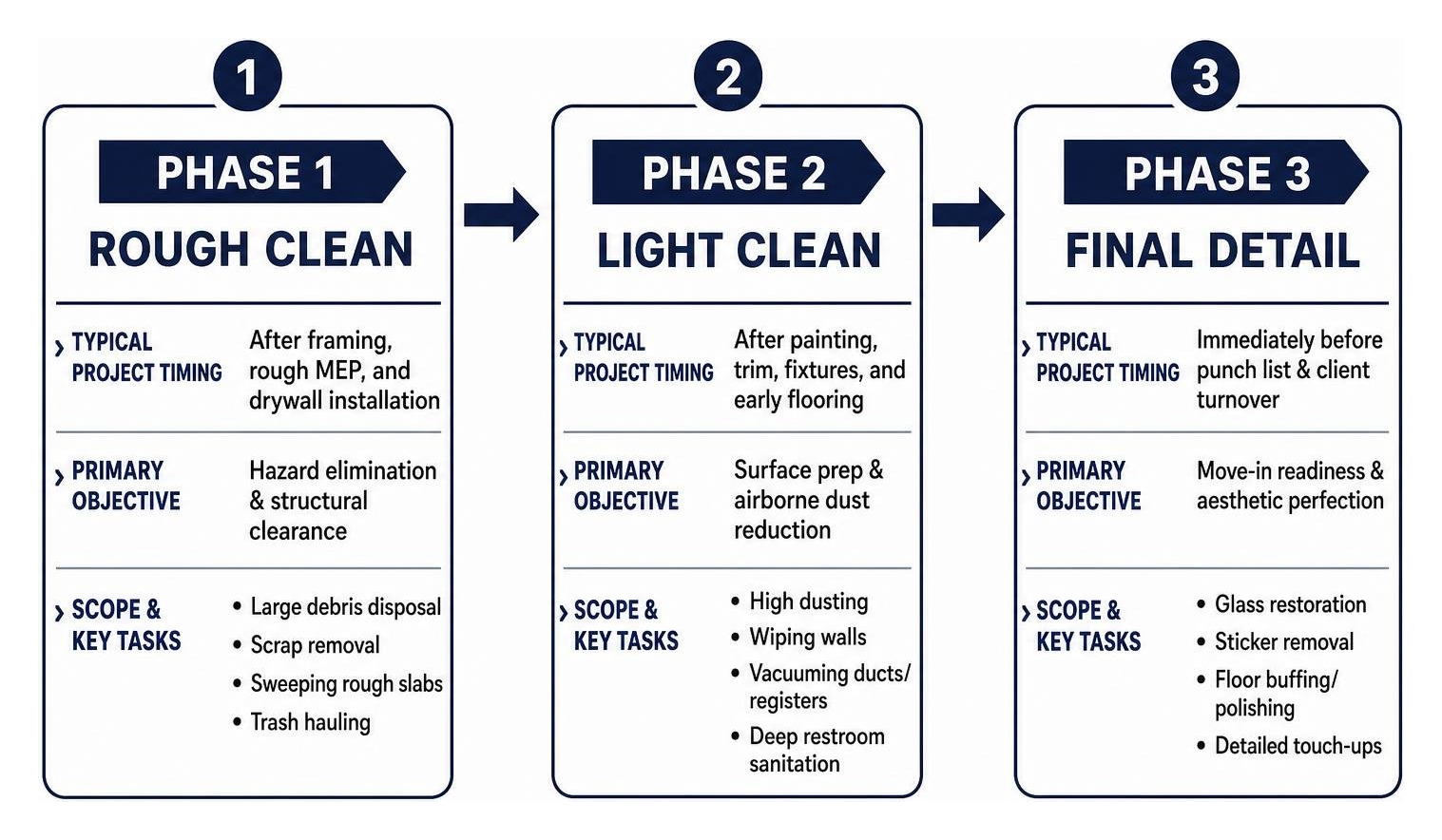
| Cleanup Phase | Typical Project Timing | Primary Objective | Scope & Key Tasks |
|---|---|---|---|
| Phase 1: Rough Clean | After framing, rough MEP, and drywall installation | Hazard elimination & structural clearance | Large debris disposal, scrap removal, sweeping rough slabs, trash hauling |
| Phase 2: Light Clean | After painting, trim, fixtures, and early flooring | Surface prep & airborne dust reduction | High dusting, wiping walls, vacuuming ducts/registers, deep restroom sanitation |
| Phase 3: Final Detail | Immediately before punch list & client turnover | Move-in readiness & aesthetic perfection | Glass restoration, sticker removal, floor buffing/polishing, detailed touch-ups |
Phase 1: Rough Clean and Heavy Debris Removal
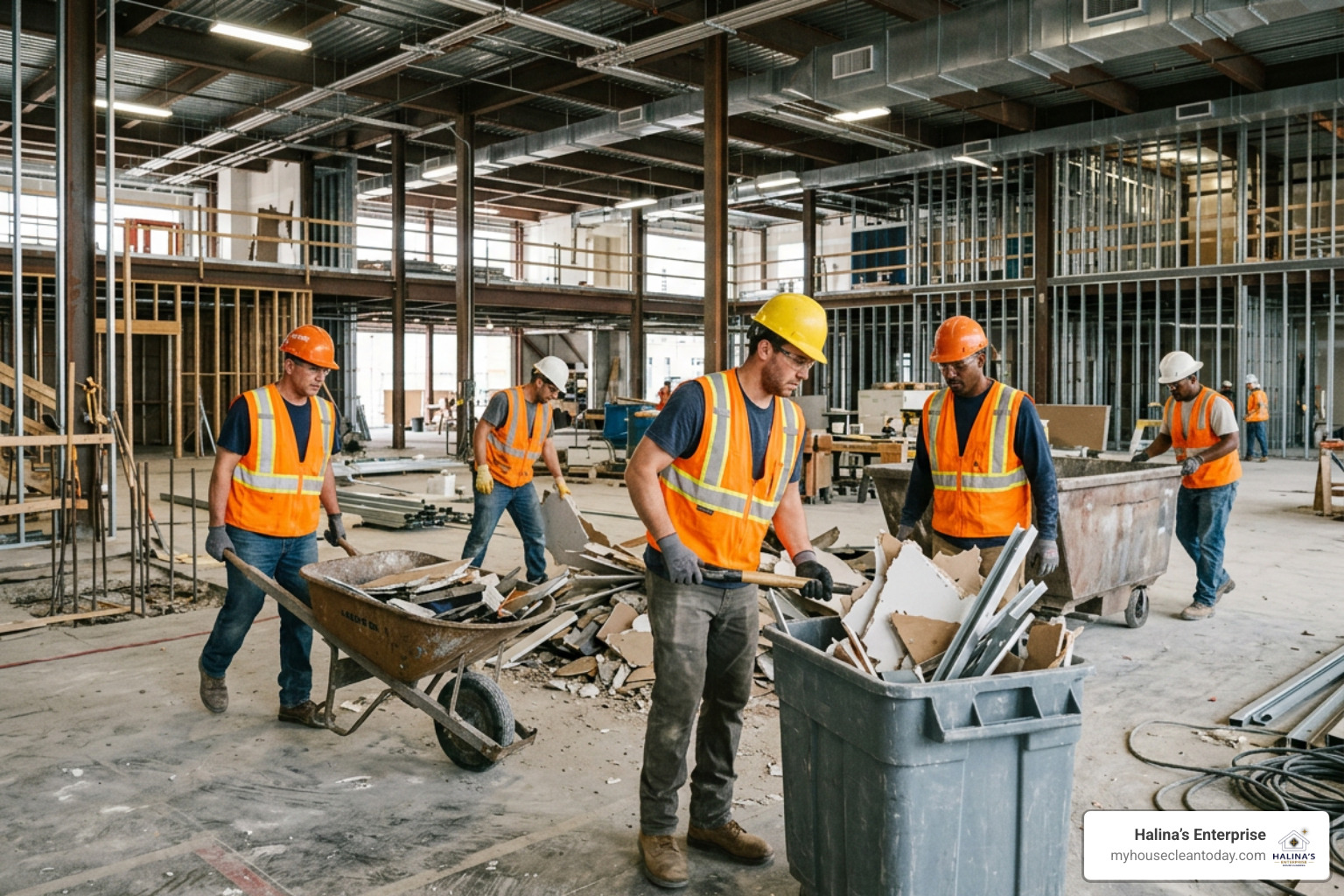
The rough clean begins once major structural, mechanical, electrical, and plumbing rough-ins are finished, typically right after drywall hanging and taping. At this point, the jobsite is filled with cutoffs, packaging, structural lumber scraps, metal studs, and drywall compound splatter.
The primary focus during this stage is safety and clearance:
- Hauling away broken materials, excess wiring, packaging, and discarded framing scraps.
- Scraping down concrete slabs to remove stuck drywall mud, mortar droppings, and mastic.
- Sweeping and clearing mechanical rooms, utility spaces, and elevator shafts to give finishing trades unobstructed access.
- Clearing perimeter access points, staging bays, and fire exits to maintain clear site logistics.
Removing this heavy bulk upfront prevents abrasive construction debris from being tracked onto subfloors or damaging sensitive equipment as installation crews begin their work.
Phase 2: Light Clean and Interior Surface Preparation
Once walls are primed and painted, cabinets and fixtures are set, and tile or hard flooring is laid down, the site enters the light clean phase. This is the most labor-intensive portion of the project because it directly tackles fine airborne particulate matter that has settled into every crevice.
Our focus shifts toward detailed interior preparation:
- Vacuuming out HVAC returns, vents, and registers before the mechanical systems run at full capacity.
- Washing down interior walls, doors, baseboards, and window frames to eliminate settled drywall dust.
- Sanitizing plumbing fixtures, commercial break areas, and restrooms.
- Performing an initial pass across window sills, electrical faceplates, and built-in millwork.
Executing a thorough post-construction cleanup at this midway point prevents dust from recirculating back into fresh paint or scratching sensitive surfaces as final cosmetic touches are completed.
Phase 3: Final Detail and Polish Before Turnover
The final detail clean takes place right before your final punch list walkthrough, municipal building inspection, and client handoff. At this stage, all trade work is finished, and the goal is complete aesthetic and sanitary move-in readiness.
During this stage, our team completes:
- Scratch-free glass restoration on interior partitions, curtain walls, and storefront entryways.
- Precision detailing of light fixtures, architectural metal trims, door handles, and millwork.
- Deep machine scrubbing, polishing, or sealing of concrete, hardwood, and luxury vinyl tile flooring.
- Removal of any lingering paint flecks, silicone caulking smears, or manufacturer labels.
For general contractors and facility owners handling post-construction cleaning in Roselle IL or across surrounding communities like Schaumburg and Elk Grove Village, this final phase turns a dusty jobsite into an immaculate, professional workspace ready for immediate tenant occupancy.
Jobsite Safety Protocols and Regulatory Compliance
Large commercial builds are fast-moving, high-risk environments. Cleanup crews must integrate seamlessly into the overall safety culture of the site without disrupting active workflows or creating safety hazards for other trades.
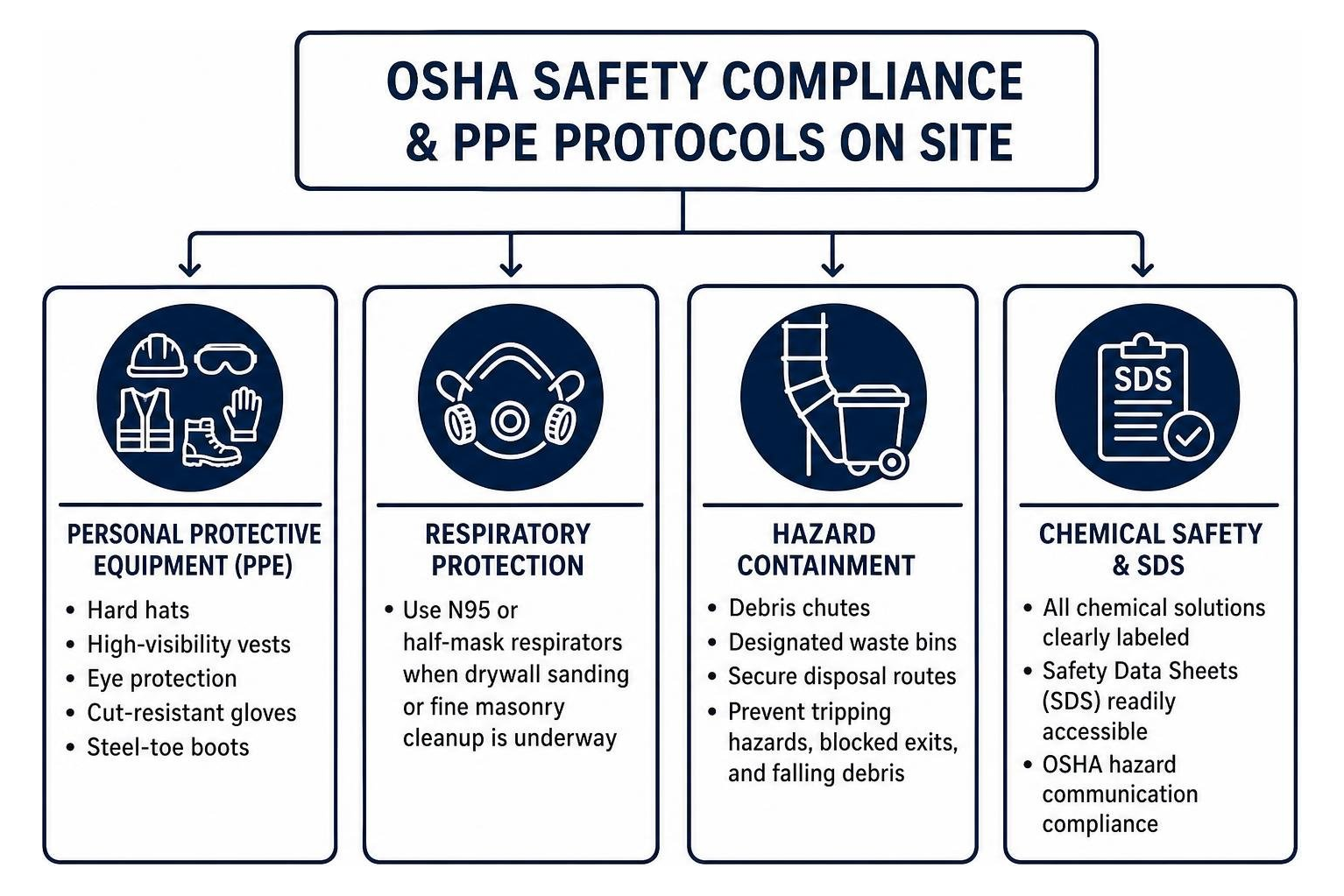
Our crews work under strict safety standards:
- Personal Protective Equipment (PPE): Hard hats, high-visibility vests, eye protection, cut-resistant gloves, and steel-toe boots are standard equipment on every active build.
- Respiratory Protection: When drywall sanding or fine masonry cleanup is underway, crews utilize appropriate N95 or half-mask respirators to safeguard against particulate exposure.
- Hazard Containment: Debris chutes, designated waste bins, and secure disposal routes are established to prevent tripping hazards, blocked exits, or falling debris.
- Chemical Safety & SDS: All chemical solutions used on site are clearly labeled with readily accessible Safety Data Sheets (SDS), ensuring complete compliance with OSHA hazard communication standards.
Licensing, Insurance, and Risk Mitigation
Hiring an unqualified or uninsured cleaning service introduces massive financial and legal risks to general contractors and property developers. If an untrained worker slips on wet concrete or scratches high-end architectural glass with the wrong scraper, the resulting delays and liability claims can quickly derail a project’s budget.
We protect our commercial partners by maintaining comprehensive coverage:
- General Liability Insurance: Protects high-value finishes, architectural glass, and newly installed building systems from accidental property damage.
- Workers’ Compensation: Ensures all crew members are fully covered in case of an on-site injury, shielding project owners and general contractors from personal injury liability.
- Surety Bonding & Background Checks: Guarantees absolute trustworthiness and accountability across secure, restricted, and high-value commercial environments.
Verifying that your cleaning partner holds active licensing, adequate bonding, and comprehensive insurance certificates is non-negotiable for smooth risk management across commercial builds.
Environmental Dust Control and Indoor Air Quality Standards
Post-construction dust consists of microscopic particles of gypsum, silica, sawdust, and concrete particulate. Left unmanaged, these fine particles can degrade indoor air quality, ruin newly applied paint jobs, and clog high-efficiency HVAC equipment.
To maintain superior indoor air quality and protect finishes, we employ multi-layered dust suppression:
- HEPA-Filtered Industrial Vacuums: True HEPA filtration traps 99.97% of particulates down to 0.3 microns, preventing fine dust from blowing out through exhaust ports back into the room.
- Damp-Wipe Microfiber Systems: Rather than dry dusting—which simply redistributes dust into the air—microfiber cloths with electrostatic properties trap particles on contact.
- Safe, Non-Toxic Cleaners: Using health-conscious, non-toxic cleaning agents ensures that no harsh chemical fumes or strong volatile organic compounds (VOCs) linger in enclosed spaces prior to tenant arrival.
- Ventilation and Register Sealing: Coordinating with mechanical contractors to seal returns and supply vents during heavy cleaning prevents cross-contamination across already finished zones.
Technical Execution Across Key Building Finishes
Modern commercial developments incorporate diverse materials, from polished concrete and luxury vinyl tile to architectural curtain walls and custom architectural metals. Each surface requires specific technical handling to avoid costly damage.
Deep Window, Frame, and Glass Restoration
Window glass is especially vulnerable during commercial construction. Overspray from exterior stucco, paint splatters, mortar droppings, and manufacturer adhesives frequently coat glass panels, frames, and sills.
Using improper techniques—such as dry scraping or using standard razor blades on tempered glass—can permanently scratch the glass due to microscopic fabricating debris.
Our window restoration process includes:
- Assessment: Checking for tempered glass stamps and low-E coatings to determine the correct mechanical or chemical cleaning approach.
- Softening Adhesives: Applying specialized, non-abrasive release agents to dissolve silicone sealants, tape residue, and mortar spots without scratching.
- Wet Scraping Techniques: Utilizing brand-new, stainless steel surgical-grade glass scrapers lubricated with cleaning solution, held at precise angles.
- Frame & Track Detailing: Industrial vacuuming of tracks followed by microfiber wipe-downs to remove gritty construction dust from rubber seals and drainage weep holes.
Floor Care and Fine Particle Extraction Across Large Facilities
Floors take the brunt of foot traffic, equipment rolling, and debris accumulation during construction. Whether dealing with expansive open spans or intricate executive suites, fine particle extraction requires industrial machinery and material-specific expertise.
For large open layouts such as logistics hubs, fulfillment centers, or distribution plants, routine brooms only kick dust into the rafters. In these settings, professional industrial warehouse cleaning relies on industrial ride-on auto-scrubbers with specialized diamond pads and cylindrical brushes to lift ground-in dirt and scrub concrete slabs clean without leaving slurry behind.
For other commercial surfaces, our process adapts:
- Hardwood and Engineered Flooring: Dry-vacuuming with soft horsehair attachments followed by neutral-pH, damp-mopping systems to preserve wood finishes without moisture damage.
- Porcelain & Ceramic Tile: Low-speed rotary floor scrubbers combined with acidic or neutral grout cleaners to eliminate stubborn grout haze and residue.
- Resilient Flooring (LVT/VCT): Deep scrubbing, neutralization, and high-durability finish application or high-speed burnishing to achieve a durable, scuff-resistant shine.
Strategic Coordination and Scheduling for Project Managers
On large commercial projects, scheduling delays can trigger costly liquidated damages. Cleanup must be tightly woven into your Master Project Schedule to keep trades moving forward without bottlenecking the critical path.
To optimize workflow efficiency:
- Stagger Cleaning Zones: On multi-story developments or sprawling corporate campuses, schedule cleanup floor by floor or wing by wing. As upper levels receive their final polish, lower levels can undergo trade punch-list work.
- Create Clear Access Windows: Cleaners perform best when given uninterrupted access to designated zones. Avoid scheduling flooring detail work simultaneously with ceiling tile installers or painters in the same room.
- Coordinate Milestone Hand-Offs: Align rough cleans right before flooring installations so installers have a clean, dust-free slab for optimal adhesive bonding.
Maintaining clean spaces during transitions is equally vital when prepping executive suites and administrative areas. Tailored corporate office cleaning helps finish administrative areas, conference rooms, and restrooms on schedule so tenant onboarding stays on track.
Outsourcing vs. In-House Labor for Commercial Projects
Some general contractors attempt to manage site cleanup using in-house laborers or trade helpers. However, this approach frequently leads to higher overall costs, surface damage, and missed turnover deadlines.
| Factor | In-House Labor / Trade Helpers | Specialized Commercial Cleaning Contractor |
|---|---|---|
| Equipment Capability | Standard shop vacs, brooms, basic mops | Industrial HEPA scrubbers, auto-scrubbers, rotary extractors |
| Cost Efficiency | High hourly trade rates for low-skill sweeping | Streamlined, fixed-scope contractual pricing |
| Surface Knowledge | High risk of scratching glass, ruining grout, or dulling floors | Material-specific chemical knowledge and specialized tools |
| Speed & Capacity | Slower execution pulled away from actual trade work | Dedicated crews focused 100% on rapid turnaround |
| Quality Assurance | Inconsistent; often fails detailed punch-list inspections | Documented quality control and inspection-ready results |
By outsourcing to a dedicated commercial cleaning partner, project managers save valuable trade hours, eliminate equipment rental overhead, and secure predictable handover results.
Selecting the Right Vendor in Competitive Regional Markets
Choosing the right cleanup partner requires evaluating capabilities beyond a simple price bid. A low estimate means little if the vendor lacks the manpower, equipment, or insurance to service a massive commercial development.
Key vendor criteria to evaluate:
- Proven Experience: Look for established providers with extensive industry experience (such as our 30+ years serving the Chicagoland construction market).
- Safety and Certifications: Demand proof of active workers’ compensation, comprehensive general liability, bonding, and OSHA-compliant safety programs.
- Equipment Fleet: Ensure the contractor owns and operates commercial-grade HEPA vacuums, auto-scrubbers, and specialized glass tools rather than residential-grade tools.
- Schedule Flexibility: Commercial builds change daily. Your cleaning partner must have the staffing flexibility to handle weekend pushes, evening shifts, or rapid schedule adjustments.
Frequently Asked Questions About Commercial Construction Cleanup
How do specialized crews handle dust control to protect sensitive HVAC systems and finishes?
Specialized cleanup crews use high-efficiency HEPA vacuums, air scrubbers, and damp microfiber wiping rather than dry sweeping. They also seal off HVAC return registers and supply grilles during the dustiest phases of rough and light cleaning. For actionable techniques on controlling airborne particles on your jobsite, explore our practical post-construction cleaning tips to maintain pristine site conditions.
What is the optimal timeline for scheduling rough and final cleanup phases?
Rough cleanup should be scheduled immediately after framing, rough-in mechanical work, and drywall finishing. Light cleanup should occur once architectural fixtures, cabinets, and major paint applications are complete. The final detail clean should be scheduled 24 to 48 hours before the final municipal inspection or client walkthrough, allowing an uninterrupted window to buff floors, restore glass, and complete punch-list detailing.
Why is contractor licensing and comprehensive insurance mandatory for cleanup teams?
Active jobsites carry inherent risks. Comprehensive general liability insurance protects against accidental damage to expensive finishes, high-grade glass, or sensitive equipment. Workers’ compensation coverage shields general contractors and property developers from direct liability in the event of an on-site injury. Always require a Certificate of Insurance (COI) naming your business as an additional insured before granting site access.
Deliver Flawless Handover Results on Every Commercial Build
Managing construction cleanup across large developments is about risk management, milestone protection, and client satisfaction. When your site is clean, safe, and systematically organized, inspections pass smoothly, trades work more efficiently, and clients step into a pristine facility ready for business.
For more than 30 years, Halina’s Enterprise has delivered reliable commercial, industrial, and post-construction cleaning services throughout Roselle, IL, and the entire Chicagoland area—including Schaumburg, Hoffman Estates, Elk Grove Village, Bartlett, Bloomingdale, Carol Stream, Naperville, and Chicago. Our fully insured, bonded, and award-winning teams use safe, non-toxic products and industrial-grade equipment to bring your project over the finish line.
Ready to streamline your site turnover and pass your final inspection with ease? Explore our complete range of commercial construction cleaning services today and partner with a team dedicated to jobsite excellence.