Commercial Ceiling Cleaning: Restore More, Replace Less
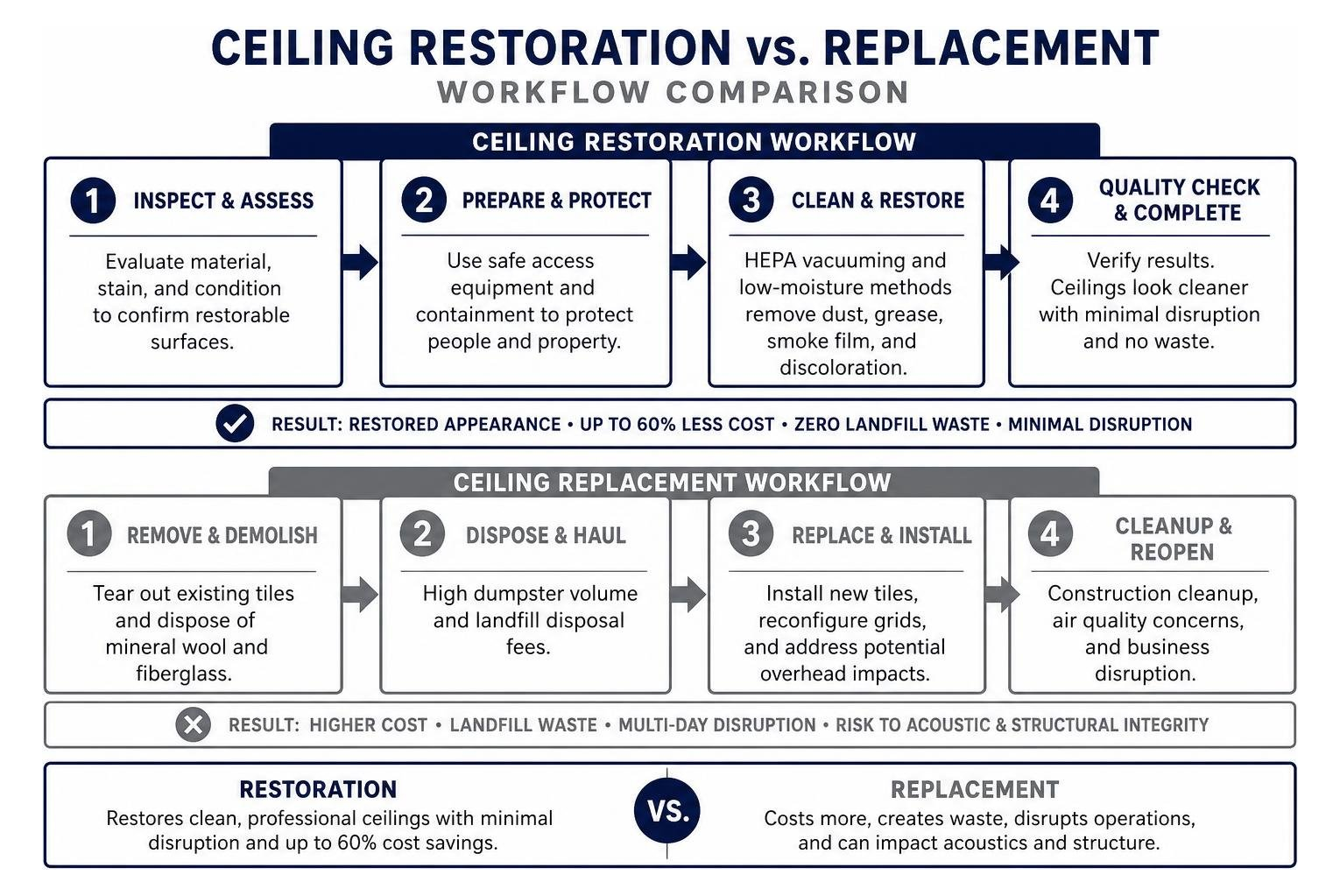
Commercial ceiling cleaning can restore many stained or dusty ceiling tiles and overhead surfaces for far less than replacement. A qualified crew first inspects the material and stain, then uses HEPA vacuuming, low-moisture cleaning methods, and safe access equipment to remove dust, grease, smoke film, and discoloration. Tiles that are sagging, mold-damaged, or structurally weakened may still need replacement.
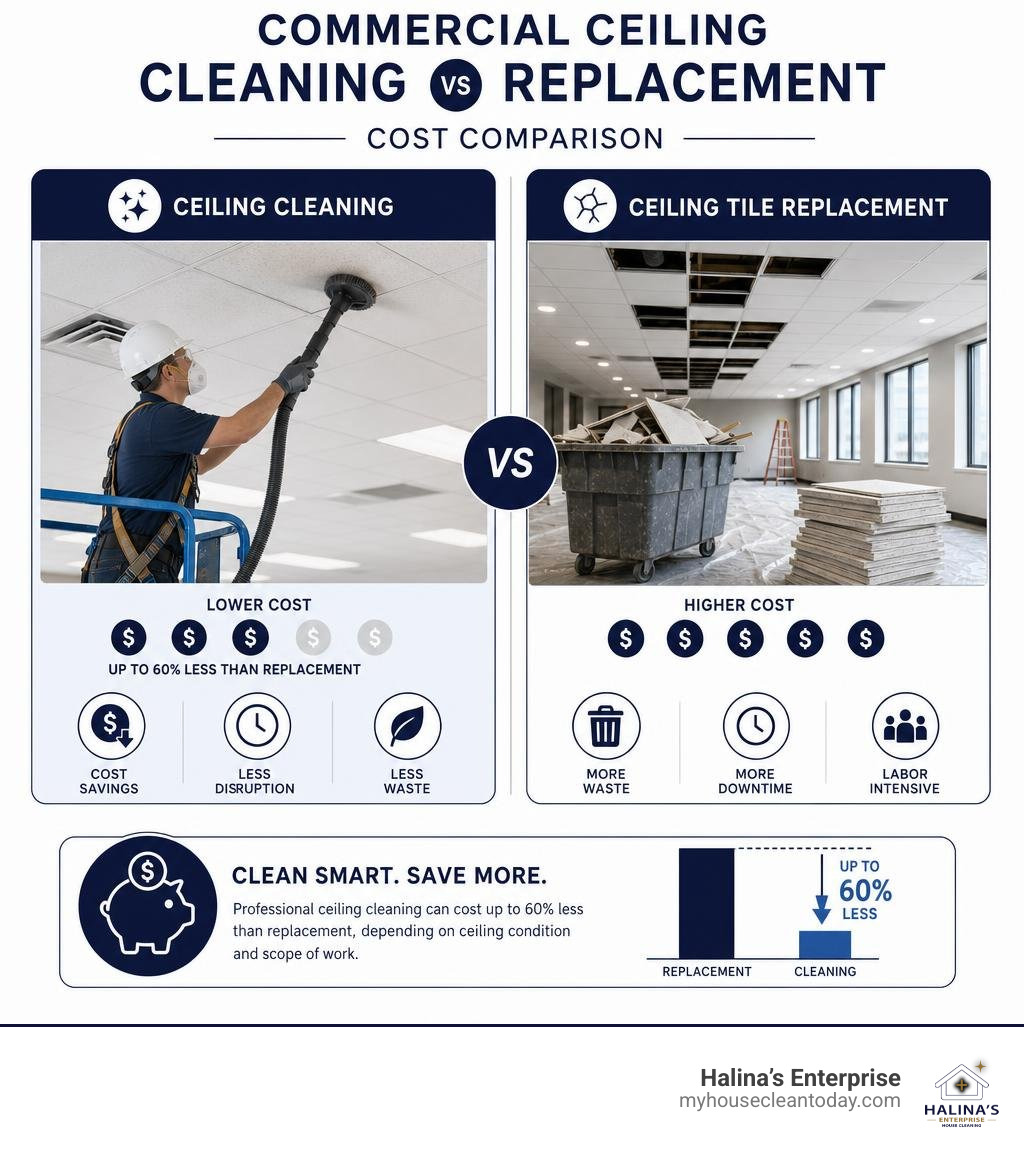
For busy offices, retail spaces, restaurants, clinics, and warehouses, this is often a practical way to improve appearance without the cost, waste, and disruption of a full tile changeout. Professional tile cleaning can cost up to 60% less than replacement, depending on the ceiling condition, access height, and scope of work.
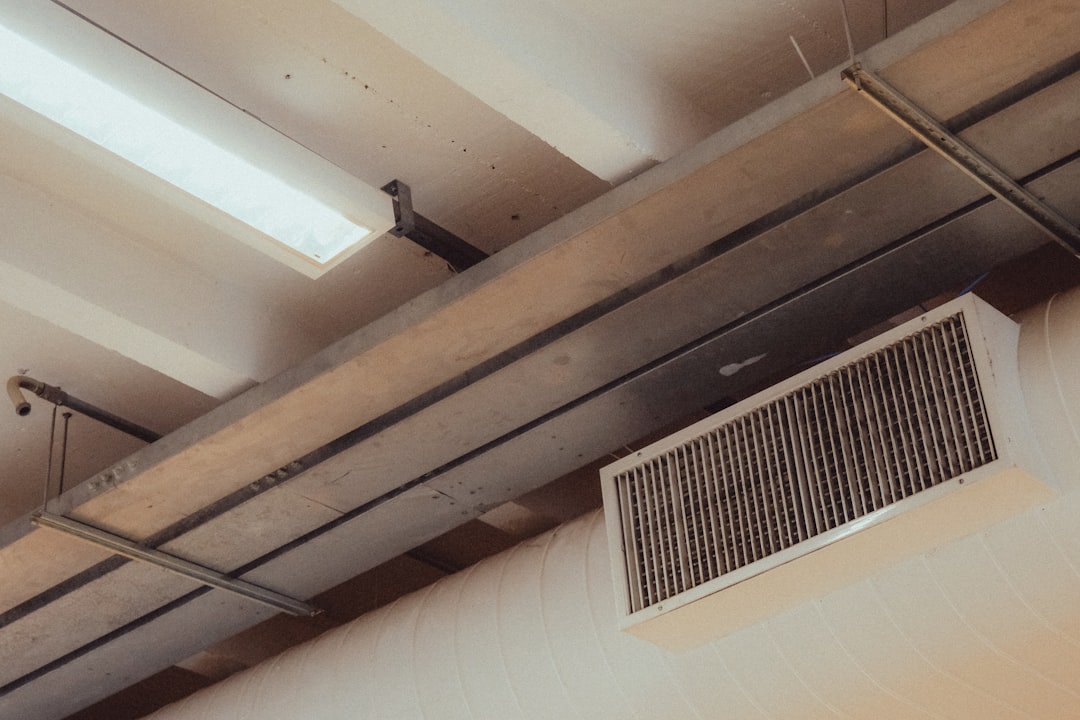
Regular janitorial service usually handles reachable surfaces. Ceiling cleaning goes higher, addressing acoustic tiles, exposed rafters, vents, ducts, beams, light fixtures, and other areas where dust can collect unnoticed. It also requires careful surface testing, fall protection, trained lift operation, and containment to protect people and property below.
Why Commercial Ceiling Cleaning Beats Costly Tile Replacement
When ceiling panels turn gray, yellow, or spotty, the default reaction for many property managers is to call a contractor for a complete tile tear-out. However, replacement is rarely the most practical or economical choice. Tearing down ceiling tiles creates massive disruptions, sends hundreds of pounds of non-biodegradable mineral wool and fiberglass into local landfills, and runs up thousands of dollars in material procurement, disposal fees, and union labor.
Restoring ceilings in place with professional methods offers around 60% cost savings compared to full structural replacement. More importantly, professional restoration protects the original acoustic ratings and fire-retardant qualities of acoustic drop-ceiling panels. Painting tiles or installing heavy replacements can seal the porous acoustic fissures, turning a quiet office or conference room into an echo chamber. Specialized low-moisture surface treatments lift deeply embedded dirt, oxidation, and oil without altering the physical architecture of the tile.
| Factor | Professional Ceiling Restoration | Complete Ceiling Tile Replacement |
|---|---|---|
| Direct Cost | Up to 60% lower overall project expense | High material, disposal, and installation costs |
| Operational Downtime | Completed overnight; zero business disruption | Multi-day closures, construction zones, dust hazards |
| Environmental Impact | Zero landfill waste; eco-friendly chemistry | High dumpster volume and disposal footprints |
| Acoustic Performance | Preserves Sound Transmission Class (STC) ratings | Painting or improper new tiles can ruin acoustics |
| Structural Integrity | T-bar grids and support wires remain undisturbed | Potential damage to grid alignments and overhead wiring |
| Air Quality Impact | HEPA extraction eliminates settled particulate | Demolition disperses construction dust into HVAC units |
Acoustic Tiles vs. Exposed Structural Decks
Every commercial facility presents unique overhead architectural elements, and each material demands an engineered approach.
- Acoustic Drop Ceilings (Porous Mineral Fiber & Fiberglass): Suspended T-bar grids holding porous tiles are common in offices, schools, and medical facilities. These panels absorb ambient sound, but their porous nature acts like a giant air filter, capturing airborne pollutants, cooking grease, and humidity. Saturated liquid cleaning ruins these tiles, causing them to bow, swell, or disintegrate. They require low-moisture mist chemistry that breaks molecular stain bonds and dries quickly.
- Exposed Structural Ceilings & Open Rafters: Modern open-concept designs, retail hubs, and fulfillment centers feature exposed steel trusses, metal roof decks, conduit lines, and spiral HVAC ductwork. In settings requiring dedicated industrial warehouse cleaning, overhead metal structures collect thick layers of settled dust, static-charged lint, and exhaust soot. These surfaces require HEPA-filtered vacuum extraction paired with surface-safe degreasing wipes to protect bare metals and painted coatings from corrosion.
High Dusting vs. Specialized Ceiling Surface Restoration
A common misconception among facility owners is that high dusting and ceiling surface restoration are the exact same task. While both address overhead contamination, they tackle completely different physical problems.
High dusting is the mechanical removal of loose, dry particulate that has drifted upward due to thermal air currents and settled onto structural beams, lighting pendants, fire sprinkler pipes, and air diffuser grilles. If left neglected, these dry layers present combustible dust hazards and continuously shed allergens onto the workspaces below.
Specialized ceiling restoration goes a step further by lifting bonded stains that have chemically adhered to surfaces. This includes stubborn grease films from commercial cooking, nicotine or combustion smoke discoloration, yellow oxidation from UV lighting, and mineral water marks left by past plumbing or roof leaks. Restoration uses targeted chemical solutions to break down surface adhesives and encapsulate discoloration without soaking delicate ceiling substrates.
Signs Your Facility Needs Commercial Ceiling Cleaning Immediately
Because we rarely look directly overhead, ceiling contamination often goes unnoticed until it begins negatively affecting employee health, customer perception, or air circulation. Watch for these clear indicators:
- Ghosting Around Air Diffusers: Dark, sooty halos forming around supply vents indicate that the HVAC system is pulling dust across the ceiling, depositing fine particulate onto adjacent tiles.
- Tile Yellowing and Discoloration: Nicotine, aerosolized kitchen oils, and aging chemical binders turn bright white tiles into an unappealing yellow or dingy gray.
- Musty, Stale Odors: Porous tiles absorb moisture and airborne odors over time. If a room smells continuously stale despite clean carpets and regular office cleaning, the overhead tiles are often harboring odor-causing contaminants.
- Visible Cobwebs and Dust Trails on Trusses: In high-ceiling retail stores or distribution spaces, vibration from foot traffic, forklifts, or machinery causes overhead dust strands to detach and drop onto workstations, inventory, and merchandise.
- Staff Allergy Complaints: An unexplained uptick in respiratory irritation, sneezing, or itchy eyes among staff frequently points to overloaded ceiling surfaces recirculating allergens through building airflow.
Safety Standards, Aerial Equipment, and OSHA Protocols
Working overhead involves significant physical and environmental safety hazards. In commercial facilities, overhead maintenance means working near high-voltage electrical conduits, fire suppression lines, delicate data cabling, and heights exceeding 40 feet.
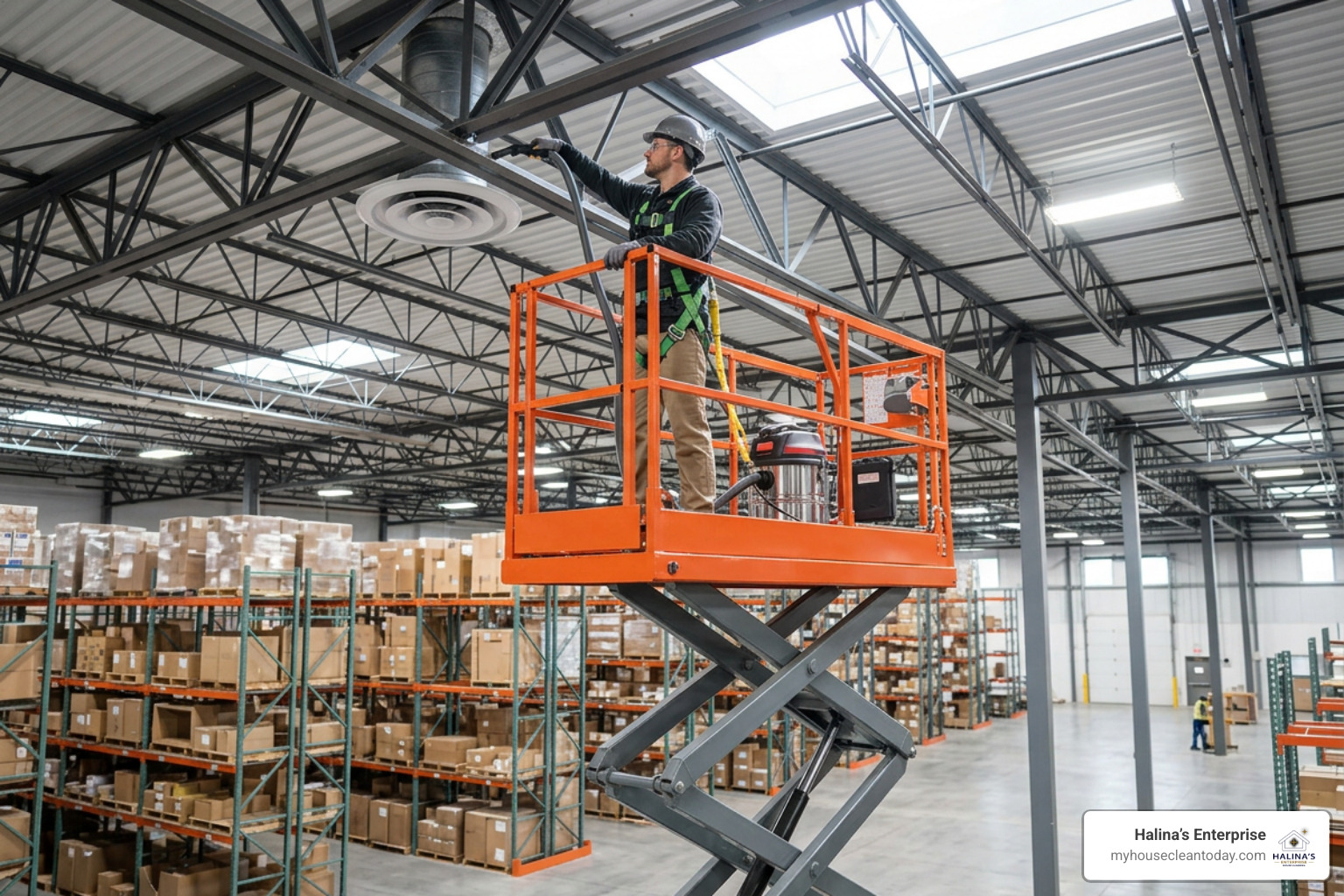
At Halina’s Enterprise, we treat high-reach safety as a core operational discipline. Professional overhead projects must strictly adhere to regulatory protocols:
- ANSI-Compliant Aerial Work Platforms: Operating scissor lifts, articulating boom lifts, and vertical mast lifts requires certified operators who inspect equipment daily and adhere to strict load capacities.
- OSHA Fall Protection Standards (29 CFR 1926/1910): Any technician working at elevated heights must be secured using full-body harnesses, shock-absorbing lanyards, and certified overhead anchor points in strict compliance with OSHA fall protection standards.
- Combustible Dust Hazard Mitigation (OSHA & NFPA 652): In manufacturing and storage environments, overhead dust buildup can become explosive if disturbed improperly. Using grounded, explosion-proof, HEPA-filtered vacuum systems prevents electrostatic discharge from igniting airborne particulates during cleaning.
- Zero-Drop Floor Zones: Staging zones below the aerial workspace must be cordoned off with high-visibility safety barriers, caution tape, and protective floor drop cloths to safeguard building occupants and delicate flooring from accidental drops.
Professional Commercial Ceiling Cleaning Methods and Chemistry
To restore overhead surfaces without causing water damage or leaving chemical residues, professional technicians follow a systematic, multi-step process.
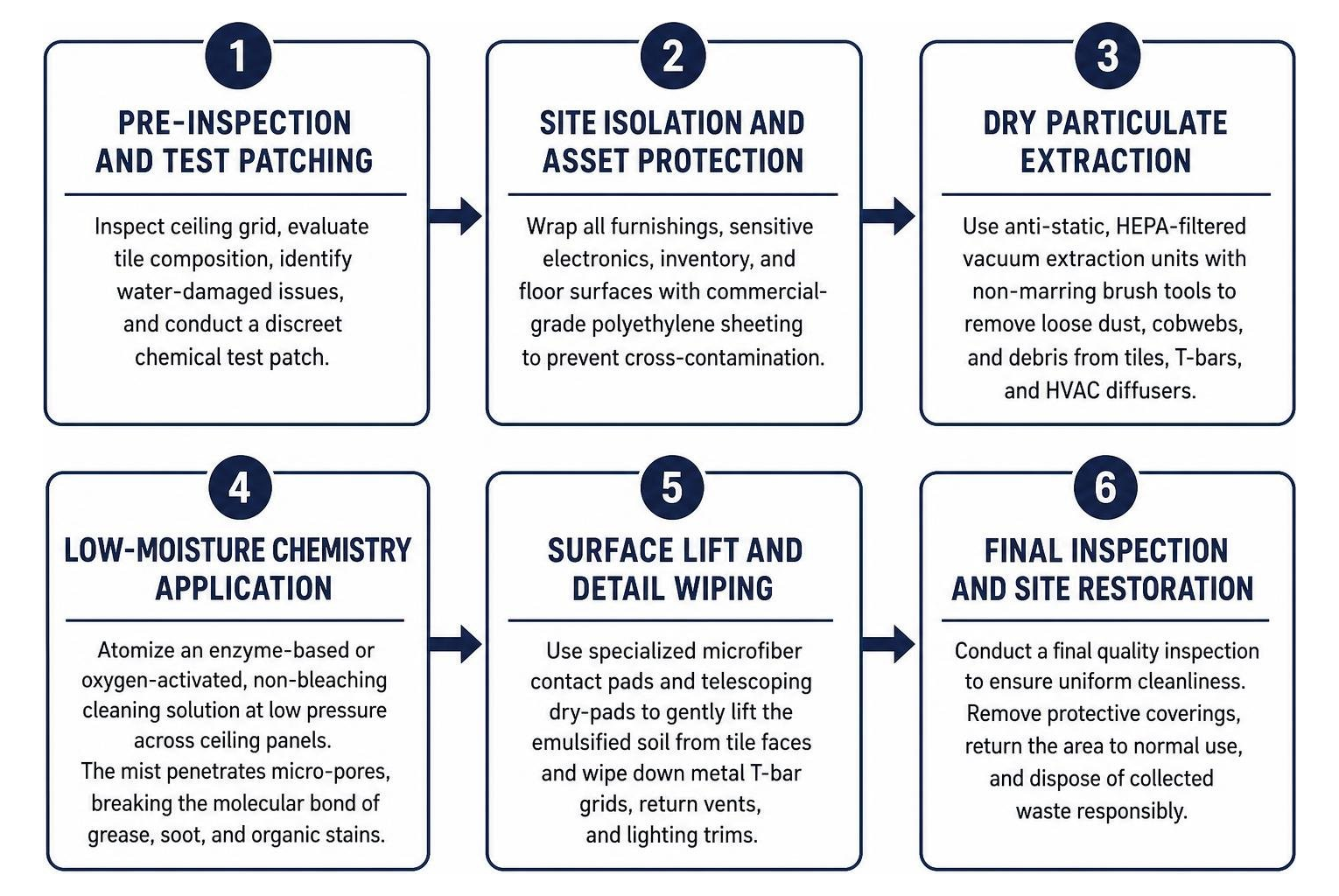
- Pre-Inspection and Test Patching: Technicians inspect the ceiling grid, evaluate tile composition, identify water-damaged structural issues, and conduct a discreet chemical test patch to verify colorfastness and dirt release.
- Site Isolation and Asset Protection: All furnishings, sensitive electronics, inventory, and floor surfaces are wrapped in commercial-grade polyethylene sheeting to prevent cross-contamination.
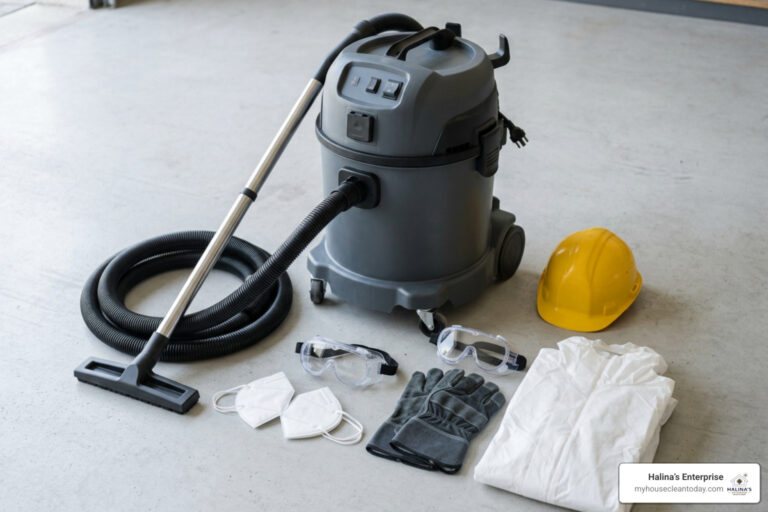
- Dry Particulate Extraction: Using anti-static, HEPA-filtered vacuum extraction units with non-marring brush tools, crews remove loose dust, cobwebs, and debris from tiles, T-bars, and HVAC diffusers.
- Low-Moisture Chemistry Application: An enzyme-based or oxygen-activated, non-bleaching cleaning solution is atomized at low pressure across the ceiling panels. This mist penetrates the micro-pores, breaking the molecular bond of grease, soot, and organic stains.
- Surface Lift and Detail Wiping: Specialized microfiber contact pads and telescoping dry-pads gently lift the emulsified soil from the face of the tiles and wipe down metal T-bar grids, return vents, and lighting trims.
- Final Quality Audit and Documentation: Technicians conduct an inspection with building managers, reviewing before-and-after photographic documentation to confirm complete stain removal and clean fixtures.
Our non-toxic, eco-friendly cleaning formulations contain no harsh bleach, ammonia, or volatile organic compounds (VOCs). This ensures the treated space remains safe for immediate occupancy without strong chemical odors or lingering respiratory irritants.
Operational Scheduling and Facility Impact Across Industries
Maintaining clean ceilings shouldn’t require grinding daily business operations to a halt. Overhead cleaning can be scheduled during evenings, over weekends, or phased section-by-section to accommodate normal workflows.
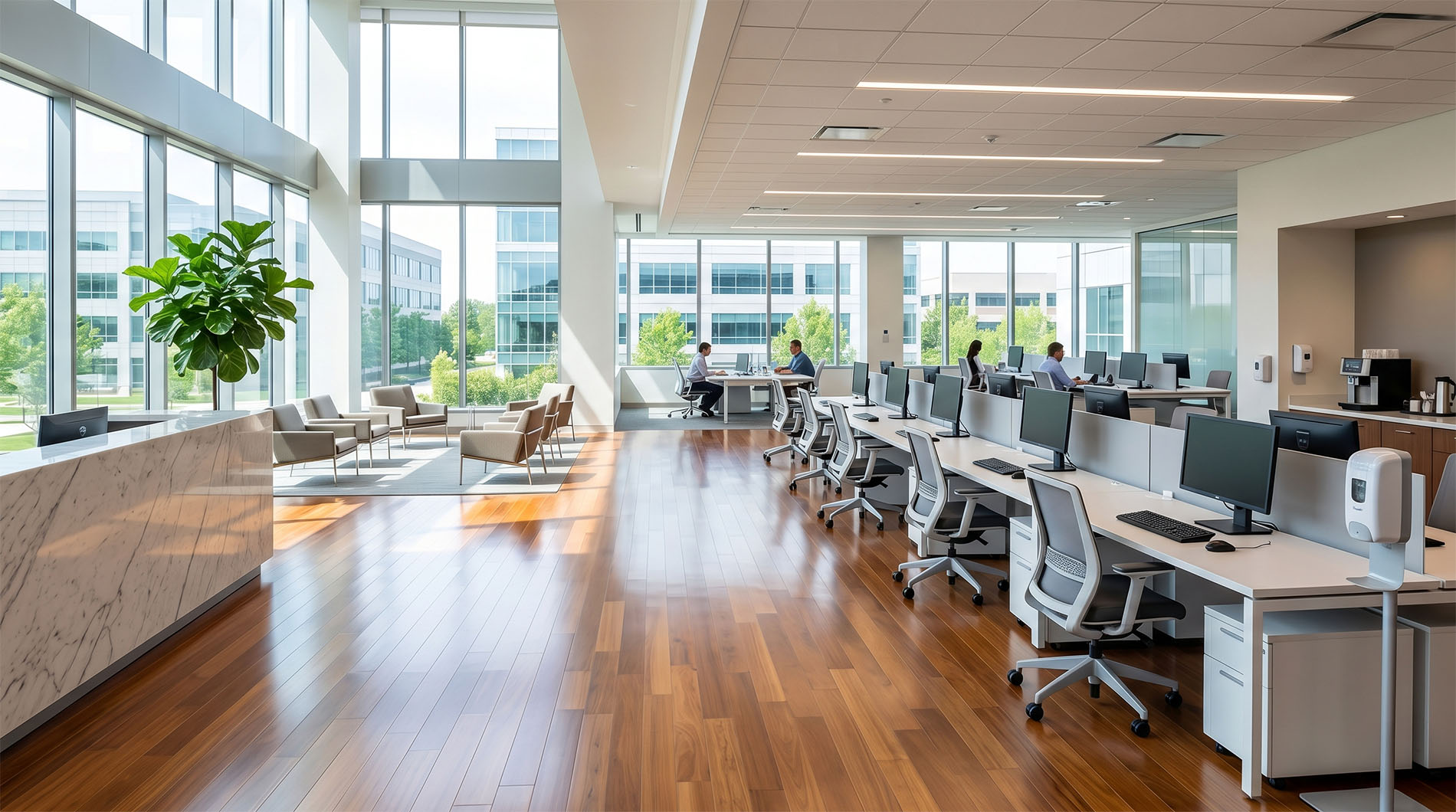
Different commercial environments require tailored cleaning schedules:
- Restaurants and Commercial Kitchens: Cooking vapors carry microscopic grease particles upward, where they settle on prep-line ceilings and dining room tiles. Regular overhead degreasing eliminates slippery fire hazards, eradicates rancid grease odors, and ensures full health department compliance.
- Medical Clinics and Healthcare Facilities: Maintaining hygienic environments requires eliminating dust reservoirs where bacteria, spores, and allergens can thrive. Regular HEPA extraction keeps sterile zones fully compliant with health codes.
- Retail Centers and Showrooms: Overhead visual appeal directly impacts shopper perceptions. Dingy tiles, dusty track lights, and discolored air returns distract customers from retail displays and make stores look neglected.
- Fulfillment and Manufacturing Facilities: Heavy equipment and continuous logistics activity generate ongoing dust. Scheduled overhead cleaning keeps sensitive machinery running smoothly and protects stored inventory from falling debris.
Whether you manage an office complex in Schaumburg, a distribution center in Elk Grove Village, a medical suite in Naperville, or a retail boutique in Downers Grove, integrating overhead care into your broader commercial cleaning strategy protects both your building assets and your brand image.
Frequently Asked Questions About Overhead Cleaning
Can severely water-stained ceiling tiles be cleaned effectively?
Yes, many water marks caused by historic plumbing leaks, condensation, or resolved roof leaks can be restored using specialized oxygen-based oxidizing cleaners. These formulas break down the dark iron and mineral rings left by evaporated water without breaking down the tile’s fiber structure. However, if the water leak caused the tile to bow, sag, crumble, or develop mold, that specific panel has lost its structural integrity and should be replaced.
How often should commercial facilities schedule overhead cleaning?
Cleaning frequency depends entirely on your industry, indoor airflow, and facility traffic:
- Warehouses and Distribution Hubs: Every 6 to 12 months to manage dust and maintain OSHA air compliance.
- Offices, Corporate Headquarters, and Schools: Annually or every 18 months for high dusting, with full tile restoration every 2 to 3 years.
- Restaurants and Food Service Spaces: Every 3 to 6 months for kitchen ceilings, and every 6 to 12 months for customer dining areas.
- Medical and Healthcare Environments: Bi-annually to minimize allergen buildup and airborne particle circulation.
Will the cleaning process disrupt normal business operations?
Not when handled by an experienced team. Professional overhead cleaning is routinely completed during off-hours, overnight, or over weekends. Technicians cover workstations, desks, equipment, and flooring with protective tarps before starting. Because low-moisture cleaning solutions dry within 1 to 2 hours, your space is clean, dry, odor-free, and ready for normal business operations the following morning.
Conclusion
Your ceilings represent up to 25% of the visible surface area in your commercial facility. Leaving them dirty, discolored, and covered in dust detracts from your professional image, strains your HVAC units, and degrades indoor air quality.
Opting for professional restoration over costly, disruptive tile replacement saves up to 60% in capital expenditures while keeping tons of usable material out of local landfills.
For more than 30 years, Halina’s Enterprise has delivered reliable, award-winning cleaning solutions across Roselle, IL, and the greater Chicagoland area—including Schaumburg, Arlington Heights, Naperville, Des Plaines, and surrounding communities. As a fully insured and bonded company, we utilize safe, non-toxic products and OSHA-aligned methods to restore your facility from floor to ceiling.
Protect your overhead assets and elevate your work environment by exploring our comprehensive commercial cleaning services or reaching out for a free on-site assessment today!