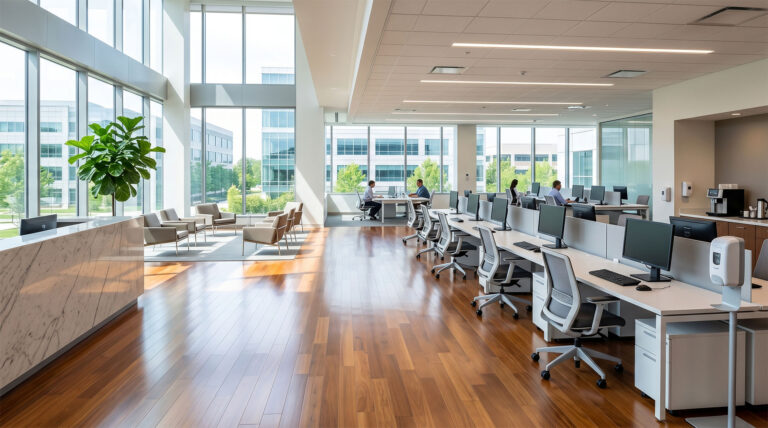
Build an Office Cleaning Schedule That Fits Your Workday
To create an office cleaning schedule, list each area, assign an owner, and set tasks by frequency. Daily: empty bins and clean restrooms, breakrooms, and shared touchpoints. Weekly: clean floors and dust desks and meeting rooms. Monthly: tackle deeper jobs such as appliance cleaning and high-level dusting. Add extra cleaning where foot traffic is high, and put noisy tasks outside busy hours.
A written plan helps staff and cleaners know what needs to happen and when. Start with these tasks, then adjust the routine as your office changes.
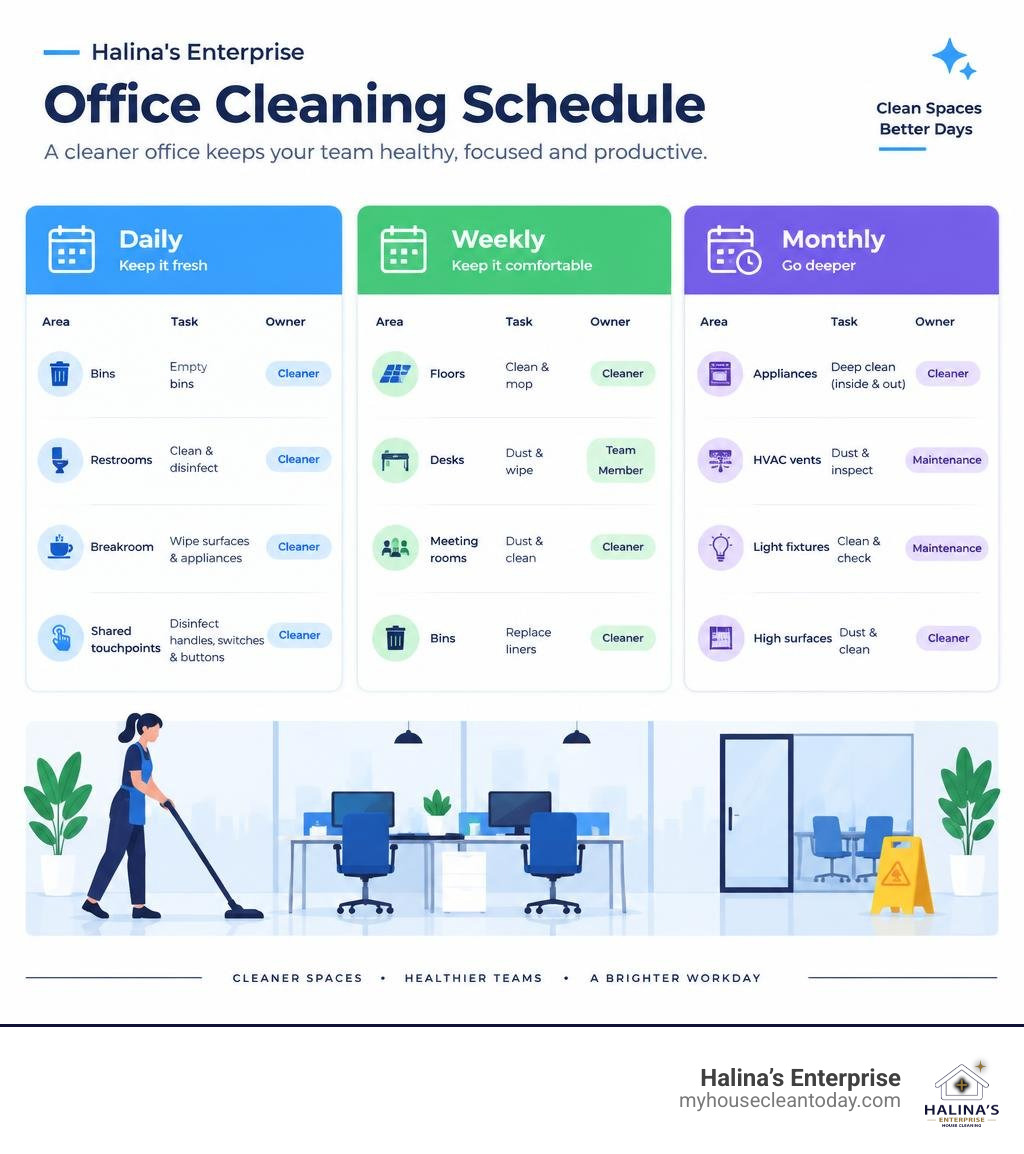
Office cleaning schedule word roundup:
Core Components of an Effective Office Cleaning Schedule
A clean workplace does far more than look impressive during client walkthroughs. Maintaining meticulous workplace sanitation directly impacts employee productivity, indoor air quality, and overall health standards. When high-touch surfaces go unaddressed, bacteria and viruses spread rapidly through shared facilities, leading to avoidable sick days and dips in team morale.
To build an effective routine, we must eliminate cross-contamination risks by dividing facilities into distinct traffic zones. High-traffic communal hubs demand rapid, frequent sanitation, while low-occupancy storage suites need less frequent attention. Aligning your facility with corporate office cleaning standards ensures that every square foot receives proper care without wasting valuable labor.
| Task Frequency | Target Areas & Tasks | Primary Objective | Key Tools & Methods |
|---|---|---|---|
| Daily | Restrooms, breakrooms, high-touch points, waste bins | Prevent bacterial growth & cross-contamination | EPA-registered disinfectants, microfiber towels |
| Weekly | Carpets, hard floors, conference rooms, interior glass | Maintain aesthetic appeal & allergen removal | HEPA vacuuming, neutral floor cleaners, squeegees |
| Monthly | Deep appliance interiors, baseboards, vents, upholstery | Long-term asset protection & deep sanitization | Steam extraction, degreasers, extension dusters |
Daily, Weekly, and Monthly Office Cleaning Schedule Tasks
Breaking tasks down by frequency prevents your cleaning crew or internal staff from feeling overwhelmed by endless to-do lists.
Daily Must-Haves
- Waste and Recycling Disposal: Empty all communal, kitchen, desk, and restroom bins; replace liners to prevent pest intrusion and odor buildup.
- Restroom Sanitization: Scrub toilets, disinfect sinks, polish mirrors, mop tile floors with hospital-grade disinfectant, and restock soap and paper supplies.
- Breakroom Refresh: Disinfect countertops, wipe down sink basins, clean microwave interiors, and sanitize shared tables.
- High-Touch Disinfection: Wipe light switches, door handles, elevator buttons, handrails, and shared water cooler spigots.
- Daytime Maintenance: Many busy facilities benefit from dedicated daily porter services to tackle mid-day spills, maintain clean entryways, and monitor restroom supplies in real time.
Weekly Deep Routines
- Comprehensive Floor Care: Vacuum high-traffic runners, executive rugs, and open-plan carpeting with certified HEPA filtration units. Mop sealed hard floors.
- Dusting and Surface Care: Dust window sills, door frames, baseboards, open shelving, and meeting room tables.
- Glass and Partition Polishing: Remove fingerprints and smudges from interior glass partitions, conference room walls, and entry doors.
- Detailed Seating Care: Vacuum upholstered task chairs and wipe down ergonomic mesh frames.
Monthly and Periodic Maintenance
- Appliance Deep-Cleans: Empty, defrost, and sanitize the breakroom refrigerator; run maintenance cycles on shared dishwashers and coffee machines.
- High-Level Dusting: Clean ceiling fan blades, HVAC return vents, exposed ceiling beams, and acoustic baffles.
- Floor Scrubbing and Buffing: Machine-scrub hard surfaces to lift ground-in dirt and restore protective finishes.
- HVAC Filter Checks: Inspect air handling filters to support fresh indoor airflow and lower allergen concentrations.
Adjusting Frequency for High-Traffic Zones and Seasonal Shifts
No cleaning routine should remain entirely static throughout the year. As occupancy density fluctuates and seasons turn, cleaning frequencies must adapt accordingly.
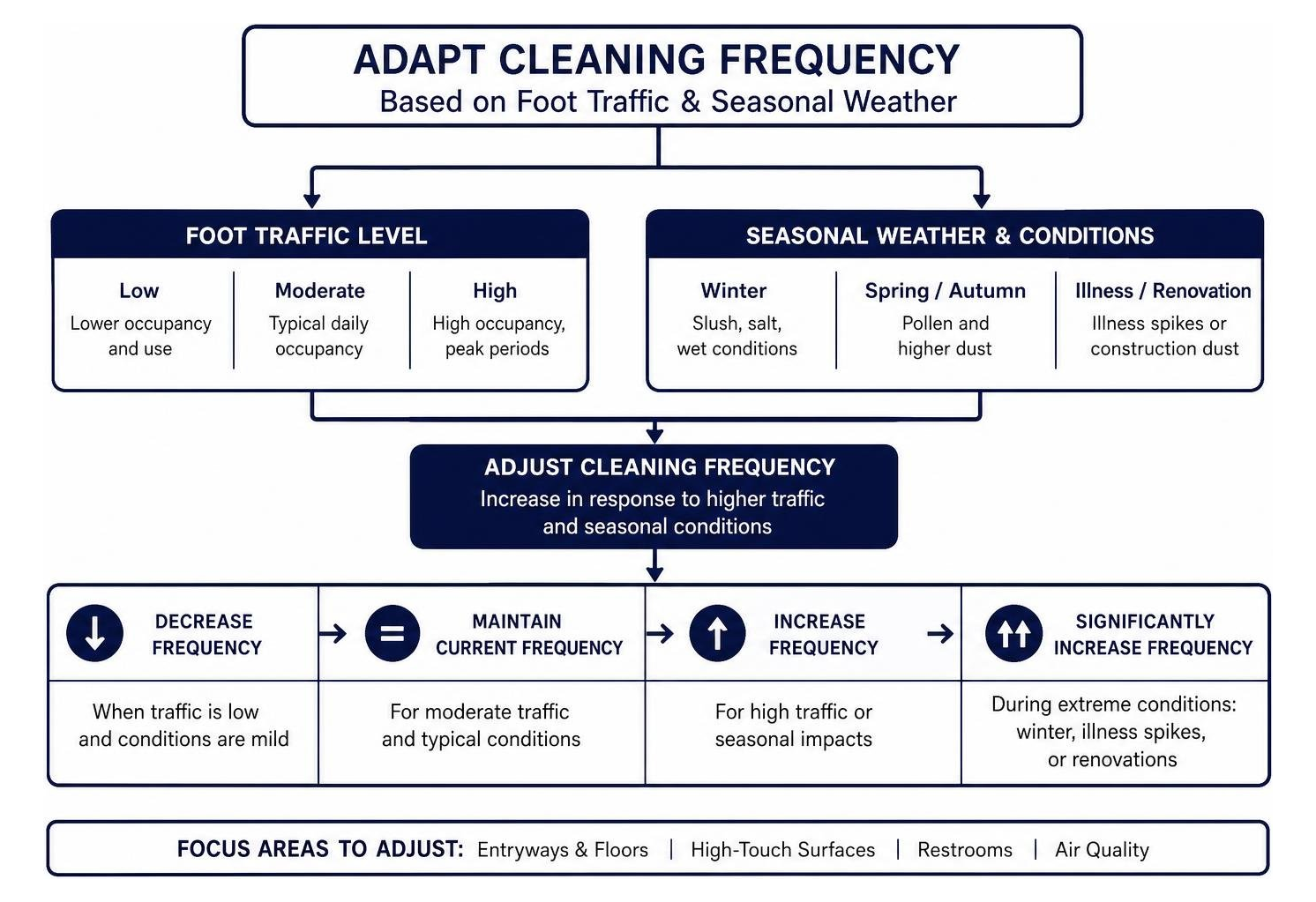
During Midwestern winters across Chicagoland, slush and abrasive de-icing salt get tracked across entryways daily. Salt residue can permanently damage expensive flooring if not dissolved and extracted promptly. In communities referencing Roselle municipal workplace guidelines and regional sanitation standards, facilities prioritize daily entrance mat extraction and frequent hard-surface neutralizer mopping from November through March.
In spring and autumn, increased pollen counts require extra attention to vacuuming and dusting routines to protect sensitive employees. Furthermore, if seasonal illness spikes or your office undergoes structural renovations, ramp up high-touch sanitization and post-construction dust abatement protocols immediately to keep the air clear and safe.
How to Build and Tailor Your Routine by Workspace Type
Every building features a distinct layout, and a strategy that succeeds in a compact engineering firm may struggle inside a dynamic multi-tenant center. Utilizing a customizable office cleaning schedule template lets facility directors adjust scopes of work to match exact architectural zones and daily operating realities.
Open-Plan Offices vs. Private Executive Suites
Open-plan environments emphasize shared spaces, flexible desking, and collaborative benches. Because multiple team members often cycle through identical workstations over a single week, shared peripherals demand rigorous sanitization.
- Hot Desking Hygiene: Provide skin-safe, alcohol-based wipes near banks of desks so workers can sanitize computer mice, keyboards, and phone handsets before and after use.
- Cubicle Partition Maintenance: Fabric dividers absorb airborne dust, hair, and ambient odors. Vacuum vertical panels quarterly to keep workstations fresh.
- Private Executive Suites: Executive suites usually experience less foot traffic but feature delicate materials like hardwood executive desks, leather seating, and sensitive paper files. Cleaners must respect confidentiality protocols—leaving documents undisturbed on desks—while focusing on polishing wood surfaces, conditioning leather, and dusting sound baffles.
Coworking Hubs and Multi-Tenant Facilities
Shared workspaces present dynamic occupancy patterns where transient guests, freelancers, and growing enterprise teams mingle daily.
For these properties, commercial cleaning programs must include rapid midday turnover for meeting rooms, frequent restocking of high-volume kitchenettes, and after-hours floor restoration. Communal lounges, phone booths, and quiet rooms require continuous odor elimination and soft-surface sanitization so every arriving member enjoys an immaculate first impression.
Step-by-Step Implementation: Managing Tasks, Tools, and Staff
Rolling out a structured cleaning system requires thoughtful delegation, clear accountability, and intuitive management tools.
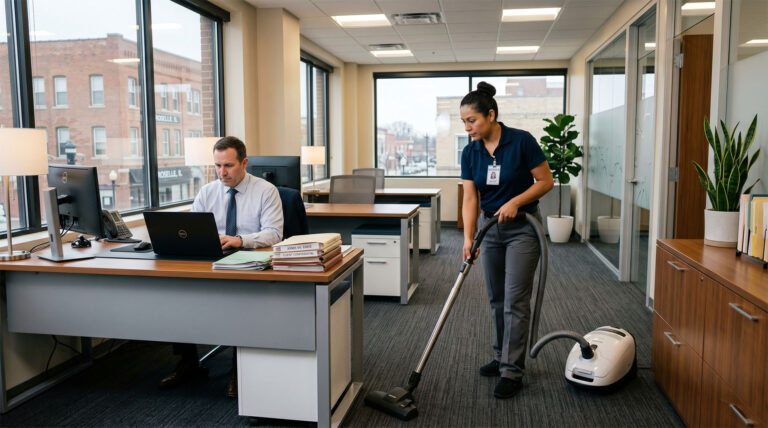
When establishing your program, determine whether tasks fall to internal administrative teams or vetted commercial professionals. If partnering with outside specialists, review essential questions for local cleaning crews beforehand to confirm insurance coverage, bonding, product safety, and emergency response capabilities.
Digital Tools to Manage Your Office Cleaning Schedule
Modern facility operations rely heavily on digital organization to avoid missed cleaning appointments. Google Calendar offers a straightforward, accessible platform to coordinate recurring sanitation tasks:
- Set Recurring Events: Create daily, weekly, and monthly repeating entries corresponding to specific zones (e.g., “7:00 PM – 2nd Floor Restroom Deep Sanitize”).
- Color-Code Cleaning Zones: Assign distinct colors to identify specific operational areas—such as green for communal kitchens, blue for restrooms, and yellow for meeting suites.
- Enable Cross-Device Access: Share calendars directly with cleaning crew leads and maintenance staff for real-time mobile tracking and notifications.
- Include Task Checklists in Event Notes: Paste specific instructions (e.g., “Use neutral stone cleaner on marble reception desk”) directly into the event description to ensure procedural adherence.
For larger properties, Computerized Maintenance Management Systems (CMMS) can automate work orders and notify staff the moment supplies run low or a maintenance request is submitted.
Establishing Staff Communication and Accountability
An effective schedule functions only when expectations are clear and progress is visible.
- Color-Coded Cleaning Tools: Implement an industry-standard microfiber towel system—red for restroom bowls, yellow for restroom sinks/counters, blue for general glass, and green for kitchen surfaces—to eliminate cross-contamination.
- Visual Sanitation Logs: Mount discreet digital check-in tablets or laminated logs inside restrooms and breakrooms where custodians initial completion times.
- Regular Shift Handoffs: Ensure morning facility teams receive brief digital notes regarding after-hours deep cleans, maintenance issues, or spill treatments.
Maintaining Accountability and Measuring Cleaning Performance

Tracking cleaning effectiveness guarantees that your investment delivers a consistently healthy working environment. Facility leaders can combine objective data metrics with user feedback to measure progress over time:
- ATP Bioluminescence Swabbing: Use rapid ATP surface testing on key touchpoints (refrigerator handles, boardroom remote controls, water dispensers) to scientifically verify that microbial loads are properly removed.
- Indoor Air Quality (IAQ) Monitoring: Monitor particulate matter (PM2.5) and total volatile organic compounds (TVOCs) to verify that vacuum filters and non-toxic cleaning agents are maintaining optimal breathing air.
- Employee Pulse Surveys: Run quick quarterly polls asking team members to rate the cleanliness of restrooms, breakrooms, and shared meeting areas.
- Standardized Checklists: Conduct bi-weekly quality audits using our Chicago office cleaning checklist to inspect hidden corners, baseboards, and glass surfaces before issues escalate.
Frequently Asked Questions about Office Cleaning Routines
Who is responsible for managing the workplace cleaning routine?
Ultimate responsibility typically rests with the facility manager, operations director, or office administrator. However, daily success requires clear division of labor: internal employees handle their personal belongings and immediate desk tidiness, while dedicated custodial teams or licensed commercial cleaning contractors execute systematic sanitization, chemical handling, and floor maintenance.
How do you handle sudden illness outbreaks or seasonal deep cleans?
When viral illness affects an office team, shift immediately to an outbreak protocol. This involves increasing the frequency of high-touch surface sanitization to multiple times daily and utilizing hospital-grade, EPA-registered disinfectants. For comprehensive contamination containment, professional teams can deploy electrostatic misting systems to coat complex, hard-to-reach surfaces thoroughly without soaking sensitive electronic components.
What is the best time of day to schedule disruptive cleaning tasks?
Heavy, loud, or aromatic tasks—such as floor buffing, hot-water carpet extraction, and intensive trash hauls—are best scheduled after normal operating hours or during weekend windows. Light surface wipe-downs, trash emptying, and continuous restroom restocking can occur seamlessly during operating hours through quiet, low-profile day porter services.
Conclusion
A well-structured cleaning routine does more than keep floors shiny—it safeguards team wellness, protects physical building assets, and creates an inspiring, professional environment for everyone who walks through your doors.
At Halina’s Enterprise, we bring over 30 years of award-winning expertise (including Angi Super Service and Best of 2025 recognitions) to commercial properties across Roselle, Schaumburg, Elk Grove Village, Des Plaines, Downers Grove, and the greater Chicagoland area. Our fully bonded and insured teams use safe, non-toxic products designed to keep your workplace healthy, productive, and spotless.
To elevate your property’s daily operations and explore customized solutions for your building, check out our comprehensive common area maintenance services today.