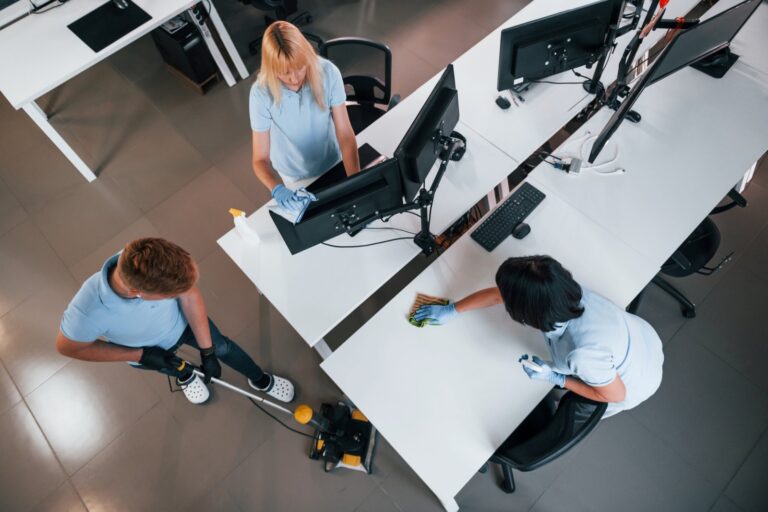
Choose Commercial Clean Up Services That Protect Your Workplace
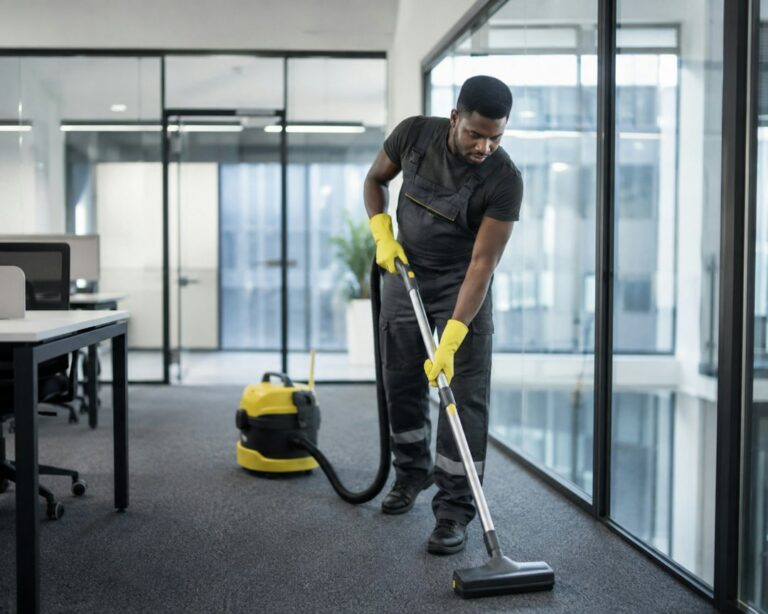
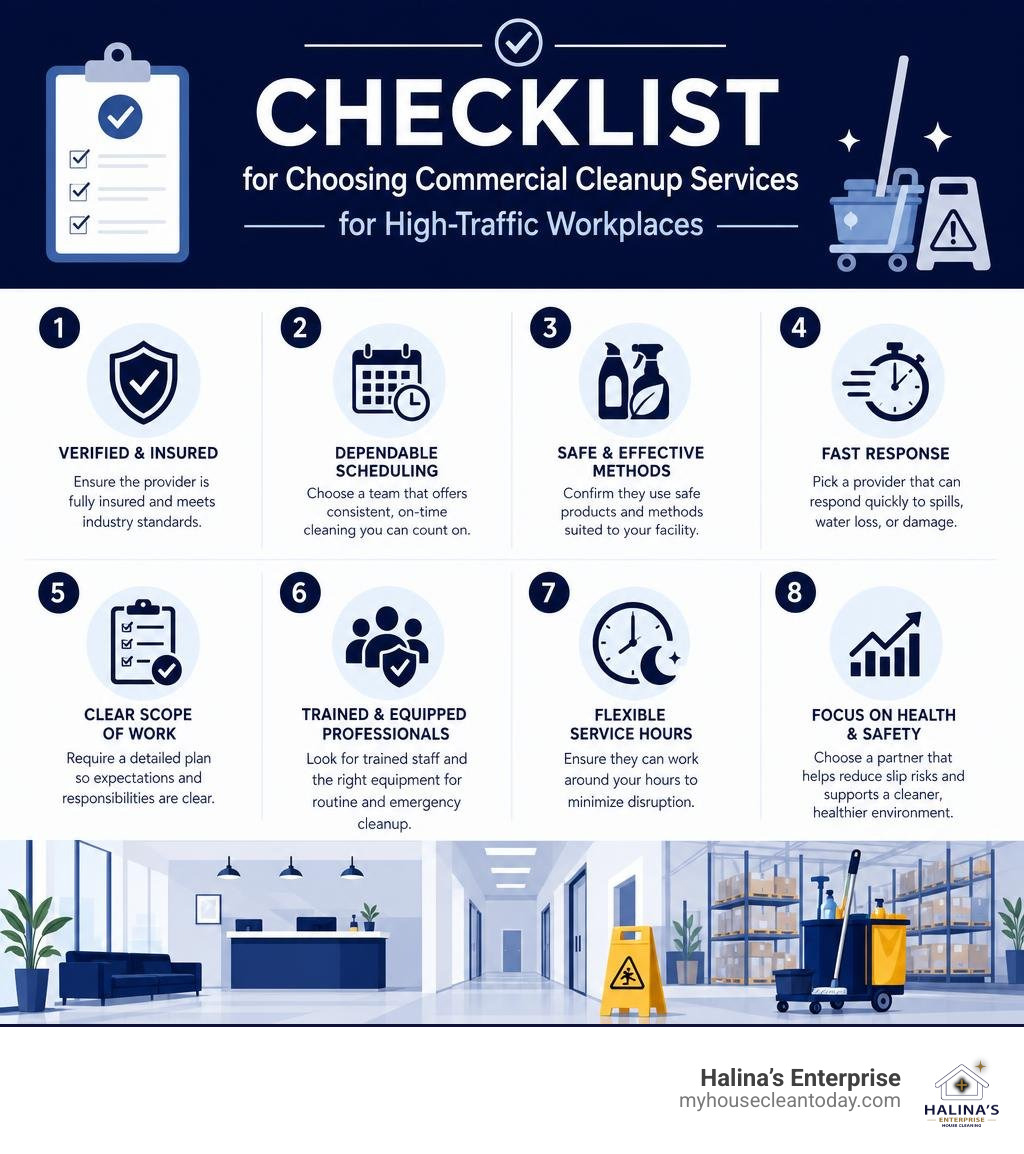
For a high-traffic workplace, hire commercial clean up services that can do three things well: clean on a dependable schedule, use safe methods for your facility, and respond quickly when an unexpected spill, water loss, or other damage threatens operations.
Before choosing a provider, confirm that they are insured, can work around your hours, provide a clear scope of work, and have the right training and equipment for both routine sanitation and emergency cleanup. The right team helps reduce slip risks, protect indoor air quality, and keep employees, visitors, and tenants comfortable.
High-traffic offices, retail spaces, medical facilities, warehouses, and shared common areas need more than an occasional surface wipe-down. They need a plan built around foot traffic, high-touch surfaces, floor wear, restroom use, and the possibility of urgent cleanup after water, fire, smoke, or storm damage.
This guide explains what to look for so you can choose a cleaning partner that supports consistent quality without creating unnecessary disruption.
Core Capabilities of Comprehensive Commercial Clean Up Services
Managing a bustling workplace is no small feat. Between continuous foot traffic, airborne contaminants, and accidental spills, maintaining workplace hygiene requires deep expertise and proactive planning. Comprehensive commercial clean up services go beyond emptying trash bins—they establish a sanitary defense system tailored to your building’s architectural layout and daily operational rhythm.
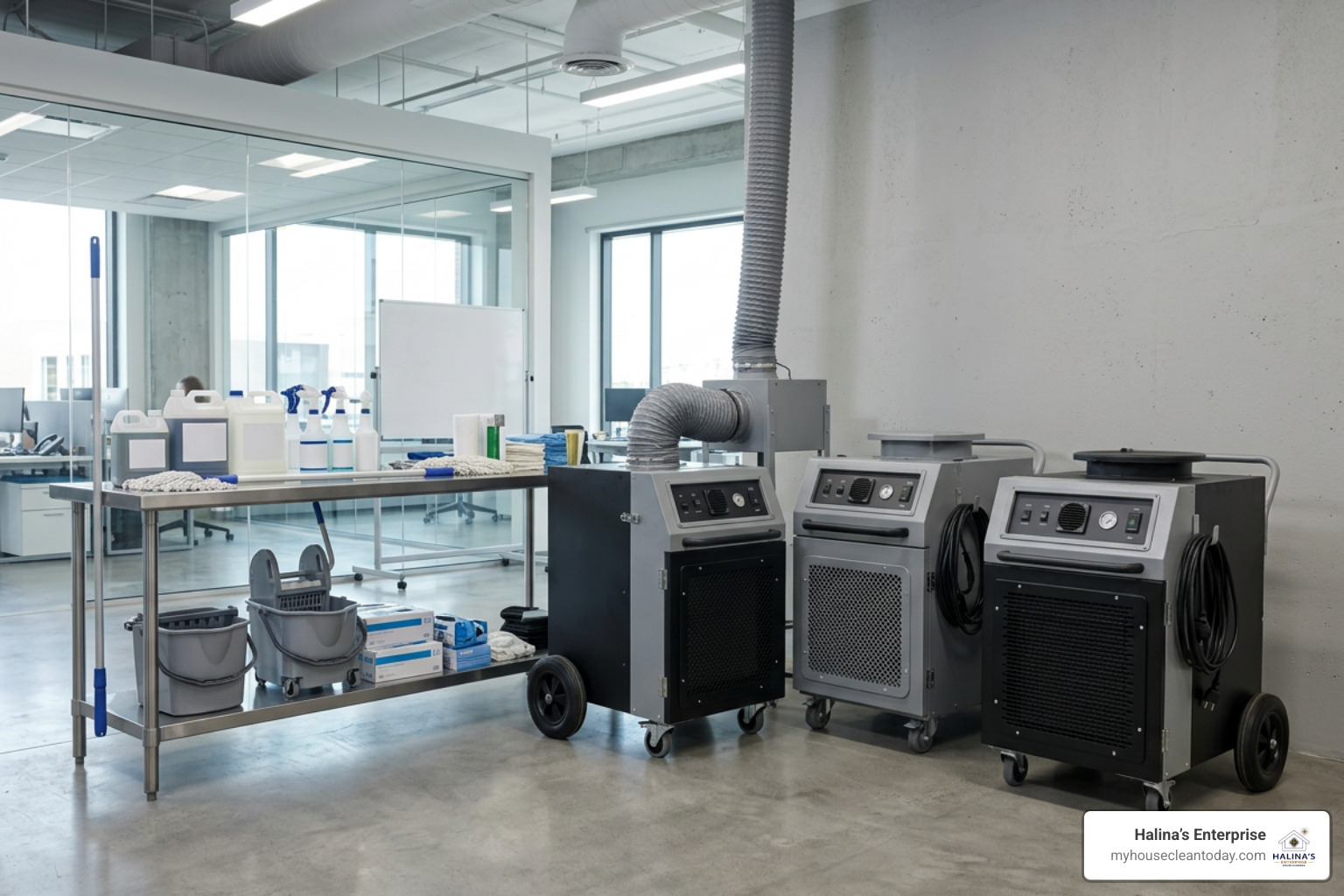
A truly capable cleaning provider mitigates cross-contamination risks and upholds strict OSHA compliance. When hundreds of employees or customers cycle through a commercial space daily, germ transmission rates skyrocket if high-touch surfaces are neglected. Professional sanitation crews employ hospital-grade disinfectants, color-coded microfiber systems, and HEPA-filtered equipment to capture particulates rather than merely stirring them into the air.
Moreover, commercial sanitation requires rapid response readiness. Whether dealing with an unexpected plumbing failure, storm runoff, or a hazardous chemical spill in an industrial corridor, having a partner capable of mobilizing advanced remediation assets at a moment’s notice keeps your business functioning smoothly.
Routine Maintenance vs Emergency Commercial Clean Up Services
Facility management demands a balanced approach between predictable maintenance and rapid-response capabilities. While daily visits keep dust, fingerprints, and trash under control, emergency cleanups tackle severe structural threats that can derail operations if left unchecked.
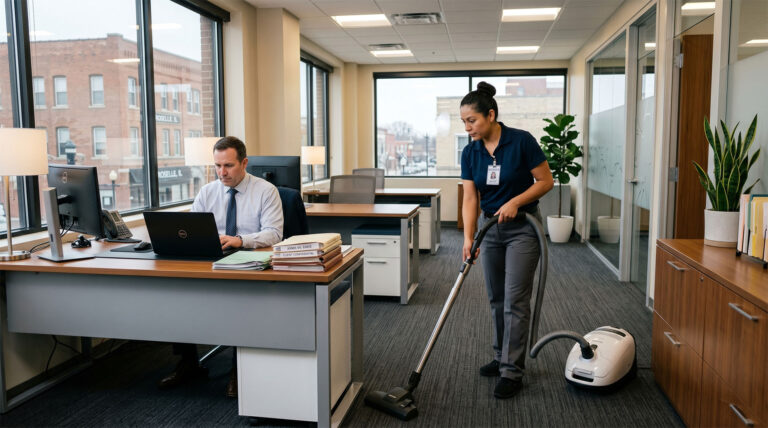
Consistent routine office cleaning preserves everyday hygiene, sanitizes common touchpoints, and maintains a welcoming atmosphere for employees and clients. In contrast, emergency commercial cleanups address sudden disasters—such as burst pipes, sprinkler line discharges, or localized fire and smoke incidents.
Emergency cleanup teams arrive equipped for rapid water extraction, industrial dehumidification, structural drying, and soot remediation. Adhering to certified commercial restoration standards, emergency technicians immediately stabilize the facility, preventing secondary damage like structural rot or mold infestation.
IICRC Industry Standards and Advanced Cleaning Technology
Professional commercial restoration and cleaning protocols are governed by established industry standards set by the Institute of Inspection, Cleaning and Restoration Certification (IICRC). Reputable providers structure their cleanup procedures around these foundational benchmarks:
- IICRC S500 Standard for Professional Water Damage Restoration: Guides water extraction, moisture mapping, psychrometric drying, and structural dehumidification.
- IICRC S520 Standard for Professional Mold Remediation: Dictates containment protocols, negative air pressure usage, HEPA filtration, and antimicrobial applications to remove fungal growth safely.
- IICRC S700 Standard for Professional Fire and Smoke Damage Restoration: Directs soot containment, thermal fogging, odor neutralization, and structural surface cleaning.
Pairing these standards with advanced technology ensures superior results. Modern facilities benefit from high-efficiency particulate air (HEPA) scrubbers, electrostatic disinfectant sprayers, and safe, non-toxic cleaning agents that protect indoor air quality without exposing your workforce to harsh chemical fumes.
| Service Category | Primary Objectives | Typical Equipment Used | Primary Use Cases |
|---|---|---|---|
| Routine Sanitation | Prevent germ spread, remove soil, maintain daily presentation | Microfiber systems, HEPA vacuums, non-toxic sanitizers | Daily office upkeep, lobby maintenance, restroom stocking |
| Emergency Mitigation | Halt active damage, remove standing water/soot, stabilize property | Submersible pumps, heavy extractors, structural air movers | Pipe bursts, flash floods, localized fire damage |
| Structural Restoration | Return property to pre-loss condition, deep remediation | LGR dehumidifiers, hydroxyl generators, thermal imaging | Deep mold remediation, major soot removal, post-loss repair |
Tailoring Specialized Solutions for High-Impact Business Sectors
Every industry presents unique operational challenges. A standard retail storefront has radically different cleanliness and compliance standards than a high-volume warehouse or an outpatient clinic. Commercial cleaning teams must adapt their protocols to match the specific layout, traffic volume, and regulatory requirements of your industry.
Customizing Commercial Clean Up Services for High-Traffic Facilities
High-density workspaces accumulate grime and microbial loads at an accelerated pace. Elevators, entrance vestibules, breakrooms, and meeting hubs demand frequent sanitation cycles. Tailored corporate office cleaning accounts for peak hours, targeting touchpoints like door handles, conference tables, and touchscreens before and after major gatherings.
Similarly, shared residential or commercial spaces depend on reliable common area maintenance to preserve property values and ensure tenant satisfaction. By mapping out foot-traffic patterns, technicians focus intensive cleaning on primary transit corridors, keeping lobbies, hallways, and stairwells clean and presentable.
Heavy-Duty Floor Care and Surface Restoration
Commercial flooring endures constant wear from foot traffic, grit, weather debris, and rolling equipment. Without consistent care, hard surfaces lose their protective finish and carpets become saturated with deeply embedded soils, leading to premature wear and slip-and-fall hazards.
Implementing scheduled floor care maintenance—including deep hot-water carpet extraction, machine scrubbing, stripping, and high-durability waxing—extends flooring lifespan while maintaining a safe, polished look. Pairing floor care with regular storefront window cleaning ensures your business makes an exceptional first impression from the outside in.
Specialized Industrial, Medical, and Post-Build Sanitation
Certain operational environments require rigorous adherence to specialized cleanliness criteria:
- Healthcare Environments: Strict medical office sanitation uses hospital-grade, non-toxic disinfectants to sanitize exam rooms, waiting areas, and clinical touchpoints while maintaining thorough infection-control standards.
- Manufacturing and Logistics Hubs: Demanding industrial warehouse cleaning removes combustible dust, chemical residues, and grease buildups across vast open layouts and heavy machinery zones.
- Construction Sites: Following renovations or new builds, thorough post-construction cleanup clears fine silica dust, adhesive residues, and discarded construction debris to make newly built spaces move-in ready.
Minimizing Operational Disruption and Managing Restoration Claims
A major facility cleaning or restoration project should never bring your enterprise to a halt. When unexpected property damage occurs, downtime costs accumulate by the hour. Experienced cleanup contractors use systematic project management and transparent communication to resolve issues while keeping your operations running smoothly.
Strategic Containment and Phased Workflow Execution
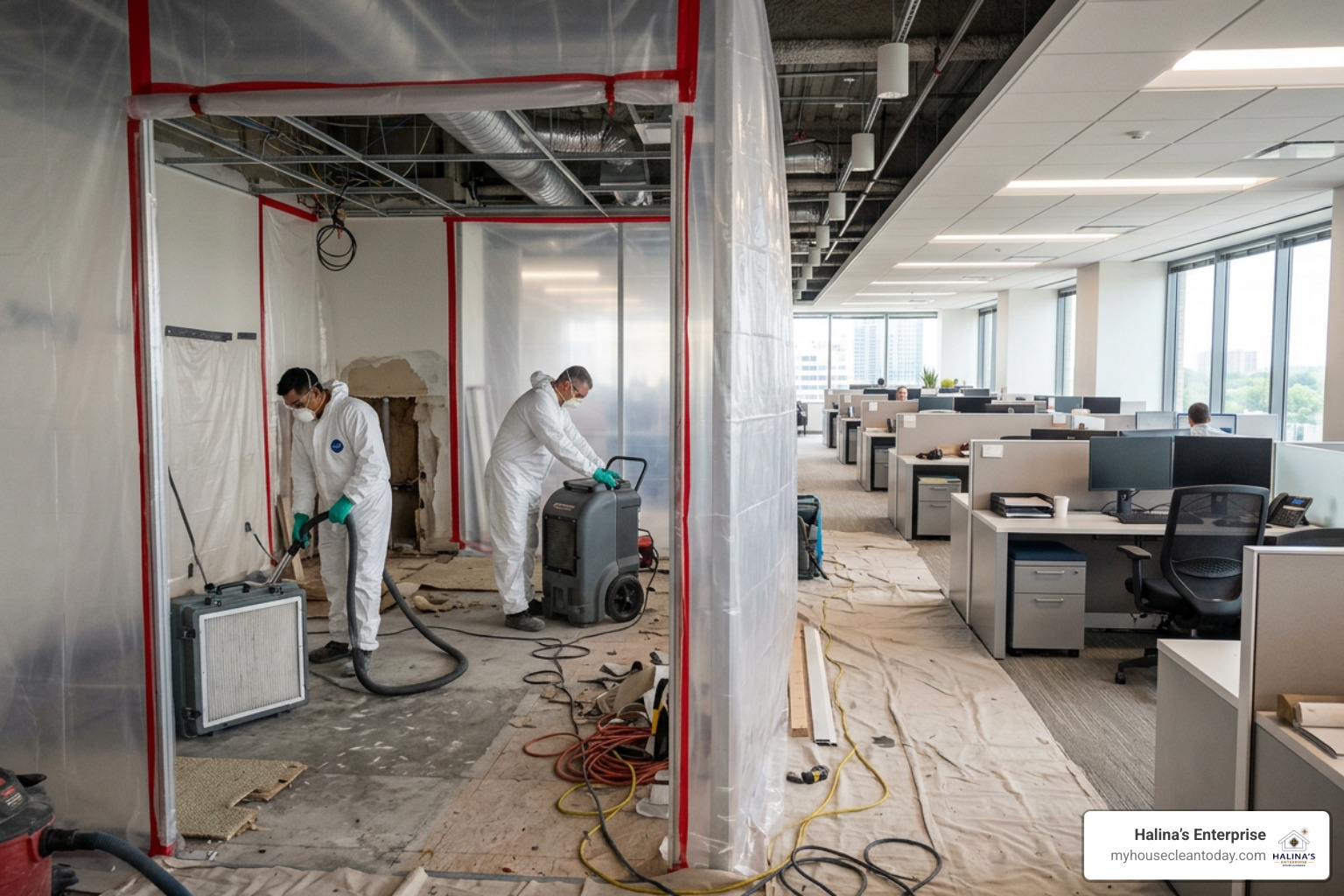
To protect ongoing operations during heavy cleaning or structural mitigation, crews establish physical containment barriers using heavy-duty poly sheeting and zip-wall systems. These barriers isolate dust, odors, and moisture, preventing airborne contaminants from migrating into active workspaces.

By pairing negative air machines with HEPA filtration inside the containment zone, technicians capture fine particulates at the source. Work is scheduled during off-peak windows or night shifts to avoid disrupting daily operations. Concurrently, day porters maintain active zones through regular restroom sanitation stocking and detailed interior window washing, ensuring an uninterrupted, hygienic environment for employees and guests.
Insurance Direct Billing and Property Management Protocols
Navigating commercial insurance claims after a water, fire, or storm loss can overwhelm busy property managers. Professional cleanup and restoration companies simplify this process by coordinating directly with insurance adjusters and leveraging industry-standard estimating platforms like Xactimate.
Technicians document every phase of the project using moisture meters, thermal imaging, and detailed photo logs. This transparent documentation justifies the scope of work to insurance carriers, accelerating claim approvals and minimizing out-of-pocket expenses for the business owner. Establishing structured protocols—like those found in an organized office cleaning schedule template—keeps facility stakeholders aligned before, during, and after major cleanup initiatives.
Frequently Asked Questions About Commercial Facility Cleanup
How quickly should a business respond to commercial water or fire damage?
A business should respond within minutes of discovering property damage. Water migrates rapidly through drywall, subflooring, and structural framing, causing significant damage and encouraging mold growth within 24 to 48 hours. Quick emergency dispatch allows technicians to extract standing water, deploy structural dehumidifiers, and stabilize the environment, drastically reducing secondary damage and restoration expenses.
What is the distinction between damage mitigation and full restoration?
Mitigation focuses on halting active damage and securing the facility. This phase includes emergency board-ups, roof tarping, water extraction, debris removal, and setting up industrial drying equipment. Full restoration occurs once the space is stable and dry; it encompasses structural repairs, deep sanitization, surface refinishing, painting, and rebuilding damaged areas to return the property to its pre-loss condition.
Can a business continue operations during extensive commercial cleanup?
Yes, in most situations, a business can remain operational while cleanup takes place. By setting up sealed containment zones, using negative air machines, and establishing clear safety walkways, technicians isolate the work area from regular staff and customer traffic. Additionally, loud or invasive tasks—such as floor stripping, heavy extraction, or structural tear-outs—can be scheduled during evenings or weekends to prevent business disruptions.
Selecting the Right Commercial Sanitation Partner
Selecting the right commercial cleaning and restoration provider is critical for workplace safety, regulatory compliance, and business continuity. When vetting local vendors across the Chicagoland area, look for fully licensed, bonded, and insured companies with proven experience handling both routine maintenance and complex cleanups.
If your facility is located in Cook County or DuPage County, partnering with a dependable team like Halina’s Enterprise guarantees top-tier results. Backed by over 30 years of industry experience, prestigious awards including Best of 2025 and the Angi Super Service Award, and an unwavering commitment to safe, non-toxic products, we tailor our services to your exact schedule and property requirements.
Whether you need a dedicated office cleaning service in Des Plaines, IL, specialized deep sanitation in Schaumburg or Naperville, or practical guidance on how to choose a cleaning company in Roselle, IL, our certified professionals are here to help.
Keep your workplace pristine, healthy, and compliant. Contact Halina’s Enterprise today to explore our full suite of commercial cleaning services and schedule your on-site facility consultation.