Why a Clean Hood Service Is Essential for Restaurant Safety
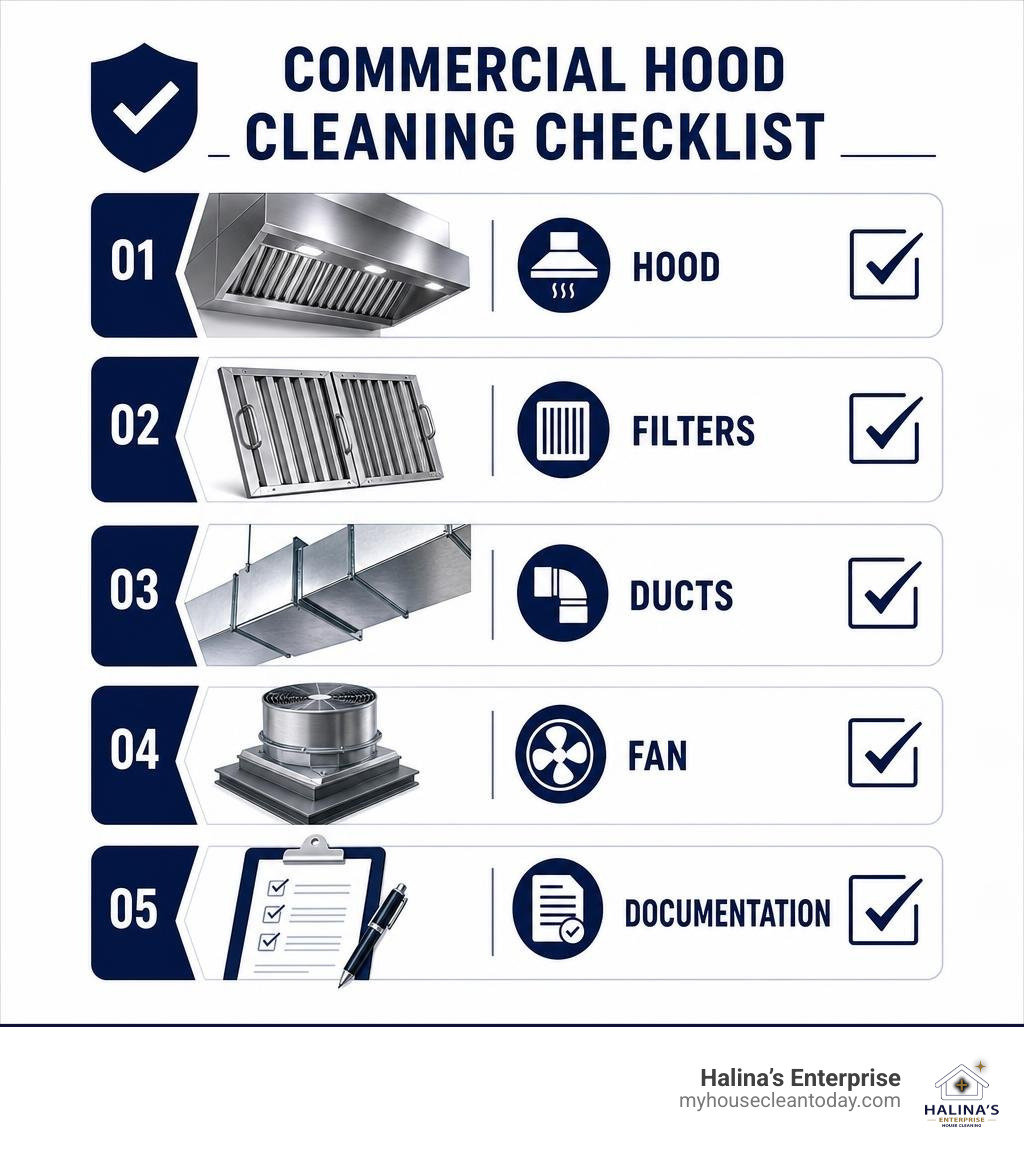
A clean hood service removes grease from the hood, filters, ductwork, and exhaust fan in a commercial kitchen. Restaurant owners should schedule it at the frequency required by NFPA 96, keep the service report and inspection sticker, and confirm the contractor cleaned the full system – not just the visible hood.
Grease can collect far beyond the cooking line. It builds up inside the plenum, ducts, and rooftop fan, where it raises fire risk and can restrict airflow. Regular professional cleaning helps your kitchen ventilate properly, supports fire-code compliance, and gives you records for inspectors and insurers.
For most commercial kitchens, the cleaning schedule depends on cooking volume and fuel type. High-volume frying and solid-fuel cooking may need monthly service, while moderate- and low-volume operations may qualify for quarterly, semiannual, or annual cleaning. Local fire authorities can set stricter requirements.
This guide explains the standards, service scope, costs, and contractor checks restaurant owners need to make informed choices.
Understanding NFPA 96 Standards and Fire Safety Compliance
Operating a commercial kitchen requires constant attention to fire prevention and safety codes. The National Fire Protection Association sets the benchmark for kitchen ventilation with NFPA 96: Standard for Ventilation Control and Fire Protection of Commercial Cooking Operations.
This standard governs the design, installation, operation, inspection, and maintenance of all commercial cooking exhaust systems. Its primary objective is simple: prevent kitchen fires by controlling the accumulation of combustible grease vapors throughout the exhaust structure.
Local authorities having jurisdiction (AHJs), including local fire marshals and municipal building inspectors across Chicago and surrounding suburbs like Schaumburg, Hoffman Estates, and Naperville, enforce NFPA 96 regulations. If a kitchen system fails to meet these standards, operators face severe penalties, failed health inspections, insurance policy cancellations, or mandatory business closure until the grease hazards are resolved.
Why Every Commercial Kitchen Needs a Certified Clean Hood Service
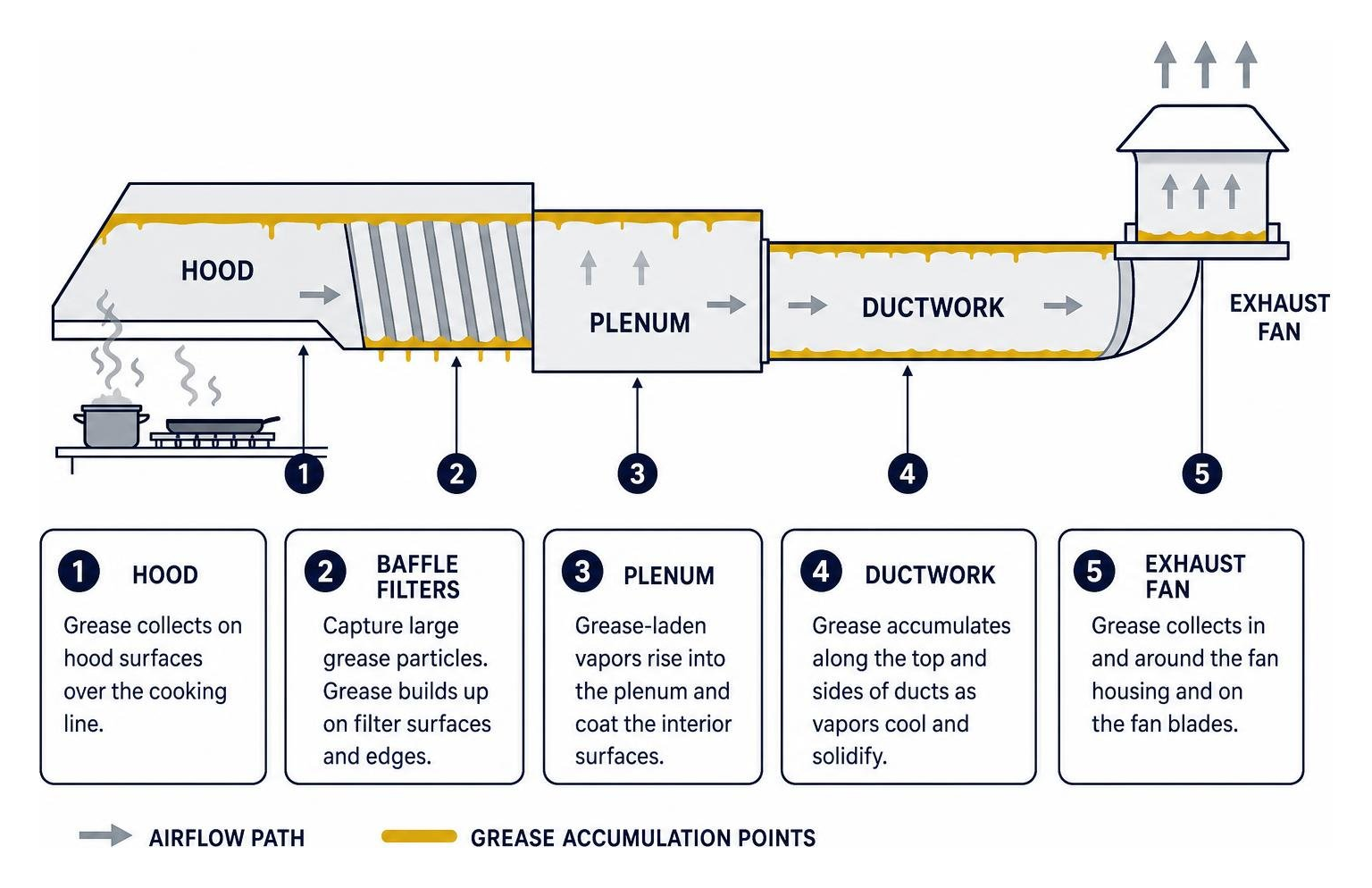
During daily operations, hot vaporized grease, smoke, and moisture are drawn upward by the exhaust fan. While baffle filters catch large grease particulates right above the cooktop, lighter grease vapors travel deep into the plenum, ductwork, and up to the rooftop exhaust assembly. Over time, these vapors cool and solidify into a heavy, highly flammable fuel layer coating every square inch of the exhaust interior.
A comprehensive clean hood service delivers critical operational benefits:
- Grease Fire Prevention: Removing fuel sources ensures that flare-ups on the stove or charbroiler cannot ignite accumulated grease inside the ductwork.
- Optimized Ventilation Efficiency: Clean fans and unobstructed ductwork maintain designed cubic-feet-per-minute (CFM) air movement, removing ambient heat, smoke, and carbon monoxide effectively.
- Odor and Air Quality Control: Eliminating old, rancid grease layers keeps the kitchen smelling fresh and prevents stale air from migrating into customer dining areas.
- Regulatory and Code Compliance: Passing routine municipal fire and health inspections avoids costly fines and unexpected operational shutdowns.
- Lower Equipment Strain: Exhaust fans operating in clean, balanced environments experience less motor fatigue, reducing utility bills and extending equipment lifespan.
NFPA 96 Cleaning Frequency Schedule by Cooking Volume
NFPA 96 Table 11.4 establishes specific inspection and cleaning intervals based on operational volume, fuel type, and cooking duration. The following schedule outlines the required frequencies:
| Operational Volume / Kitchen Type | Fuel / Cooking Operations | Inspection & Cleaning Frequency | Typical Facility Examples |
|---|---|---|---|
| Solid Fuel Cooking | Wood, charcoal, hardwood briquettes, mesquite | Monthly | Wood-fired pizzerias, charcoal BBQ pits, solid-fuel steakhouses |
| High-Volume Operations | 24-hour cooking, heavy charbroiling, continuous deep frying | Quarterly (every 3 months) | Fast-food franchises, busy diner kitchens, 24-hour hotel restaurants |
| Moderate-Volume Operations | Standard commercial cooking lines without heavy grease production | Semiannually (every 6 months) | Sit-down casual restaurants, corporate cafeterias, hotel dining rooms |
| Low-Volume Operations | Light cooking, seasonal operations, heating/warming only | Annually (every 12 months) | Daycare centers, seasonal snack bars, church kitchens, community halls |
(Note: If an inspection reveals grease buildup exceeding 0.078 inches or 2 mm, immediate full-system cleaning is required regardless of the calendar interval.)
Key Components of a Professional Clean Hood Service
A professional clean hood service goes far beyond wiping the shiny stainless steel surfaces visible above the fryers. True compliance requires deep, bare-metal cleaning across the entire exhaust network.
Bare Metal Ductwork, Plenum, and Exhaust Fan Cleaning
A compliant service targets three primary zones that form the kitchen’s ventilation loop:
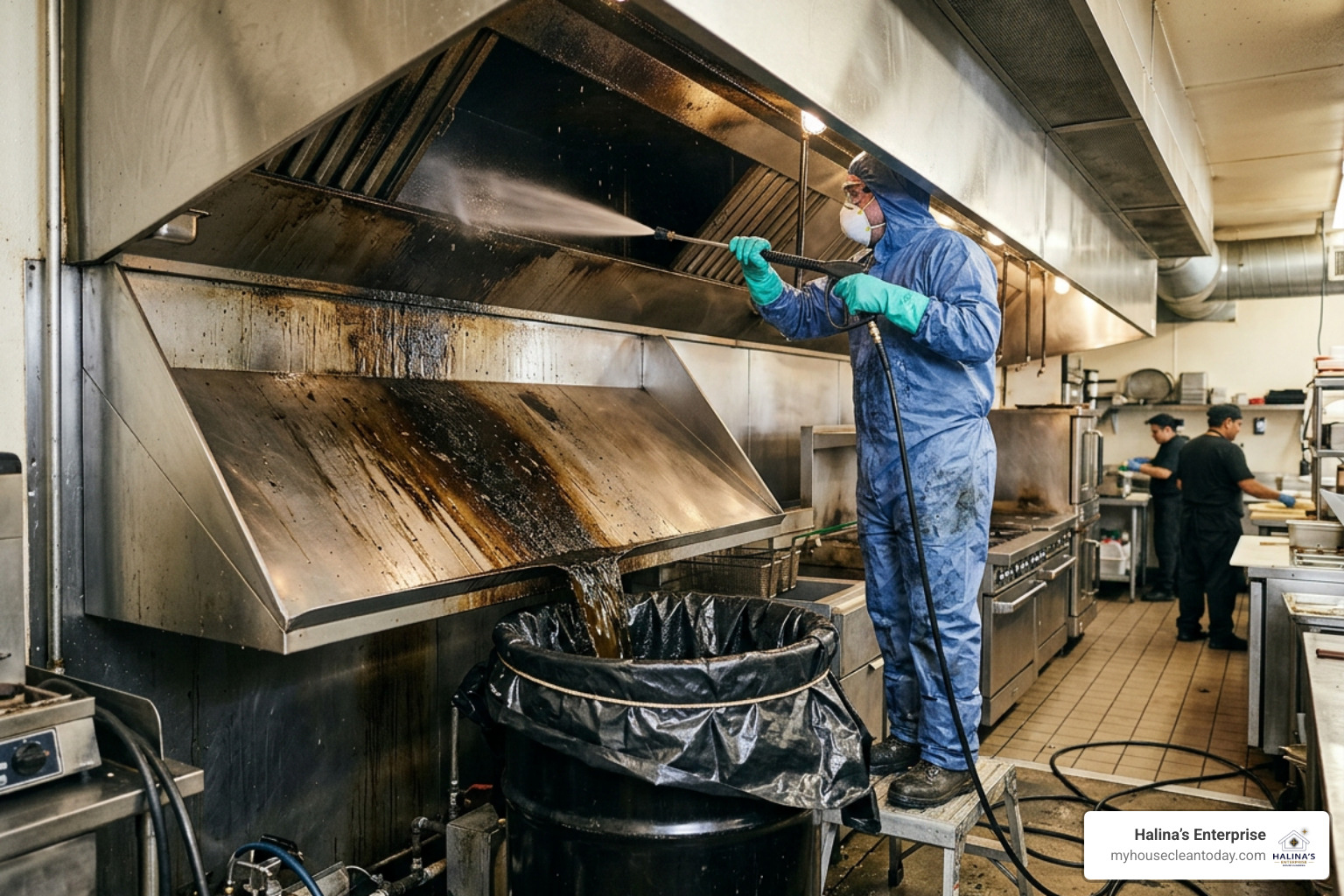
- The Hood Canopy and Plenum Chamber: Technicians mask the cooktop line with heavy-duty plastic tarps that funnel runoff into collection barrels. The baffle filters are removed, and the plenum (the area behind the filters where grease collects first) is treated with non-toxic, industrial-strength degreaser before being scrubbed and pressure-washed.
- Vertical and Horizontal Ductwork: Using specialized high-pressure hot water equipment and rotary scrubbing whips, technicians clean vertical risers and long horizontal duct runs down to bare metal. In areas where ductwork passes through several building stories, maintaining access through dedicated panels is critical to achieving a full clean.
- Rooftop Exhaust Fan and Housing: The rooftop fan unit is opened on its hinge kit. Technicians pressure-wash the fan blades, blower wheel, housing bowl, and grease drain spout to eliminate heavy encrustations. Balancing the fan wheel by removing uneven grease layers prevents motor vibrations and early bearing burnout.
Proper wastewater containment is vital during this process. Certified teams capture all chemical and grease wash water to prevent runoff into municipal storm drains, staying in full compliance with local environmental regulations.
Ancillary Services: Grease Containment, Filter Exchange, and Access Panels
To maintain system integrity between cleanings, full-service providers offer several vital maintenance upgrades:
- Rooftop Grease Containment: Exhaust fans naturally discharge grease onto rooftop membranes. Custom rooftop containment boxes and hydrophobic absorbent pads prevent roof rot, membrane blistering, and rooftop fire hazards.
- Access Panel Installation: NFPA 96 dictates that horizontal ducts must have access openings every 12 feet, and vertical ducts must have access at every floor. Certified technicians cut and install UL-listed, fire-rated access doors where ducts were previously unreachable.
- Hinge Kit Installation: Heavy commercial exhaust fans must have durable hinge kits installed. Hinges allow technicians to safely tilt the fan open for inspection and washing without damaging electrical wiring or cracking the roof curb.
- Exhaust Fan Belt Replacement & Bearing Lubrication: Fan drive belts wear down, stretch, and crack under heavy usage. Routine belt inspections and regular drive component greasing prevent sudden ventilation shutdowns during peak dinner rushes.
- Filter Maintenance and Soak Tank Programs: Baffle filters need regular rotation and degreasing. Soak tank programs and scheduled filter exchanges keep filters performing at peak grease-capturing efficiency.
- Ultraviolet (UV) Technology Inspection: Modern hood designs use integrated UV-C lamps within the plenum. These UV rays break down grease molecules via photolysis and ozonolysis, transforming sticky grease into inert powder before it enters ductwork.
Commercial Kitchen Hood Cleaning Costs and Scope
Understanding what goes into commercial cleaning budgets helps restaurant owners plan expenses effectively while avoiding deceptive “budget” quotes that cut dangerous corners.
Residential vs Commercial Clean Hood Service Requirements
The difference between commercial and residential range hood maintenance comes down to airflow volume, grease concentration, and regulatory enforcement:
- Commercial Systems: Move thousands of CFM of air, continuously vent animal fats and vegetable oils, and run through complex, welded steel duct routes subject to strict municipal fire codes and required NFPA logging.
- Residential Systems: Handle much lower air volumes and light cooking vapors. For domestic kitchens, standard upkeep often pairs with routine house cleaning services. If your home kitchen has seen extensive holiday cooking or grease accumulation around cabinets and stove vents, scheduling a deep house cleaning restores hygiene and removes lingering cooking residues effectively.
Factors Determining Service Pricing and Contract Rates
Commercial hood cleaning prices are determined by several operational and physical variables:
- Number of Hoods and Total Linear Footage: Larger commercial cook lines require wider canopy hoods, increasing labor and chemical requirements.
- Duct Length and Routing Complexity: Multi-story buildings with long duct runs, multiple elbows, or hard-to-reach rooftop fans require additional setup time and specialized rotary tooling.
- Degree of Grease Accumulation: Kitchens that have neglected regular service intervals or operate heavy solid-fuel pits require intensive scrapers, steam cycles, and extra chemical degreasers, raising service costs.
- System Accessibility: Ducts lacking standard fire-rated access panels require door installation before a full bare-metal clean can be completed.
- Contract Type: Routine scheduled maintenance contracts (monthly, quarterly, or semiannually) are significantly more cost-effective per visit than emergency one-off restoration jobs.
On average, commercial kitchen hood cleanings range from $450 to $1,500+ per visit, depending on system complexity and grease volume. A single short-run hood may cost around $450 to $600, whereas multi-hood hotel systems or long vertical duct networks can exceed $1,500 to $2,500 for a thorough deep clean.
How to Select and Verify a Compliant Kitchen Exhaust Cleaning Contractor
Hiring the right exhaust cleaning partner protects your business, your staff, and your customers. Never choose a provider based on rock-bottom pricing alone; inexpensive quotes often mean the crew only wipes down the hood canopy while ignoring dangerous ductwork and rooftop fans.
Essential Certifications, Insurance, and Documentation
When vetting a commercial kitchen exhaust contractor, verify the following credentials before signing any service contract:
- Industry Certifications: Look for technicians certified by reputable industry bodies, such as the International Kitchen Exhaust Cleaning Association (IKECA), showing comprehensive knowledge of NFPA 96 codes.
- Comprehensive Insurance Coverage: The company must hold extensive General Liability insurance, Workers’ Compensation, and dedicated Pollution Liability coverage to protect your premises against property damage or environmental runoff claims.
- Bonding and Business Licensing: Ensure the business is fully licensed and bonded to operate across your municipality.
- Safety First Focus: Technicians should use safe, non-toxic, food-grade cleaning compounds, wear appropriate personal protective equipment (PPE), and implement lock-out/tag-out safety procedures on fan electrical boxes.
Post-Service Inspection and Compliance Verification
Do not sign off on a completed clean hood service until you review their documented proof of performance:
- Before-and-After Photo Reports: A transparent contractor provides timestamped photos showing the hood plenum, horizontal and vertical duct interiors, access panel entry points, and the rooftop fan housing.
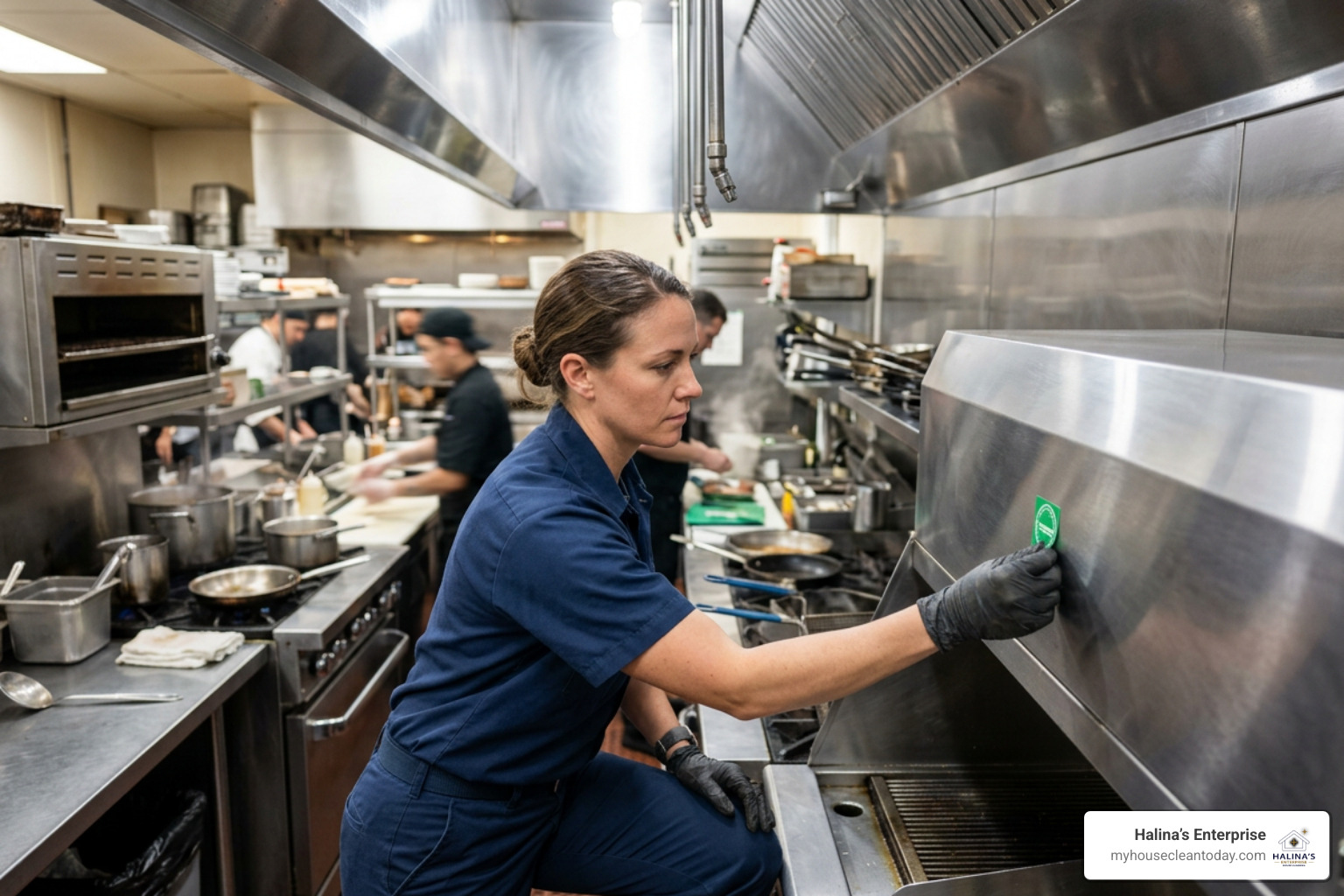
- NFPA 96 Compliance Sticker: Technicians must affix an official, dated service sticker directly onto the hood canopy. This sticker displays the company name, technician name and certification number, date of service, and the scheduled date for the next required cleaning.
- Written Service Report: Keep a detailed service log documenting completed work, noting any fan belt wear, missing access doors, or rooftop grease issues that need attention. Present this log during municipal fire, health, and insurance audits.
Frequently Asked Questions About Commercial Kitchen Hood Cleaning
How do I know if my kitchen exhaust system meets local fire codes?
Your kitchen exhaust system meets local fire codes if it has an up-to-date NFPA 96 compliance sticker attached to the hood canopy, holds documented service logs with before-and-after photos, maintains UL-listed baffle filters, and features properly spaced fire-rated access panels. Local fire marshals and health inspectors check these service records during routine compliance reviews.
What should I do immediately after a hood cleaning service is completed?
Immediately after the service:
- Review the contractor’s photo report showing bare metal across ducts, plenum, and fan blades.
- Confirm the new service sticker has been affixed to the hood with the current date and next service interval.
- Turn on the exhaust system to confirm the fan operates smoothly, without strange noises or belt slips.
- Verify that pilot lights on cooking equipment have been safely relit and that all cooking surfaces are wiped down and food-ready.
Can neglecting regular hood cleaning void commercial insurance policies?
Yes. Commercial property and liability insurance policies require policyholders to maintain fire safety systems according to local codes and NFPA standards. If a fire originates in an uncleaned exhaust system and investigators uncover heavy grease accumulation or missed service intervals, the insurance carrier can deny property damage claims, leaving the business owner fully liable for structural losses.
Conclusion
Maintaining a rigorous clean hood service schedule is a fundamental responsibility for every commercial kitchen operator. From minimizing devastating fire risks and improving indoor air quality to staying fully compliant with NFPA 96 standards, professional exhaust maintenance keeps your staff safe and your doors open.
For more than 30 years, our team at Halina’s Enterprise has delivered top-tier residential and commercial cleaning solutions across Roselle, Schaumburg, Hoffman Estates, Des Plaines, Naperville, and the greater Chicagoland area. As an award-winning, fully insured, and bonded cleaning provider, we focus on health-centered cleaning using safe, non-toxic products to keep your facilities spotless, sanitary, and compliant.
Explore our comprehensive facility cleaning services today to discover how our customizable scheduling and proven experience can support your business’s cleanliness and safety goals.