Understanding Façade Care and Cladding Substrates
When hiring specialist cladding cleaning companies, property managers must evaluate contractors based on specialized work-at-height safety accreditations, verified commercial liability insurance, substrate-specific chemical expertise, and proven low-pressure soft washing techniques. Selecting qualified professionals requires confirming that the crew uses manufacturer-approved cleaning protocols, provides comprehensive risk assessments, executes non-destructive test patches, and avoids high-pressure blasting that can void architectural warranties or compromise weather seals.
A commercial building envelope represents a significant capital investment. Whether you are managing an office park in Schaumburg, IL, a distribution hub in Elk Grove Village, IL, or a retail property in Hoffman Estates, IL, exterior panels endure continuous environmental stress. Atmospheric grime, vehicle exhaust, organic matter, and industrial pollutants bond to panel surfaces over time, accelerating oxidation and cosmetic wear.
Every cladding substrate reacts differently to cleaning chemistries and mechanical washing forces. Using an incorrect chemical or excessive hydraulic pressure can strip protective surface seals, invalidate manufacturer warranties, and trigger costly replacements.
| Cladding Material | Common Contaminants | Recommended Cleaning Method | Risks to Avoid |
|---|---|---|---|
| Metal Profile (Steel/Aluminum) | Industrial fallout, traffic soot, surface chalking | pH-neutral detergents, soft washing, pure water rinsing | Acidic washes that pit coatings; abrasive pads |
| UPVC Panels | Green algae, mold spores, airborne dirt | Low-pressure soft washing, mild biodegradable surfactants | High-heat steam that warps plastic; harsh solvents |
| Powder-Coated Aluminum (ACM/ACP) | Oxidation, atmospheric pollution, grease | Non-abrasive soft wash, eco-friendly degreasers | High-pressure blasting that chips or delaminates finish |
| Composite Panels | Biological growth, water run-off stains | Low-pressure chemical wash, hot water thermo-cleaning | Forcing water behind panel gaskets and seals |
| Stone Veneer / Precast Concrete | Lichen, deeply rooted moss, carbon build-up | Controlled superheated steam, gentle biocide wash | Acid burns; sandblasting aggregate erosion |
Soft Washing vs. High-Pressure Power Washing
One common pitfall in commercial building maintenance is treating cladding panels like bare concrete sidewalks. High-pressure jet washing forces water beneath the building skin, degrading rubber panel seals and soaking internal insulation.
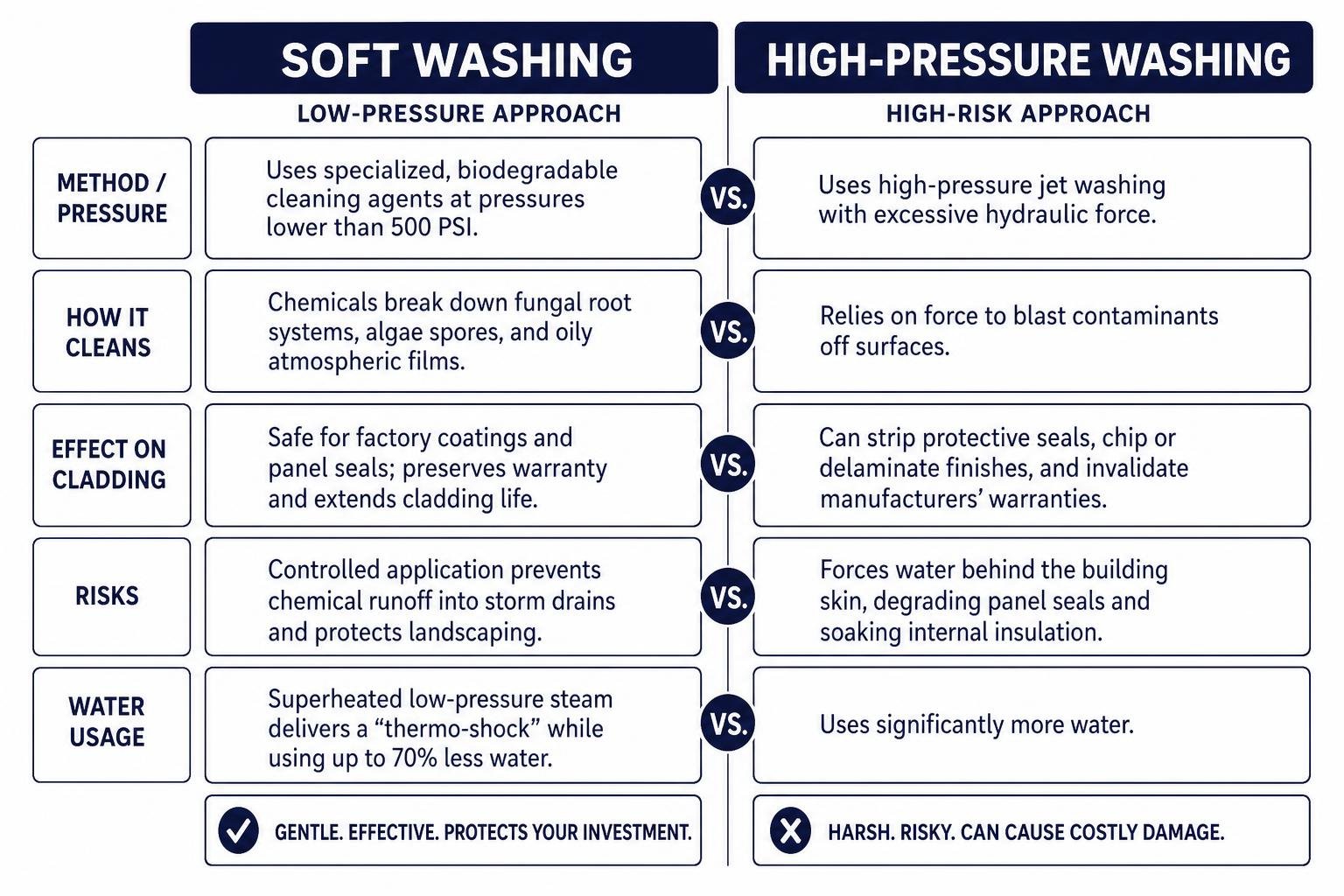
Low-pressure soft washing uses specialized, biodegradable cleaning agents at pressures lower than 500 PSI. These solutions break down fungal root systems, algae spores, and oily atmospheric films without damaging factory coatings. For tougher industrial soils, superheated low-pressure steam delivers a “thermo-shock” that kills biological matter and lifts grease while using up to 70% less water than traditional pressure washers. Controlled application methods prevent chemical runoff into municipal storm drains and preserve nearby landscaping.
In-House Maintenance vs. Specialist Façade Contractors
Ground-level spot maintenance can occasionally be handled by on-site facilities staff using basic extension poles. However, full building envelopes present safety and technical challenges that require experienced contractors.
High-level multi-story elevations demand certified access platforms, water recovery systems, and calibrated, non-hazardous cleaning products. In food processing, cold storage, or pharmaceutical facilities where cleanroom integrity is non-negotiable, interior wall cladding must meet strict sanitary protocols to prevent airborne dust or chemical drift. Pairing exterior façade upkeep with comprehensive commercial cleaning ensures your facility remains compliant, hygienic, and professional from the inside out.
How to Evaluate and Choose Cladding Cleaning Companies
Selecting the right partner requires vetting technical capabilities rather than just comparing price tags. When reviewing proposals from exterior cladding cleaning companies, property managers should verify safety standards, operational transparency, and eco-friendly practices to protect structural integrity and long-term asset value.

Essential Certifications and Insurance for Cladding Cleaning Companies
Commercial exterior cleaning involves elevated work, specialized equipment, and custom chemical formulations. Verifying credentials safeguards property managers from liability and costly accidents:
- Work-at-Height Accreditations: Crews operating boom lifts, scissor lifts, or mobile access towers should hold relevant safety certifications (such as IPAF for powered access machinery and PASMA for scaffolding).
- Insurance Coverage: Verify active public liability and workers’ compensation policies. High-level façade work requires comprehensive coverage that accounts for elevated commercial structures and potential property impact.
- Health and Safety Documentation: Professional contractors provide site-specific Risk Assessments and Method Statements (RAMS) along with Material Safety Data Sheets (MSDS/COSHH) before beginning any wash cycle.
- Substrate Competence: Ensure technicians understand specialized metal and composite coatings, including architectural coil coatings, anodized metals, and insulated sandwich panels.
Questions Property Managers Must Ask Cladding Cleaning Companies
To ensure an efficient, non-disruptive project across properties in Bartlett, IL, Bloomingdale, IL, or Streamwood, IL, ask candidates the following questions:
- Will you conduct a test patch on an inconspicuous area to demonstrate finish compatibility?
- What steps do you take to prevent water intrusion behind structural gaskets and seals?
- How do you control wastewater runoff and protect adjacent pedestrian zones or retail parking?
- Can you schedule work during off-peak hours, evenings, or weekends to prevent business interruption?
- Are your detergents biodegradable and safe for nearby landscaping and wildlife?
- What guarantees or workmanship warranties do you offer on biological regrowth prevention?
Project Execution, Cleaning Timelines, and Commercial Costs
Professional building envelope cleaning follows a structured workflow that prioritizes structural safety and systematic project sign-off.
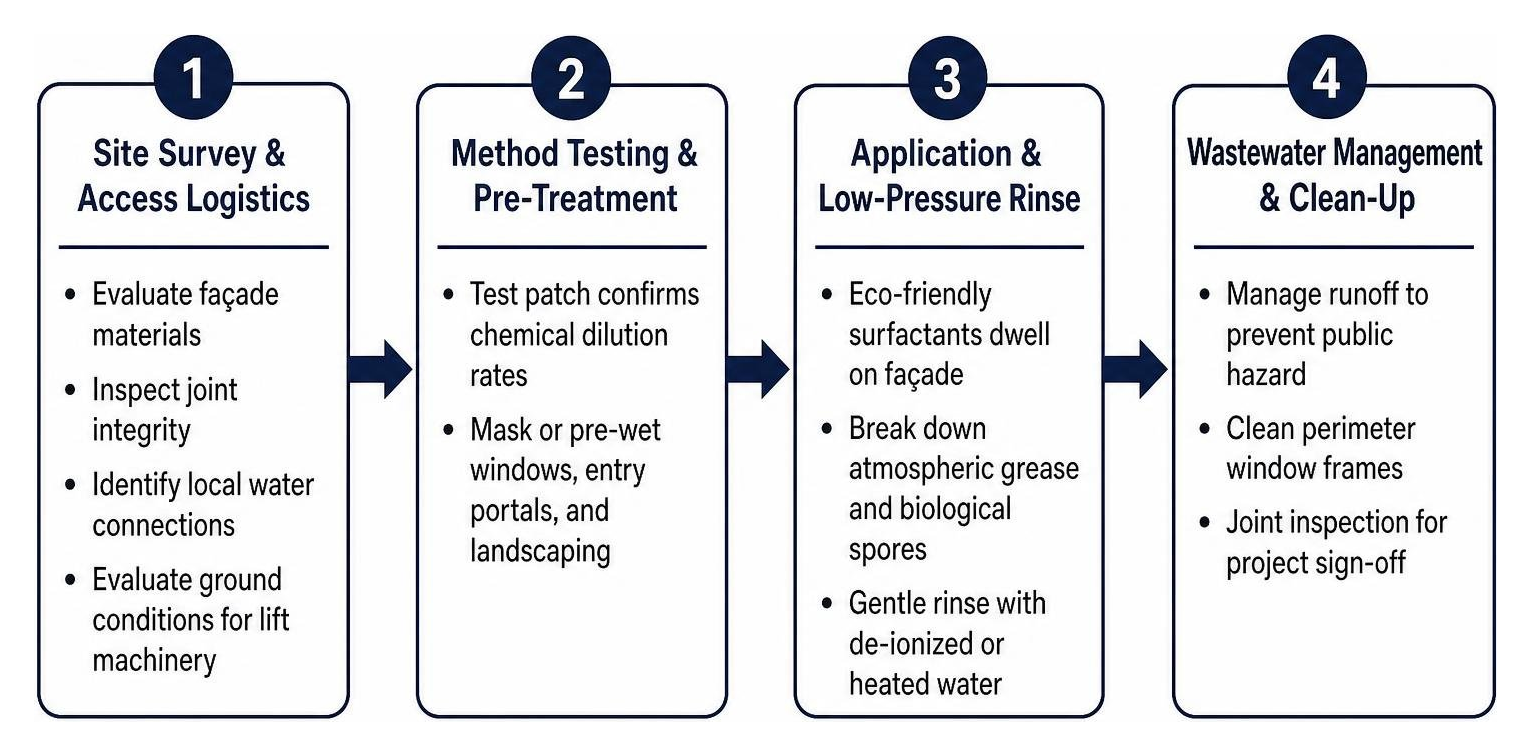
- Site Survey & Access Logistics: Technicians evaluate façade materials, inspect joint integrity, identify local water connections, and evaluate ground conditions for lift machinery.
- Method Testing & Pre-Treatment: A localized test patch confirms chemical dilution rates. Surrounding windows, sensitive entry portals, and landscaping are masked or pre-wetted for protection.
- Application & Low-Pressure Rinse: Eco-friendly surfactants dwell on the façade to break down atmospheric grease and biological spores before receiving a gentle rinse with de-ionized or heated water.
- Wastewater Management & Clean-Up: Crews manage runoff to prevent public hazard, clean perimeter window frames, and conduct a joint inspection for project sign-off.
Recommended Cleaning Frequency for Commercial Properties
Cleaning frequency depends on your facility’s environment, orientation, and usage:
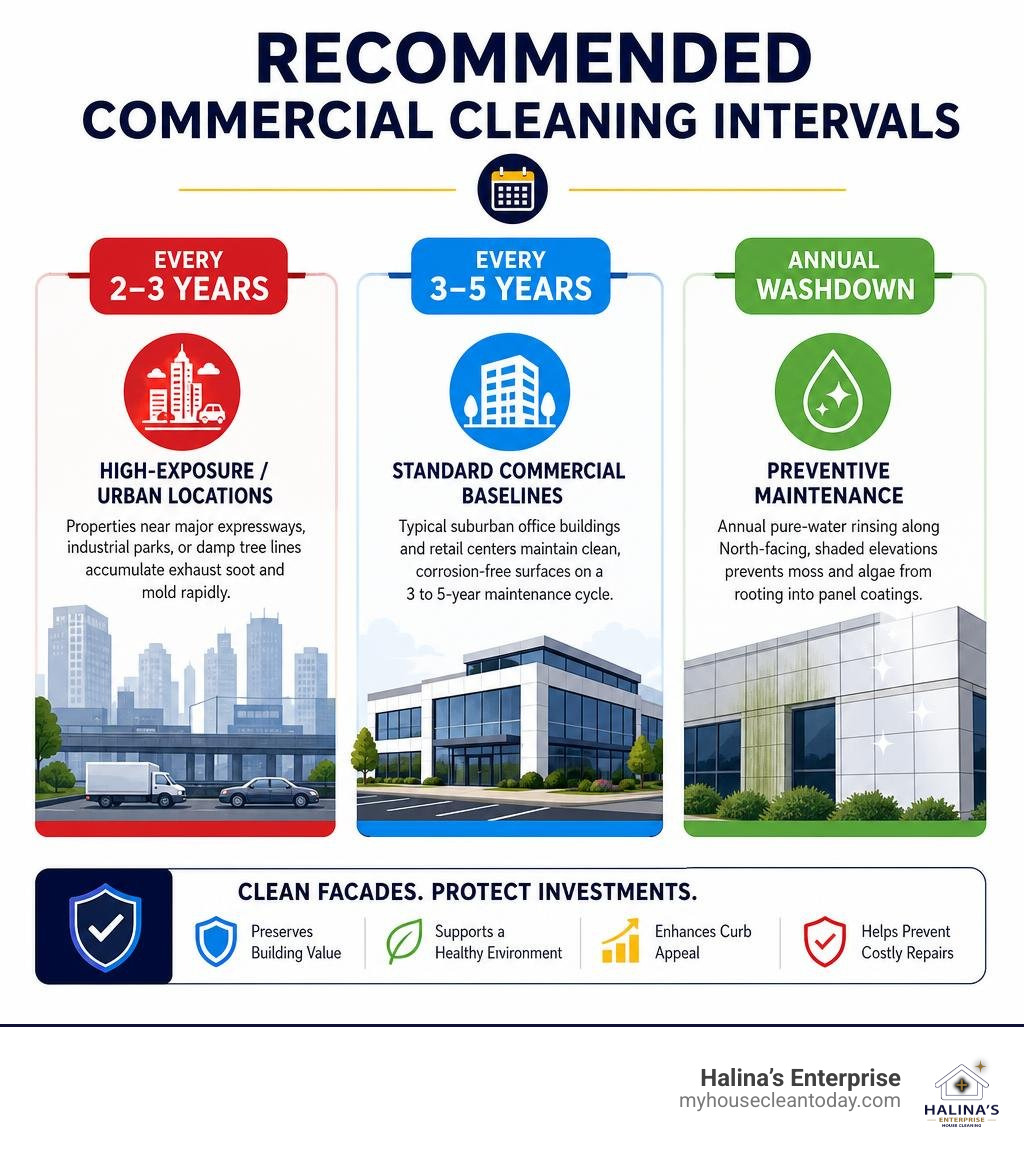
- High-Exposure / Urban Locations (Every 2–3 Years): Properties near major expressways, industrial parks, or damp tree lines accumulate exhaust soot and mold rapidly.
- Standard Commercial Baselines (Every 3–5 Years): Typical suburban office buildings and retail centers in locations like Hanover Park, IL, Carol Stream, IL, or Addison, IL, maintain clean, corrosion-free surfaces on a 3 to 5-year maintenance cycle.
- Preventive Maintenance Washdowns: Annual pure-water rinsing along North-facing, shaded elevations prevents moss and algae from rooting deeply into panel coatings.
Pricing Variables and Façade Cleaning Cost Factors
Cladding maintenance costs reflect several operational and structural variables:
- Total Façade Square Footage: Larger surface areas lower the cost per square foot through volume efficiencies.
- Architectural Complexity and Height: High-rise structures requiring powered access, boom lifts, or specialized staging increase equipment rental expenses.
- Access Restrictions: Restricted perimeters, overhead utility lines, and delicate landscaping require specialized reach systems.
- Contamination Severity: Restoring heavily oxidized metal or long-standing biological build-up requires deeper chemical dwell times and multi-stage treatments.
- Integrated Service Bundling: Pairing exterior washdowns with industrial warehouse cleaning can streamline mobilization costs and reduce overall contractor overhead.
Frequently Asked Questions About Building Cladding Maintenance
Can high-pressure jet washing damage composite or powder-coated cladding?
Yes. High-pressure jet washing regularly strips protective factory clear-coats, leaves permanent wand marks on powder-coated panels, and forces water behind structural caulking. Once moisture penetrates the sub-frame, trapped dampness degrades insulation and causes panel delamination. Reputable contractors use low-pressure soft washing and hot steam techniques to clean surfaces safely.
How does cladding cleaning differ from routine window and pressure washing?
While window cleaning focuses on glass clarity and standard pressure washing relies on high hydraulic force for flat concrete, cladding cleaning preserves the entire building envelope. It requires specialized chemical formulations to eradicate organic root systems, neutralize oxidation, and protect panel coatings.
Different tax guidelines often reflect these service distinctions as well; in many jurisdictions, standard window washing is categorized under routine janitorial services, whereas full exterior wall restorations fall under structural surface maintenance.
What access machinery is required for multi-story cladding projects?
Contractors select access equipment based on building height, site terrain, and structural access:
- Water-Fed Telescopic Poles: Carbon-fiber reach poles safely clean façades up to 35–40 feet directly from the ground using pure de-ionized water.
- Mobile Elevating Work Platforms (MEWPs): Articulated boom lifts and scissor lifts provide stable access for multi-story buildings up to several hundred feet.
- Suspended Cradles and Fall Arrest Systems: Used for high-rise commercial towers where ground space cannot accommodate heavy machinery.
Conclusion
A well-maintained building envelope protects your commercial real estate investment, preserves asset value, and makes a strong first impression on clients, tenants, and visitors. Partnering with experienced exterior cleaning professionals prevents accidental substrate damage, eliminates safety risks, and keeps your facility looking its best.
At Halina’s Enterprise, we bring more than 30 years of cleaning experience to commercial and residential properties throughout Roselle, IL, and the greater Chicagoland area. Our fully bonded and insured teams use safe, non-toxic products and customizable service schedules to deliver reliable results for your facility.
Ready to refresh your building’s exterior and keep your properties in top shape? Contact our team today to schedule professional commercial cleaning services for your facility.