A Smarter, Safer Way to Handle Kitchen Cleaning
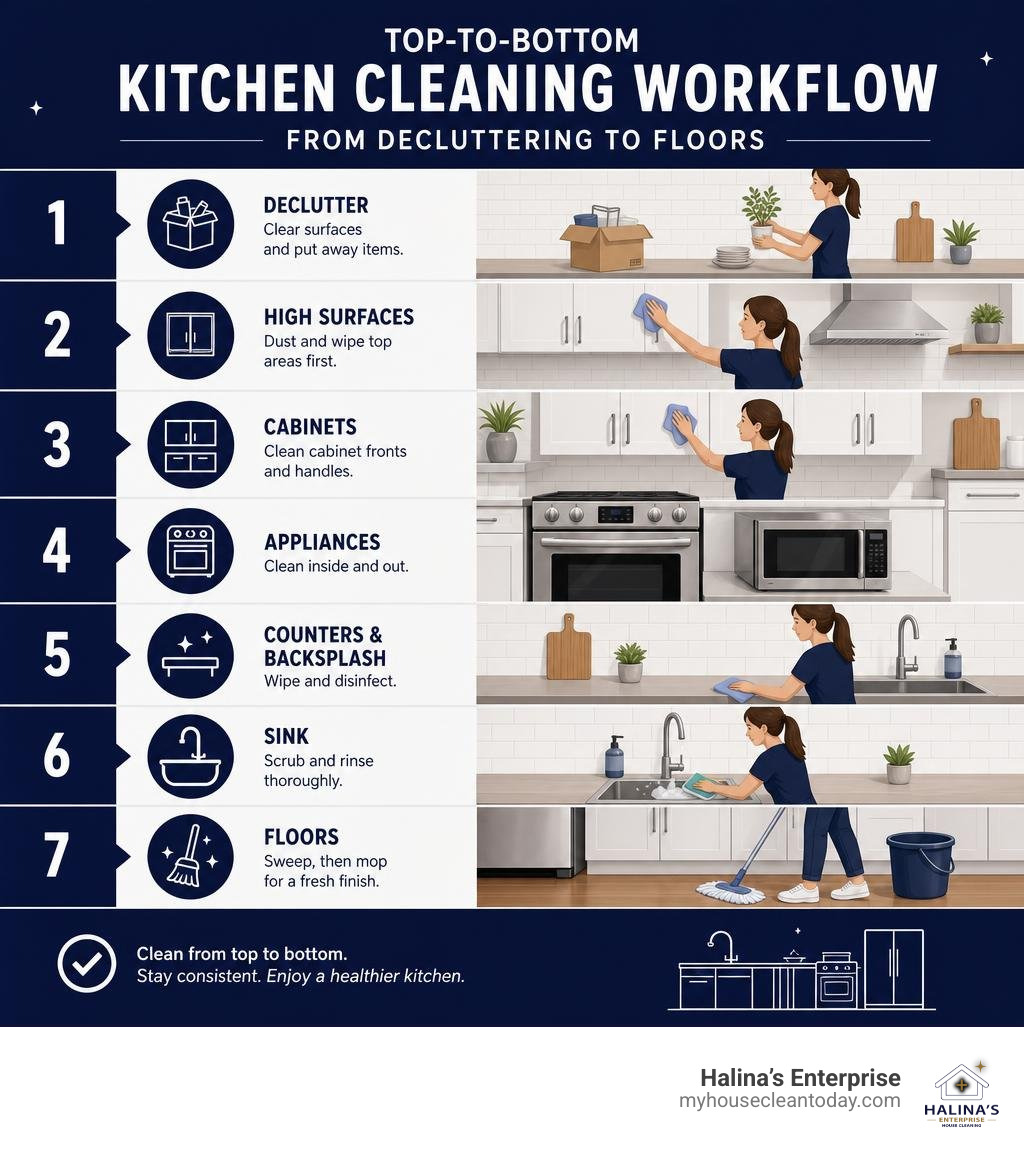
Effective kitchen cleaning follows a simple rule: clear clutter, clean from the highest surfaces down, handle appliances and food-prep areas with the right products, then finish with the floor. This order keeps dust, crumbs, and grease from landing on areas you already cleaned.
For a quick weekly reset, wipe counters and the stovetop, wash dishes, scrub the sink, empty trash, and sweep or mop. A deep clean goes further into appliance interiors, range hood filters, cabinet tops, refrigerator seals, and the spaces under and behind appliances.
A clean kitchen is not only about appearance. It helps limit cross-contamination, control odors, and protect the surfaces and appliances your household uses every day. Keep the refrigerator at or below 40°F, replace or wash dish towels often, and wash hands with soap for 20 seconds before food prep and after handling raw meat.
Essential Supplies and the Proven Sequence for Kitchen Cleaning
Anyone who has ever spent three hours scrubbing countertops only to knock dusty grime from the top of the refrigerator knows the frustration of cleaning out of order. Establishing an efficient routine starts with following How to Deep Clean Your Kitchen: Full Sequence (2026). By relying on a top-down, dry-before-wet strategy, we eliminate backtracking and ensure that gravity works for us rather than against us.
Before applying any cleaning solutions, implement a strict decluttering protocol. Move mail, small appliances, dish racks, and food containers off the countertops entirely. Wash any dishes resting in the basin or load them directly into the dishwasher. You cannot clean a surface you cannot reach, and attempting to wipe around clutter only smears dirt into tight crevices.
Step-by-Step Top-to-Bottom Sequence
Executing a thorough reset requires a methodical order of operations:
- Ceiling Vents and High Corners: Begin at the highest architectural point. Use an extendable duster or a dry microfiber cloth to capture cobwebs and loose dust around ceiling vents, pendant lights, and high light fixtures.
- Cabinet Tops and Upper Cabinetry: Dust the upper ledges of cabinets, then wipe down exterior upper cabinet faces and crown molding.
- Range Hood and Backsplash: Degrease the range hood canopy and work down the backsplash tile.
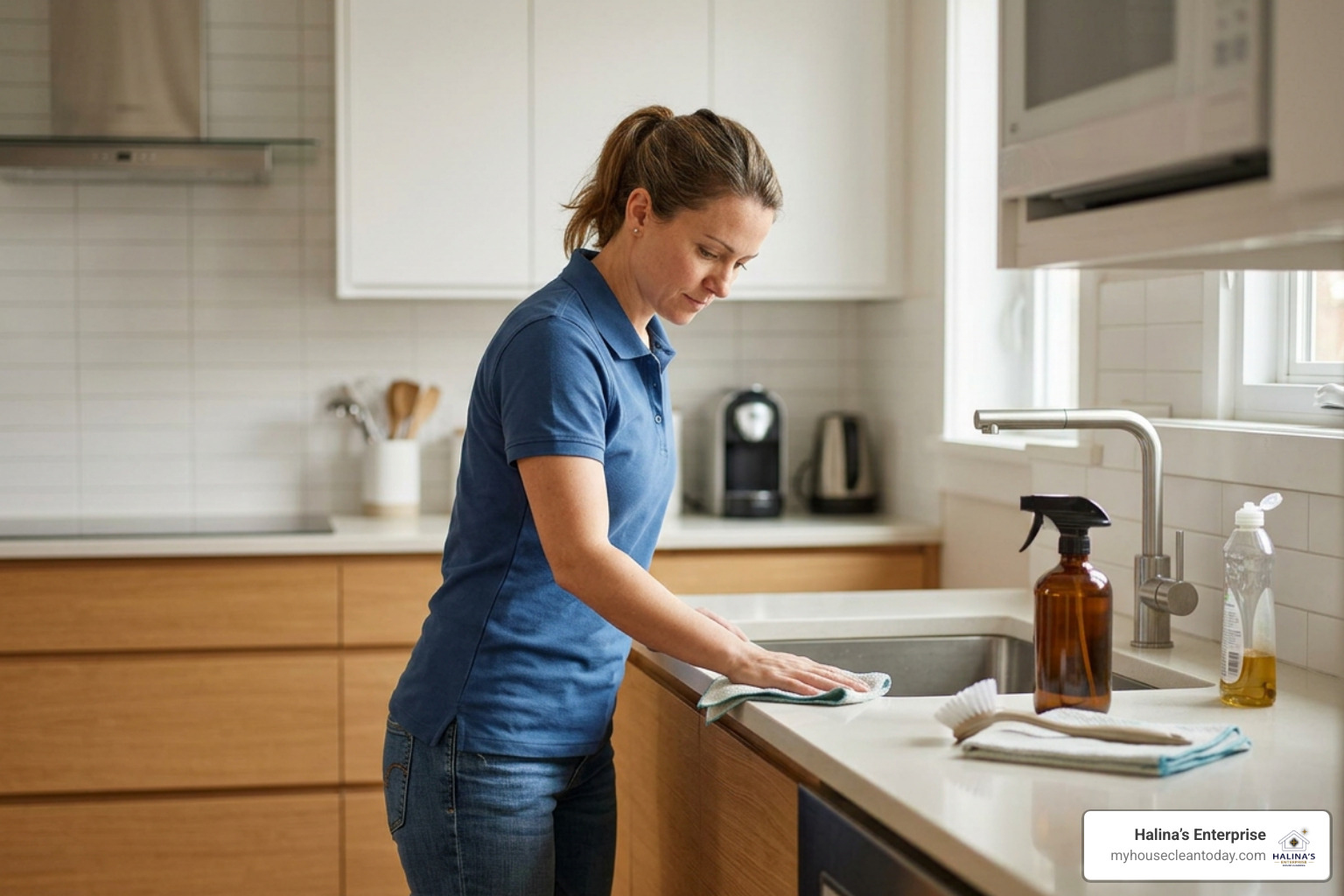
- Countertop Perimeter and Prep Zones: Clear and wipe the entire expanse of your counters from the back edge forward.
- Lower Cabinetry and Hardware: Clean lower cabinet doors, drawer fronts, and pull handles.
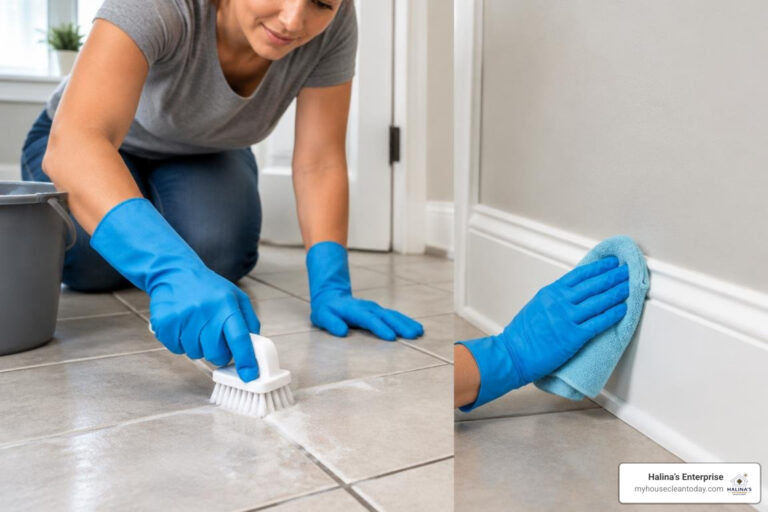
- Floor Sweeping and Mopping: Finish with the floor, sweeping from the farthest corner out toward the room entryway before executing a thorough wet mop.

Safe and Non-Toxic Cleaning Supplies
Achieving a pristine finish does not require harsh, eye-watering chemical fumes that linger near your food. We prioritize choosing eco-friendly cleaning products safe for kids and pets that effectively dissolve grease without introducing synthetic residues.
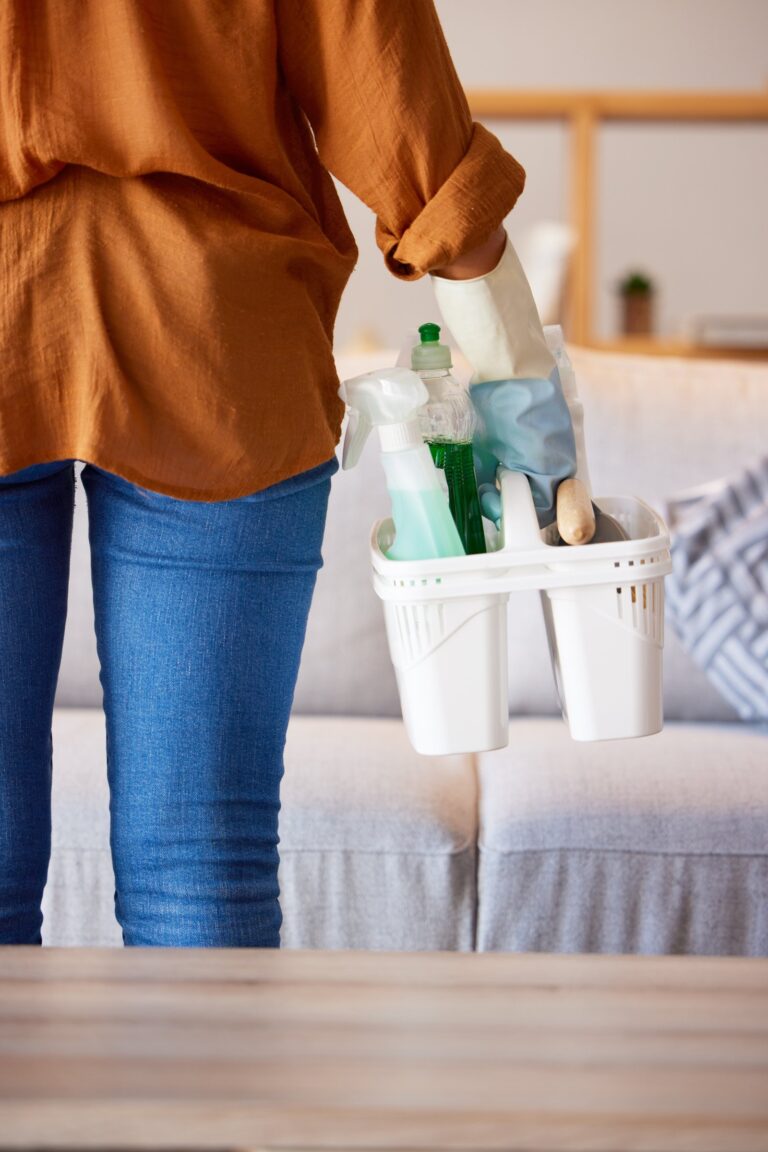
A well-stocked, non-toxic arsenal includes:
- Color-coded microfiber cloths: Trap 99% of surface dirt without scratching delicate sealants.
- Baking soda: Acts as a gentle physical abrasive and natural deodorizer.
- Distilled white vinegar: Cuts through hard-water mineral deposits and alkaline soap films (keep clear of natural stone).
- Plant-based dish soap: A balanced surfactant that emulsifies grease effectively.
- pH-neutral all-purpose spray: Safe for everyday touchpoints and mixed surfaces.
Crucial Chemical Safety Warning: Never mix household bleach with vinegar, ammonia, or rubbing alcohol. Combining bleach with acidic or ammonia-based substances produces dangerous chlorine or chloramine gases.
Deep Cleaning Major Appliances: Oven, Refrigerator, and Microwave
Appliances are the mechanical workhorses of the culinary space. As highlighted in The Complete Kitchen Cleaning Guide: Every Surface, Every Appliance – CleaningTuts, regular appliance maintenance protects your investment, lowers utility bills, and removes hidden foodborne pathogens.
Oven Degreasing and Stovetop Care
Carbonized grease baked onto oven walls acts as an insulator, reducing heating efficiency and generating acrid smoke during baking.
To restore your oven without harsh chemical sprays:
- Mix three parts baking soda with one part warm water to form a spreadable paste.
- Coat the interior oven walls and base, avoiding the heating elements and fan assemblies.
- Allow a dwell time of at least 20 minutes (or leave it overnight for severe carbonization).
- Wipe the softened paste away with a damp microfiber cloth, using a plastic scraper on stubborn residue.
- For glass cooktops, apply a dedicated non-abrasive cooktop cream or baking-soda paste, buffing gently with a non-scratch sponge to eliminate cloudiness without micro-scratching the tempered glass. Soak cast-iron burner grates in hot, soapy water before scrubbing.
Refrigerator Sanitization and Coil Maintenance
The FDA Food Code stresses maintaining your refrigerator interior at or below 40°F and freezers at 0°F to inhibit bacterial proliferation like Listeria monocytogenes.
Begin by removing expired food items. According to USDA Food Safety guidance, prepared leftovers must be discarded after 4 days, regardless of appearance or smell.
Remove interior shelving and crisper bins, washing them in warm water mixed with mild dish soap. Wipe down interior walls and door gaskets, where moisture frequently fosters mold spores.
Every six months, pull the refrigerator outward and vacuum the condenser coils located at the base or back. Dust-laden coils force the compressor to run hotter and longer; clearing them can reduce appliance energy consumption by up to 25%.
Microwave and Dishwasher Sanitization
Microwaves collect splattered oils that harden over time. Utilize the steam method: fill a microwave-safe bowl with one cup of water and slices of fresh lemon or two tablespoons of white vinegar. Microwave on high for 3 to 5 minutes until steam fills the chamber. Let it stand unopened for 5 minutes so the steam breaks down the grease, then wipe the interior with a single pass of a microfiber cloth. USDA research highlights that microwaving a wet sponge for 60 seconds eradicates over 99% of active bacteria.
To restore your dishwasher, extract and scrub the cylindrical bottom filter beneath hot running water to eliminate trapped food debris. Place a cup of white vinegar on the top rack and run a hot water cycle to strip away limescale and grease inside the spray arms.
Surface-Specific Care for Countertops, Sinks, and Cabinetry
Different materials require distinct chemical approaches to keep them pristine and prevent permanent surface etching.
Mastering Countertop Materials in Your Kitchen Cleaning Routine
- Quartz: Engineered quartz is non-porous and resilient, but sensitive to extreme heat and harsh solvents. Clean with warm water, mild liquid dish soap, and a soft microfiber cloth. Avoid acidic or abrasive scrubbing pads.
- Granite and Marble: Natural stone requires pH-neutral cleaners. Never apply vinegar, lemon juice, or bleach, which chemically dissolve calcium carbonate and cause irreversible etching. Reseal granite every 12 to 18 months to prevent liquid absorption.
- Butcher Block: Scrape away dried residue with a bench scraper. Sanitize using mild soap, wipe dry immediately, and condition monthly with food-grade mineral oil to prevent warping and timber splits.
- Laminate: Wash with a balanced all-purpose spray, avoiding standing puddles near seams where moisture can swell underlying particleboard.
Sinks, Drains, and Cabinet Hardware Care
NSF research flags the kitchen sink and dishrags as the primary bacterial hot zones in the home, often harboring more microbial colonies than a bathroom fixture.
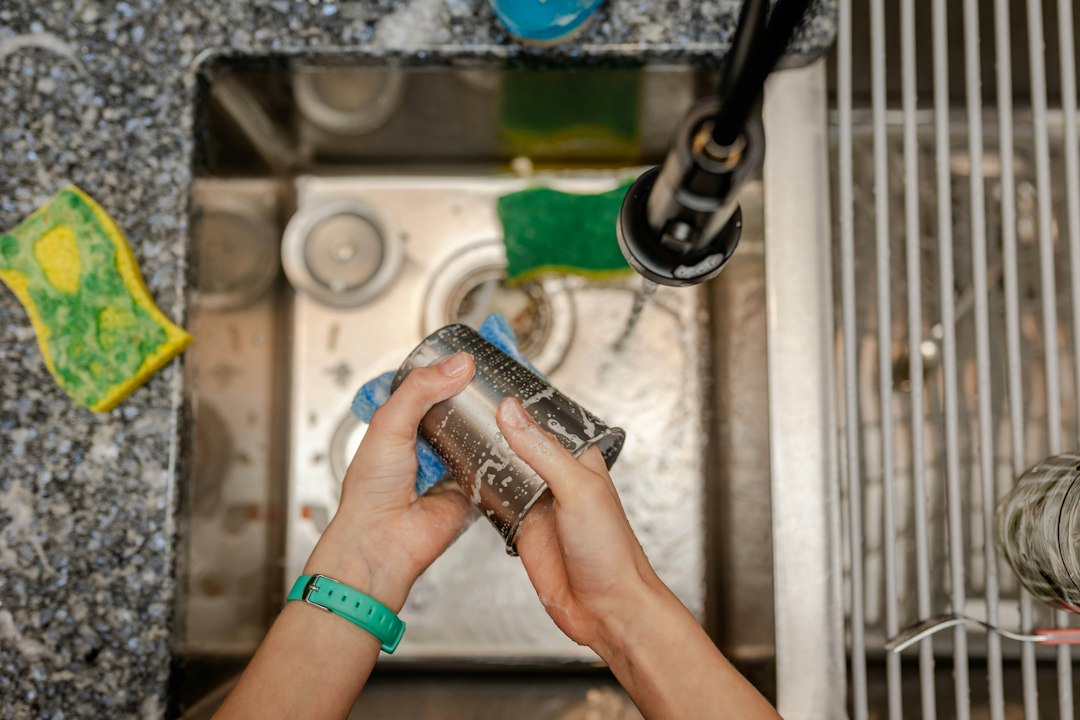
Stainless steel sinks feature an invisible chromium oxide layer that prevents rust. Protect this barrier by steering clear of bleach and wire wool. Instead, sprinkle baking soda over the basin, scrub along the grain using a non-scratch sponge, rinse with hot water, and buff dry to eliminate water spotting.
To freshen the garbage disposal, grind a tray of ice cubes combined with a tablespoon of coarse salt to scrape build-up off internal impellers, followed by citrus peels for a clean scent. Finish by wiping cabinet knobs, pulls, and drawer handles with an EPA-registered disinfectant to stop cross-contamination across high-touch surfaces.
Overlooked Grime: The Most Commonly Missed Kitchen Hotspots
Deep cleaning addresses the neglected spots that standard surface wiping leaves behind.
Range Hood Filters, Appliance Gaskets, and Cabinet Tops
- Aluminum Mesh Filters: Range hood filters capture aerosolized grease from daily cooking. Submerge clogged filters in a sink basin filled with boiling water, half a cup of baking soda, and a heavy squirt of degreasing dish soap for 15 minutes, then rinse clean.
- Appliance Gaskets: Flexible rubber seals around the refrigerator and dishwasher trap crumbs and harbor mildew. Clean the folds using a soft cotton cloth dampened with warm, soapy water, drying completely.
- Cabinet Tops and Kickplates: The tops of upper cabinetry accumulate a tacky combination of airborne dust and cooking oils. Wipe these surfaces down quarterly using a specialized degreasing cleaner.
Under-Sink Organization and Trash Can Sanitization
The cabinet space beneath your sink is vulnerable to slow plumbing leaks, pest intrusion, and hidden mildew growth. Clear this space completely, check pipe joints for moisture, and wipe down baseboards.
Sanitize indoor trash cans and recycling bins monthly by spraying them with an antibacterial solution, scrubbing the base, and air-drying before replacing bin liners.
Building a Sustainable Routine: Maintenance Schedules and Professional Resets
A clean kitchen is preserved through steady, manageable habits rather than sporadic, exhausting marathons. Incorporating expert residential cleaning principles helps you maintain a sparkling, hygienic space year-round.
| Cleaning Frequency | Focus Tasks Included | Estimated Time Investment |
|---|---|---|
| Daily Upkeep | Wipe down counters, wash dishes, sweep floor crumbs, sanitize sink basin, replace dish towels. | 10–15 Minutes |
| Weekly Maintenance | Mop floors, wipe appliance exteriors, steam-clean microwave, discard expired leftovers, wipe stovetop. | 30–45 Minutes |
| Monthly Deep Clean | Degrease range hood filter, clean oven interior, sanitize trash cans, inspect refrigerator shelves. | 1.5–2 Hours |
| Seasonal Reset | Vacuum refrigerator coils, wash cabinet interiors, clean under appliances, reseal natural stone. | 3–4 Hours |
Daily Habits and Weekly Kitchen Cleaning Maintenance
Prevent grease accumulation by practicing the clean-as-you-go method. Wipe stove splatters while surfaces are still warm, and sanitize cutting boards immediately after meal prep.
Because NSF studies identify dishrags and towels as significant carriers of bacteria, swap out hand towels daily and avoid using the same cloth for drying hands and cleaning food-contact counters.
When to Schedule a Comprehensive Deep Clean
A complete, top-to-bottom reset typically takes 2 to 4 hours for an average-sized kitchen, and up to 6 hours if deep care has been deferred. When busy work schedules or seasonal events limit your personal time, bringing in trained specialists makes all the difference.
At Halina’s Enterprise, we bring over 30 years of hands-on expertise to every home we touch across Roselle, Schaumburg, Arlington Heights, Naperville, and the broader Chicagoland area. Whether you need a seasonal deep house cleaning or want consistent support through recurring maid services, our bonded, insured, and award-winning teams handle the tough scrubbing so you can enjoy your home.
Frequently Asked Questions About Kitchen Sanitation
What is the difference between a deep clean and a regular kitchen clean?
A regular clean focuses on surface maintenance: washing dishes, wiping active counter spaces, clearing visible stovetop crumbs, and sweeping floors. A deep clean targets structural and mechanical elements: breaking down carbonized oven grease, sanitizing refrigerator interiors, degreasing hidden range hood filters, wiping cabinet faces, and cleaning the dirt accumulated beneath heavy appliances.
How long does a full kitchen deep clean take?
For an average-sized residential kitchen, a thorough deep clean takes between 2 and 4 hours. Larger kitchens or spaces that have not received detailed care in several months may require 4 to 6 hours to properly treat all surfaces, appliances, and cabinetry without skipping essential dwell times.
What is the safest way to sanitize food-prep surfaces without harsh chemicals?
Wash surfaces with warm water and plant-based dish soap to lift dirt, then apply an EPA-registered, food-contact-safe sanitizer or steam. For non-stone surfaces, a balanced mixture of equal parts distilled white vinegar and water can help clear mineral build-up and freshen surfaces, provided you allow adequate contact time before wiping dry with a clean microfiber towel.
Conclusion
Mastering kitchen maintenance comes down to using the right order of operations, respecting product dwell times, and applying surface-safe cleaning methods. By working top-to-bottom and keeping up with key touchpoints, you protect your appliances, keep food prep areas safe, and create an inviting space for family and friends.
When life gets busy and you would prefer a professional reset, explore our full range of cleaning services to keep your home healthy, safe, and spotless throughout the year.