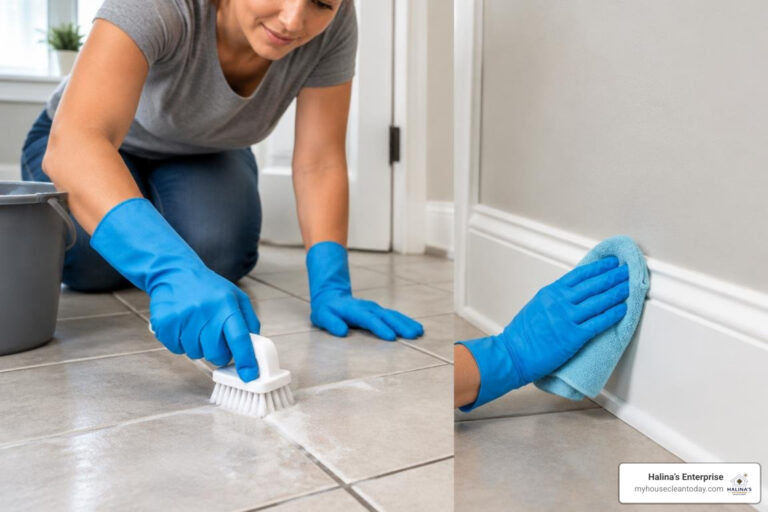
Essential Preparation: Decluttering and Supplies
For effective bedroom cleaning, always work top-to-bottom: first declutter trash and misplaced items, strip and wash bed linens, dust high fixtures and ceiling fans, wipe furniture and sanitize high-touch surfaces, and finish by vacuuming and mopping the floors.
Before reaching for a duster or a vacuum, you need a clear workspace. A cluttered room makes deep cleaning nearly impossible because you end up simply moving items from one dusty corner to another. A full trash can or piles of clothing make any space feel chaotic before you even begin scrubbing.
To get started quickly without feeling overwhelmed, we recommend using the three-bin decluttering method:
- Trash & Recycling: Grab a heavy-duty trash bag. Walk through the room and immediately throw away empty bottles, used tissues, tags, and packaging. Empty your bedroom wastebasket as well.
- Relocate: Place a laundry basket or bin near the door. Walk around the nightstands, dresser tops, and floor to collect items that belong in other rooms—such as coffee mugs, dishes, books, or bathroom products. Set them aside to deliver once the bedroom is finished.
- Donate & Purge: Keep a sturdy box for clothing, extra throw pillows, or decorative items you no longer love. Seasonal wardrobe transitions provide the perfect opportunity to prune crowded closet hangers and drawers.
Once surface clutter is removed, you can treat your surfaces with eco-friendly cleaning products safe for kids and pets to keep indoor air clean and healthy.
Essential Bedroom Cleaning Supplies and Non-Toxic Tools
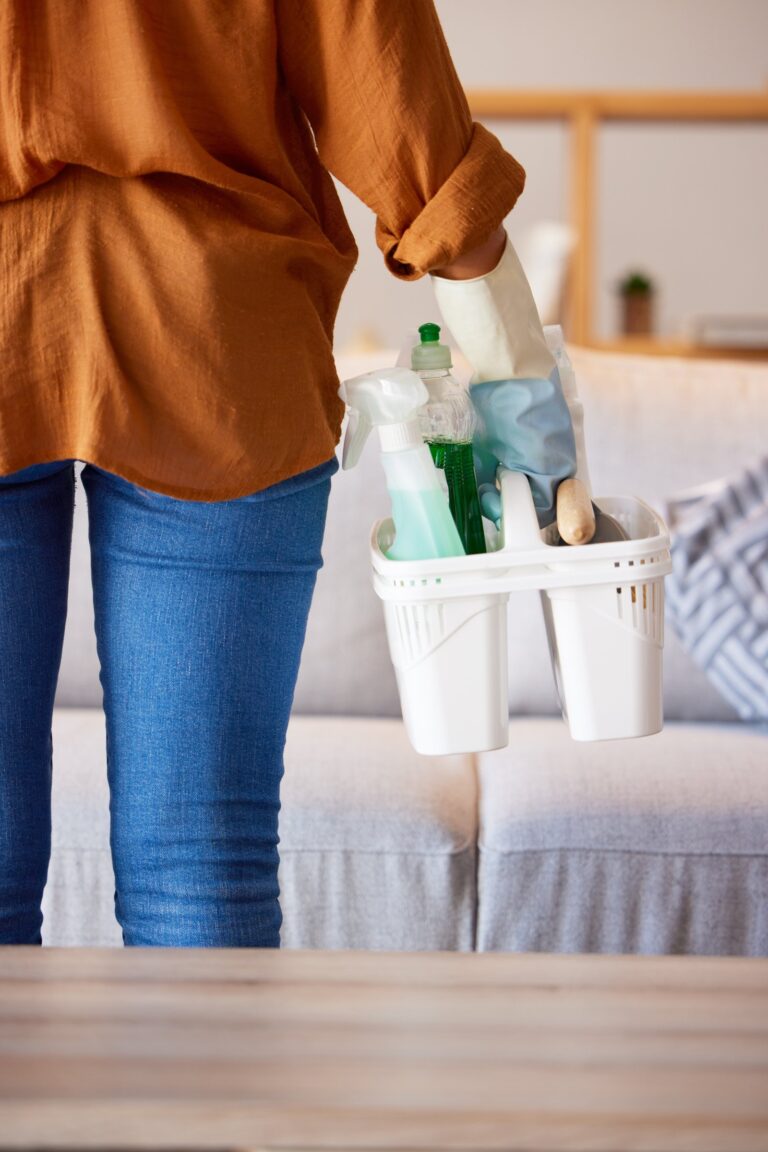
Having all your cleaning supplies gathered in a mobile caddy keeps you from losing momentum mid-clean. We prefer simple, non-toxic solutions that effectively cut through dirt without introducing harsh chemical fumes into the room where you sleep.
Here is your ideal bedroom cleaning supply kit:
- Color-Coded Microfiber Cloths: Use dedicated colors to avoid cross-contamination (e.g., blue for glass and mirrors, green for general wood and furniture dusting, yellow for sanitizing high-touch door handles and light switches). Microfiber creates a slight static charge that lifts and holds dust particles instead of scattering them into the air like traditional feather dusters.
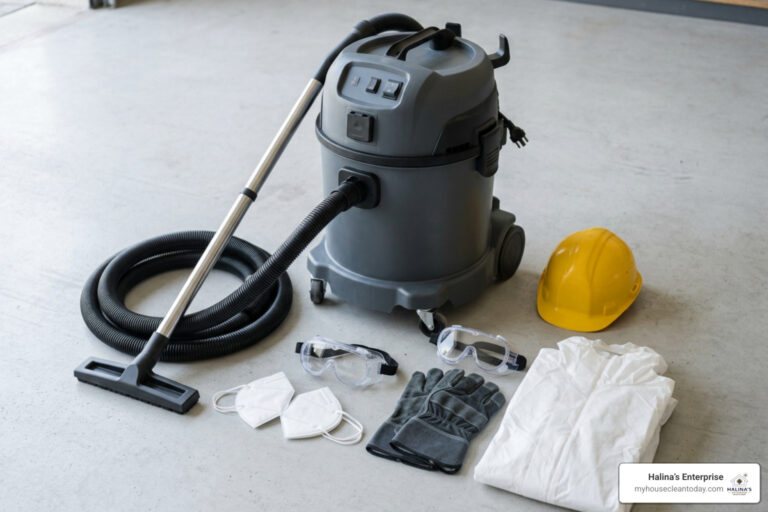
- HEPA-Filter Vacuum Cleaner: A vacuum equipped with a certified HEPA filter prevents microscopic dust mite waste, pollen, and pet dander from blowing straight back into your room’s airflow. Ensure you have crevice tools, an upholstery brush, and a motorized floor head ready.
- Extendable Duster: A flexible, long-handled microfiber wand allows you to reach high ceiling corners, ceiling fan blades, and crown molding safely without balancing on unsteady chairs.
- Plant-Powered Multi-Surface Cleaner: A gentle, natural spray safe for sealed wood, laminate, baseboards, and painted walls.
- Glass Cleaner & Pure Water Spray: A streak-free glass cleaner or a simple vinegar-water solution for mirrors, picture frames, and interior window glass.
- Baking Soda & Essential Oils: Natural deodorizers that work wonders on mattresses, carpets, and upholstered headboards.
- Microfiber Flat Mop: Ideal for damp-cleaning hardwood, laminate, or tile flooring after vacuuming.
For more detailed strategies on managing every room, you can reference step-by-step cleaning guides from top to bottom to build healthy habits throughout your home.
The Step-by-Step Bedroom Cleaning Sequence
The golden rule of professional bedroom cleaning is always to work from top to bottom and back to front. If you vacuum your carpets or polish your nightstands first, dusting the ceiling fan afterward will simply drop debris onto your freshly cleaned surfaces, forcing you to do the job twice.
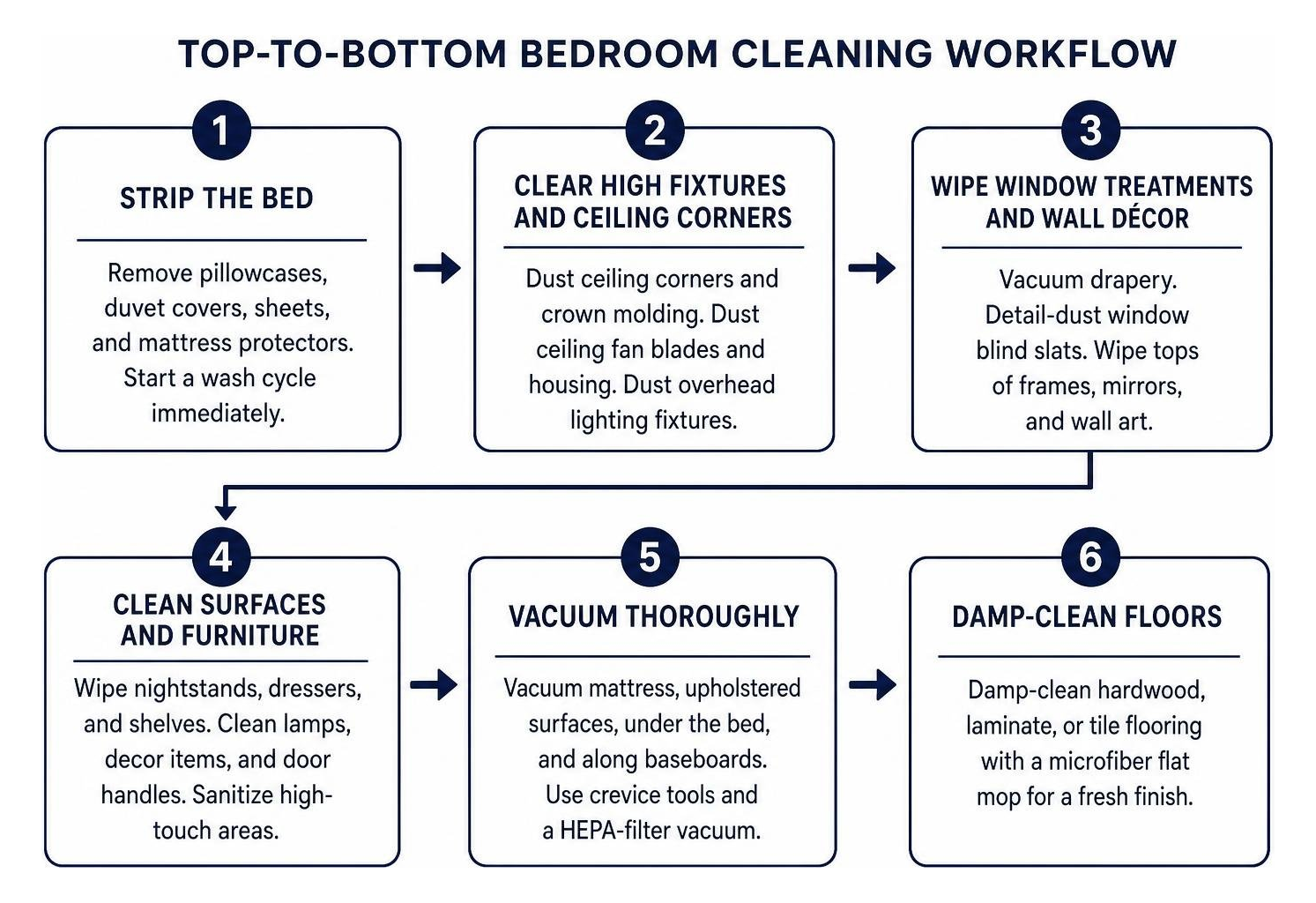
Follow this proven sequence for maximum efficiency:
- Strip the Bed: Remove pillowcases, duvet covers, sheets, and mattress protectors. Start a wash cycle immediately so fresh linens are drying while you clean the rest of the room.
- Clear High Fixtures and Ceiling Corners: Using your extendable duster, work your way around the room’s perimeter to catch cobwebs along the crown molding. Dust the upper housing and blades of your ceiling fan, followed by overhead lighting fixtures and flush mounts.
- Wipe Window Treatments and Wall Décor: Vacuum drapery with a soft brush attachment, detail-dust window blind slats, and wipe down the tops of picture frames, hanging mirrors, and wall art.
- Sanitize High-Touch Contact Points: Disinfect door knobs, closet pulls, light switch plates, lamp switches, and TV remotes using a slightly dampened microfiber cloth.
- Clean Furniture and Horizontal Surfaces: Wipe down dressers, bedside tables, desks, and shelving. Move items to clean the surface underneath, rather than dusting around them.
- Dust Walls and Baseboards: Run a microfiber cloth or flat duster along the trim and baseboards. Safety note: If you live in an older home built before 1978, inspect window sills and baseboard corners carefully for chipping paint to handle older lead-based coatings safely.
- Vacuum and Mop the Floors: Vacuum every inch of flooring, including under furniture and inside closet edges, then damp-mop hard surface floors to collect fine residue.
For homeowners with demanding schedules who prefer professional care, our standard residential cleaning delivers this detailed top-to-bottom treatment to keep bedrooms fresh.
Deep Bedroom Cleaning for Mattresses and Bedding Care
Your bed is the center of your room, but it is also the primary collector of shed skin cells, bodily oils, and microscopic allergens. A comprehensive deep clean ensures your mattress and bedding stay hygienic and supportive.
To refresh your mattress:
- Strip off all bedding and vacuum the entire mattress surface, seams, and tufts thoroughly with your upholstery attachment to remove built-up dust and dead skin.
- Spot-treat any accidental spills or stains using a mild foam cleaner or gentle dish soap solution. Work in small sections with minimal moisture so you never saturate the internal padding.
- Sprinkle a light, even layer of pure baking soda across the entire top of the mattress. Let it sit for at least two to three hours (longer if possible) to draw out moisture and neutralize lingering odors.
- Vacuum away the baking soda completely using a clean vacuum attachment.
- Rotate the mattress 180 degrees (or flip it if your mattress design allows) to promote even wear and maintain spinal support.
For homes requiring a total seasonal overhaul, pairing this care with our comprehensive deep house cleaning restores your living spaces from top to bottom.
Windows, Mirrors, and Hidden Surfaces
Natural light makes a bedroom feel open and restorative, but smudged glass and dusty screens block sunlight and trap airborne grime.

Spray your glass cleaner directly onto a folded microfiber cloth rather than misting the glass itself; this prevents overspray from pooling along window sills or wood frames. Wipe in an “S-pattern” from top to bottom for a clean, streak-free finish.
Don’t neglect the hidden zones where dust bunnies quietly multiply:
- Behind and Under the Bed: Move lightweight nightstands and pull the bed away from the wall every few months to clear collected dust and fibers.
- Under Dressers and Heavy Wardrobes: Use your vacuum’s flat crevice wand or an extendable microfiber duster to pull dust rolls out from beneath heavy furniture without scratching your flooring.
- Air Vents and Returns: Vacuum return air grates and wipe down vent louvers to keep your HVAC system from recirculating settled dust into your sleeping area.
You can also consult a detailed checklist for deep bedroom resets to keep track of these periodic tasks.
Daily, Weekly, and Seasonal Cleaning Schedules
The easiest way to prevent a bedroom from falling into disarray is by dividing tasks into manageable timeframes. When you handle small maintenance tasks daily and weekly, deep cleans take far less effort.
| Frequency | Target Duration | Key Tasks Included |
|---|---|---|
| Daily Routine | 5–10 Minutes | • Make the bed each morning • Put dirty clothes straight into hampers • Hang up clean garments • Clear bedside drinking glasses and clutter • Open windows briefly for fresh air ventilation |
| Weekly Reset | 20–30 Minutes | • Strip and wash sheets and pillowcases in warm water • Dust flat furniture surfaces, dressers, and nightstands • Sanitize door knobs, switches, and remotes • Empty all trash cans • HEPA vacuum rugs, carpets, and hard floors |
| Monthly Refresh | 45–60 Minutes | • Wash mattress pad, pillow protectors, and bed skirts • Detail-dust window blinds and vacuum drapes • Clean interior window panes and mirrors • Wipe down baseboards and doors • Vacuum under accessible furniture edges |
| Seasonal Overhaul | 2–3 Hours | • Vacuum, spot-clean, deodorize, and rotate mattress • Launder duvets, comforters, and pillows • Move heavy furniture to vacuum and mop behind baseboards • Declutter closet wardrobes and donate unused apparel • Wipe ceiling fan blades, light fixtures, and HVAC vents |
For homeowners who want consistent, worry-free maintenance without taking time away from family or hobbies, our scheduled recurring maid services ensure your home stays pristine year-round.
Frequently Asked Questions About Bedroom Cleaning
How often should you clean and deep clean your bedroom?
We recommend a quick daily tidy-up (5 minutes to make the bed and clear dirty clothing), combined with a dedicated weekly reset to change linens, dust surfaces, and vacuum floors. Full deep cleaning should be conducted once every quarter (or seasonally) to treat mattresses, clean behind heavy furniture, and wash bulky items like duvets and curtains.
If you live in our local Illinois service communities—such as Roselle, Schaumburg, Arlington Heights, Bloomingdale, or Naperville—seasonal weather shifts can trap allergens indoors. Reviewing how often you should deep clean your home helps keep your home balanced throughout changing seasons.
What is the proper order to clean a bedroom?
The most efficient cleaning order is:
- Declutter & remove trash (clears working space).
- Strip bed linens (gets laundry running early).
- High-to-low dusting (cleans ceiling fans, moldings, wall art, lamps, and furniture).
- Wipe and sanitize surfaces (cleans glass, nightstands, and touchpoints).
- Vacuum and mop floors (picks up settled dust and leaves the room pristine).
- Make the bed with fresh linens (completes the clean room reset).
How do you eliminate dust mites and allergens in the bedroom?
Dust mites thrive in warm, humid bedding and feed on shed skin cells. To reduce allergen triggers:
- Wash all bed sheets, pillowcases, and blankets weekly in water heated to at least 130°F (54°C).
- Use high-quality zippered allergen-barrier covers on both your mattress and pillows.
- Vacuum weekly using a machine equipped with a genuine HEPA filter to trap microscopic particles.
- Maintain indoor relative humidity levels between 30% and 50% to discourage dust mite growth.
Create Your Personal Sleep Sanctuary
A clean, clutter-free bedroom is essential for restful sleep, respiratory health, and daily peace of mind. By following a structured cleaning order and keeping up with regular bedding care, you can turn your bedroom into a quiet, relaxing haven every night.
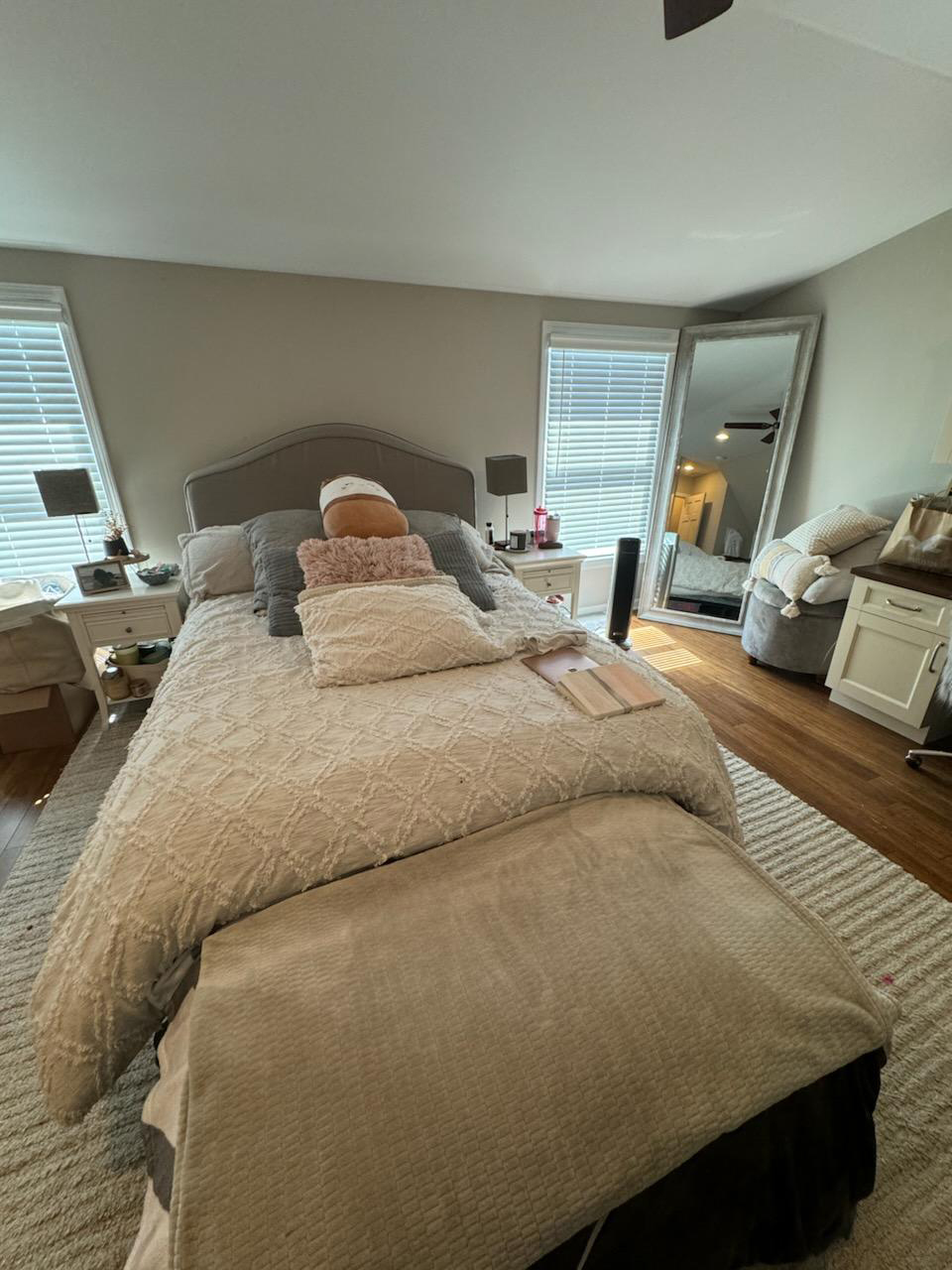
When busy schedules make it difficult to find time for thorough seasonal cleaning, Halina’s Enterprise is here to assist. With over 30 years of cleaning experience serving Roselle and the greater Chicagoland area—including Bartlett, Carol Stream, Mount Prospect, Palatine, and Downers Grove—our fully insured and bonded team uses safe, non-toxic products to protect your home and loved ones.
Explore our customizable professional house cleaning services today to schedule your next residential reset.