Essential Supplies and Non-Toxic Tools Before You Start
An effective bedroom cleaning list follows a straightforward, top-to-bottom sequence: declutter surfaces and floors, strip and wash bed linens, dust downward from ceiling fixtures and molding to furniture, wipe and sanitize high-touch contact points, and finish by thoroughly vacuuming and mopping floors.
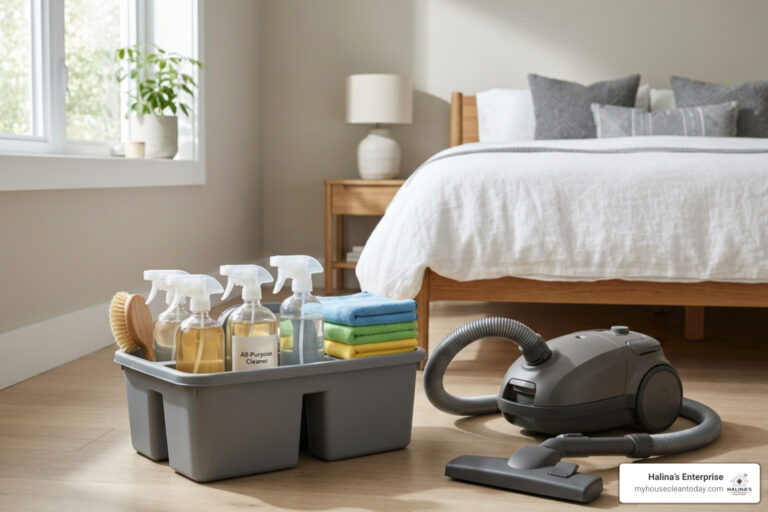
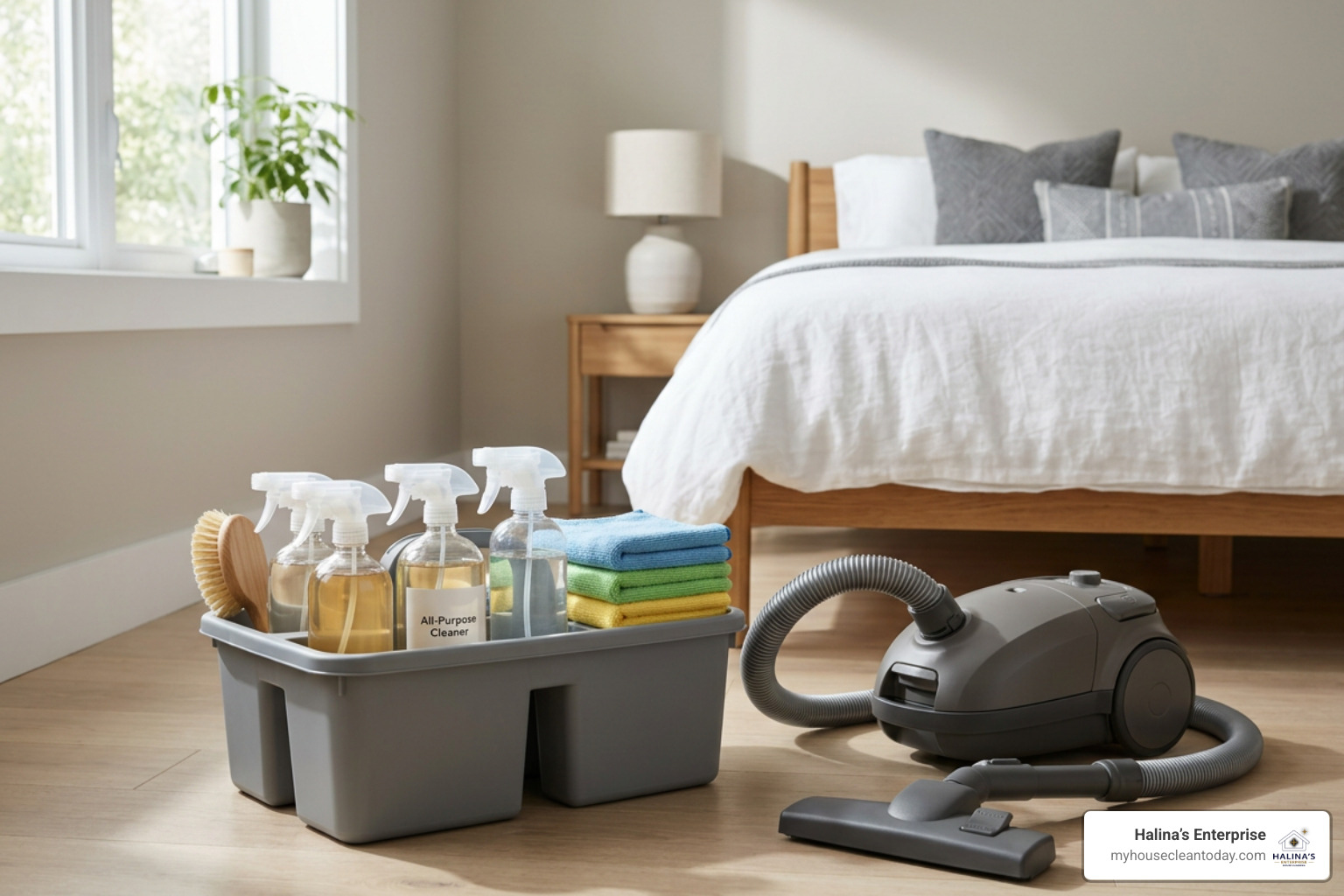
Before tackling any room, gathering the right equipment prevents you from wandering off mid-task to hunt down supplies. We always recommend building a dedicated cleaning caddy stocked with gentle, plant-powered formulas and specialized physical tools that trap debris instead of just pushing it around.
- HEPA-Filtered Vacuum: Essential for trapping microscopic biological matter, pet dander, and dust mite waste instead of blowing particles back into your indoor air. Ensure it includes an upholstery brush and a narrow crevice tool.
- Color-Coded Microfiber Cloths: Use specific colors for designated tasks (e.g., green for dusting wooden furniture, blue for glass and mirrors, yellow for baseboards) to avoid cross-contamination.
- Extendable Microfiber Duster: A bendable, long-reach tool that captures cobwebs from crown molding and reaches ceiling fan blades safely from the floor.
- Baking Soda (Sodium Bicarbonate): An affordable, natural deodorizer that draws out moisture and neutralizes odors from mattresses, area rugs, and upholstery.
- Gentle Dish Soap & Distilled White Vinegar: Everyday household staples that cut through body oils on headboards and leave streak-free glass surfaces.
- 70% Isopropyl Alcohol: Perfect for lightly misting high-touch points and sanitizing fabrics without over-saturating delicate fibers.
- Sorting Baskets & Heavy-Duty Trash Bags: Speeds up your initial decluttering phase so you do not leave the bedroom until the cleaning is complete.
Using safe, non-toxic cleaning products protects your indoor air quality and ensures sleeping surfaces remain free of harsh synthetic fumes that can irritate sensitive airways overnight.
The Complete Bedroom Cleaning List by Frequency and Routine
Breaking chores down by cadence keeps dust, dander, and clutter from turning into an overwhelming weekend project. Relying on proven room cleaning frequency recommendations allows you to maintain clean indoor air and peaceful surfaces through brief, consistent habits.

The 10-Minute Daily Bedroom Cleaning List Reset
A daily reset is not a scrub session; it is a rapid habit loop designed to restore visual calm before your head hits the pillow:
- Make the Bed: Straighten your sheets, fluff pillows, and smooth your duvet immediately after rising.
- Clear Flat Surfaces: Return stray water cups, charging cords, and books from nightstands and dressers to their rightful spots.
- Tidy the Floor & Laundry: Place dirty garments straight into the hamper and fold or hang clean clothes left on chairs.
- Quick High-Touch Wipe: Keep a fresh microfiber cloth in your top nightstand drawer for a quick 15-second surface pass.
- Set a Restful Evening Tone: Dim bedroom lights and close dresser drawers to give your mind an environmental cue that it is time to unwind.
If busy workweeks leave you struggling to keep up with recurring maintenance, setting up flexible recurring maid services keeps these everyday foundations effortless.
The Weekly Sanitizing and Dusting Schedule
Carve out 20 to 30 minutes once a week to address surface grime, settled allergens, and everyday build-up:
- Strip and Wash Bed Linens: Strip sheets, pillowcases, and duvet covers, laundering them on high heat.
- Top-to-Bottom Surface Dusting: Wipe down headboards, nightstands, dressers, lampshades, and picture frames using a damp microfiber cloth.
- Polish Glass and Mirrors: Clean vanity mirrors and interior window glass using a streak-free vinegar spray or specialized glass cloth.
- Disinfect High-Touch Contact Points: Sanitize doorknobs, light switches, drawer pulls, and remote controls.
- Vacuum and Sweep Thoroughly: Run your vacuum across all rugs and carpets, making slow, overlapping passes, and damp-mop hard flooring.
- Empty Wastebaskets: Discard trash, wipe down the inside of the bin, and replace liners.
For whole-home consistency, pairing this checklist with scheduled residential cleaning ensures bedrooms and shared living spaces receive equal attention.
Monthly and Seasonal Deep Cleaning Routines
Deeper tasks prevent mechanical parts, fabrics, and hidden floor corners from harboring colonies of dust mites and biological build-up over time.
| Cleaning Frequency | Focus Areas | Key Action Items |
|---|---|---|
| Monthly Maintenance | Air Vents, Window Sills, Light Fixtures, Under Furniture | Vacuum HVAC register grilles; wipe window sills; detail baseboards with damp cloth; vacuum open floor space under the bed. |
| Seasonal (2–4x Per Year) | Mattress, Curtains, Area Rugs, Closets, Wall Surfaces | Deodorize and rotate mattress; launder window treatments; wash pillows and heavy duvets; deep-clean carpets; purge and wipe closet shelving. |
Understanding how often to deep clean your home helps you schedule these more intensive seasonal projects during major seasonal transitions like spring and autumn.
Top-to-Bottom Bedroom Deep Cleaning: Step-by-Step Order
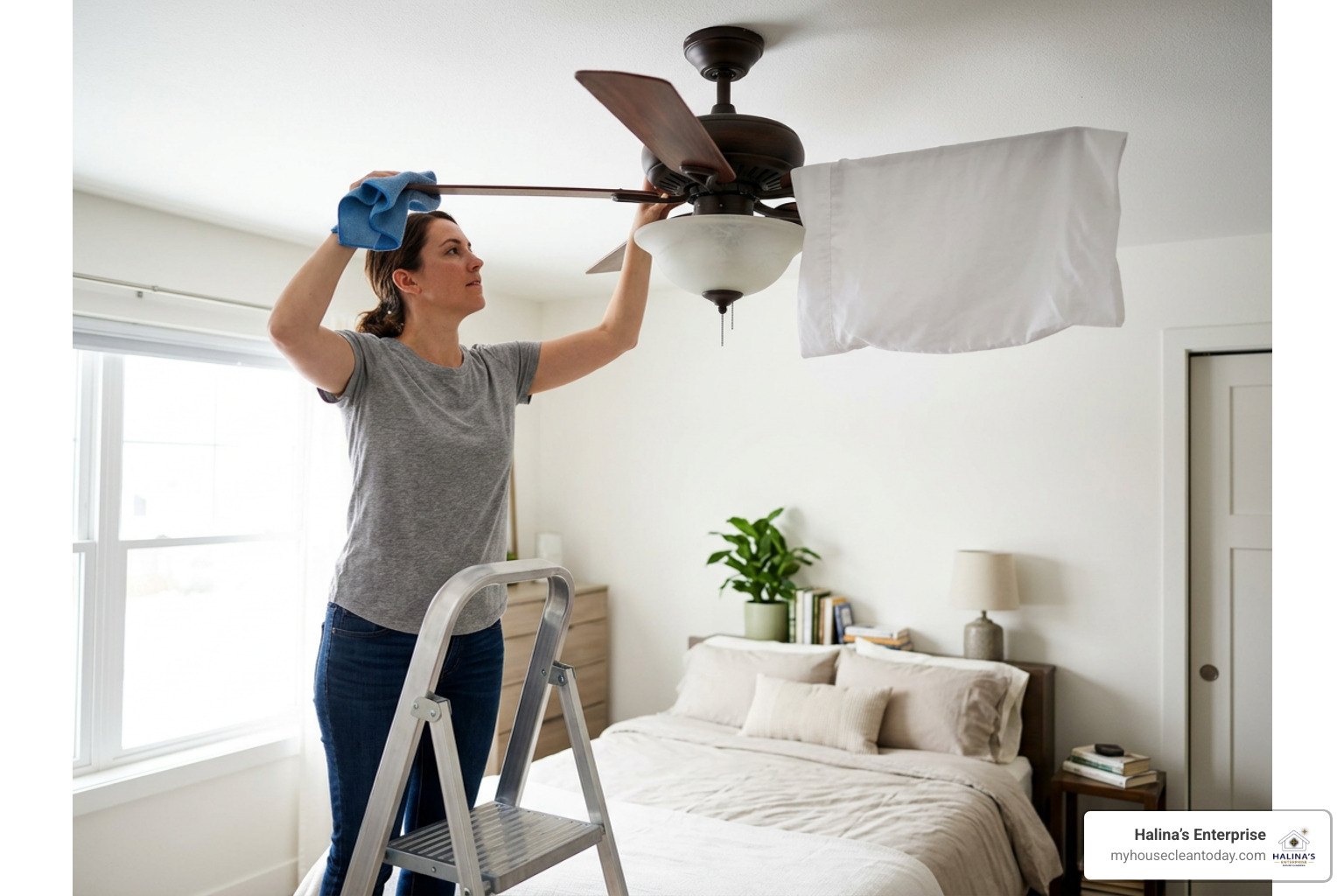
When performing a thorough seasonal refresh, working systematically prevents you from cleaning the same spot twice. Our professional approach to deep house cleaning always relies on the principle of gravity: dislodge dust high, let it settle downward, and extract it completely from the floor at the very end.
Preparing Surfaces and Decluttering Clutter Zones
Clutter is the primary barrier to efficient cleaning. Before spraying a single cloth, gather three containers: a trash bag, a donation box, and a relocation basket.
- Clear everything off the floor, closet floors, and under-bed storage zones.
- Sort stray items rapidly without overthinking—throw away rubbish, place items belonging in other rooms into your relocation basket, and box up clothes that no longer fit.
- Empty dresser tops completely so every square inch of wood or laminate can be sanitized without obstacles.
High-Reach Dusting, Window Treatments, and Walls
Always work from the ceiling down to flat furniture surfaces.
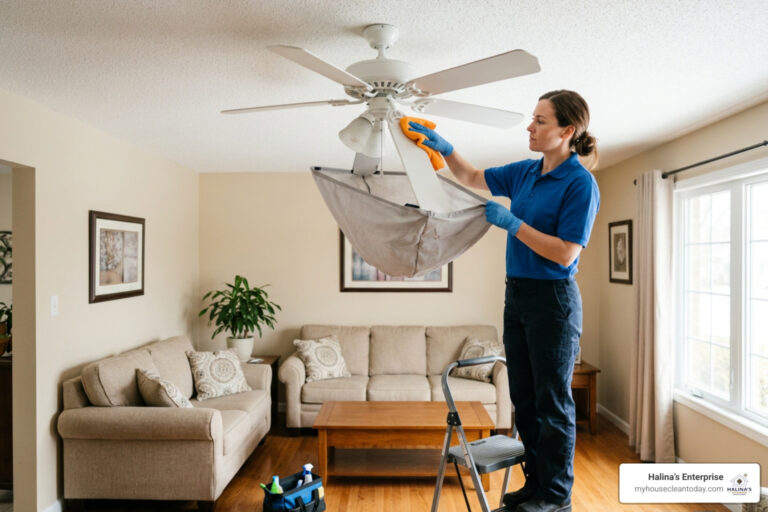
- Ceiling Fans: Slide an old pillowcase over each fan blade, pressing the fabric firmly as you pull it backward. This captures all trapped grime inside the sleeve rather than showering dust across your bed.
- Vents and Molding: Use an extendable microfiber pole to sweep ceiling corners, crown molding, and HVAC intake grilles.
- Windows & Blinds: Close horizontal blinds and wipe across the slats with a damp microfiber cloth, then reverse the slat angle and repeat. Wash interior glass using a squeegee or dedicated glass cloth.
- Walls & Trim: Spot-clean scuffs around door frames and light switches using warm water mixed with a drop of mild dish soap. Note: If your property was built before 1978, avoid harsh abrasive scrubbing on original painted trim to prevent disturbing potential lead-based coatings.
Mattress Sanitizing, Bedding Care, and Allergen Removal
Bedrooms collect substantial biological residue because humans shed millions of dead skin cells every night.
- Strip all mattress pads, sheets, and pillow encasements.
- Fit your vacuum with an upholstery attachment and pass it slowly over the entire mattress surface, paying close attention to seams, button tufts, and crevices.
- Spot-treat minor stains using a dab of diluted gentle dish soap or hydrogen peroxide on a clean rag, blotting gently without saturating the mattress core.
- Generously dust the bare mattress with baking soda. Let it sit undisturbed for at least one to two hours to absorb trapped body oils and humidity, then vacuum thoroughly.
- Rotate the mattress 180 degrees to promote even wear.
Following structured printable room-by-room cleaning checklists ensures you never overlook these foundational bedding sanitation steps.
Baseboards, Furniture, and Flooring Deep Clean
With high dust now resting on lower surfaces, finalize the room:
- Move Movable Furniture: Pull nightstands, dressers, and light chairs away from walls to vacuum accumulated dust bunnies and lost items trapped behind them.
- Wipe Baseboards: Vacuum loose hair and dust along baseboard ledges first using a brush attachment, then wipe them down with a warm, damp microfiber towel.
- Deep Clean Flooring: Run a HEPA vacuum across the entire floor, running the crevice tool along the floor-to-wall joints. Finish hardwood or tile floors with a damp microfiber mop, working backwards toward the bedroom door so you never step across clean, wet floors.
Adapting Your Routine for Kids and Busy Families
Maintaining clean bedrooms across a busy household requires shared responsibility and clear expectations. Children and teenagers often feel overwhelmed by vague instructions like “go clean your room,” but thrive when tasks are visually concrete and broken into small steps.
Printable Kids and Teens Bedroom Cleaning List
Print out an age-appropriate daily and weekly chore card, laminate it, and affix it directly to the back of their bedroom door with a dry-erase marker:
- Daily Tasks (Under 5 Minutes):
- Pull up blankets and place pillows at the head of the bed.
- Put dirty clothes and pajamas directly into the laundry hamper.
- Clear cups, snack dishes, and trash off the desk and nightstand.
- Pick up toys, books, and sports gear off the open floor.
- Weekly Tasks (Weekend Habit):
- Strip pillowcases and bed sheets and bring them to the laundry area.
- Dust flat desk surfaces and computer monitors with a dry microfiber mitt.
- Run a lightweight vacuum or dry dust mop across the bedroom floor.
- Empty the small bedroom wastebasket into the main household trash.
Long-Term Allergen and Dust Reduction Strategies
If anyone in your home suffers from morning congestion, itchy eyes, or seasonal allergies, these environmental adjustments dramatically lower bedroom dust accumulation:
- Install High-Efficiency Air Purifiers: Place a standalone HEPA air purifier in the bedroom, running it continuously on a low, quiet setting to capture airborne pet dander and floating pollen.
- Use Zippered Dust Mite Encasements: Enclose mattresses, box springs, and pillows in certified allergen-barrier encasements to lock away microscopic allergens.
- Keep Pets Off Sleeping Linens: While we love our furry companions, pet dander and outdoor pollen hitchhike directly onto duvet fabrics. Creating dedicated pet beds on the floor helps keep your mattress hygienic.
- Maintain HVAC Filters: Replace household central air furnace filters every 60 to 90 days with high-MERV-rated filters to stop dust circulation before it reaches bedroom vents.
Frequently Asked Questions About Bedroom Cleaning
How often should you deep clean a mattress to eliminate dust mites?
Deep clean your mattress every 3 to 6 months. This process should include thorough vacuuming with an upholstery tool, spot-treating stains, applying baking soda for a few hours to neutralize odors, and rotating the mattress 180 degrees. If you use a washable, zippered dust mite protector, wash the protector monthly.
What is the proper washing temperature to kill bedding allergens?
Laundering bed linens in water heated to at least 130°F (54°C) for 10 minutes or more is required to denature mite allergens and eradicate live dust mites. Standard residential hot cycles often only reach 90°F to 105°F, which refreshes fabrics but fails to kill mites biologically; running clean linens through a high-heat dryer cycle for 20 to 30 minutes provides the thermal exposure needed to neutralize allergens effectively. Wash standard sheets weekly, duvet covers every 2 to 4 weeks, and heavy comforters every 2 to 3 months.
What is the fastest top-to-bottom order to clean a messy bedroom?
The fastest order follows five key phases:
- Bag trash and clear clutter so all surfaces are accessible.
- Strip the bed and start the laundry.
- Dust from the highest points down (ceiling fans, light fixtures, molding, shelves, furniture).
- Wipe hard surfaces and disinfect high-touch contact points (nightstands, doorknobs, switch plates).
- Vacuum and mop the floors last, finishing by remaking the bed with crisp, fresh linens.
Conclusion
A clean bedroom is not about rigid perfection—it is about creating a peaceful, healthy environment where your mind can decompress and your body can recharge. By dividing large tasks into manageable daily resets, reliable weekly sanitizing routines, and seasonal deep refreshes, you eliminate the mental clutter that makes home care feel overwhelming.
When busy work weeks, family demands, or major seasonal transitions make deep cleaning difficult to fit into your schedule, our experienced team is here to help. Halina’s Enterprise has delivered bonded, fully insured, award-winning residential and commercial cleaning services across Roselle, IL, and the surrounding Chicagoland communities for over 30 years. Whether you need a seasonal refresh, recurring housekeeping, or comprehensive specialized care, explore our complete range of Halina’s Enterprise professional cleaning services and let us restore comfort, health, and sparkle to your home.